

Where to Find Beauford's Art: Knoxville Museum of Art
I am very pleased to share the news that the Knoxville Museum of Art (KMA) now houses the paintings for the Delaney estate! The estate executor has allowed the KMA to display the works shown below. Stephen C. Wicks, Barbara W. and Bernard E. Bernstein Curator for the museum, provides the commentary.
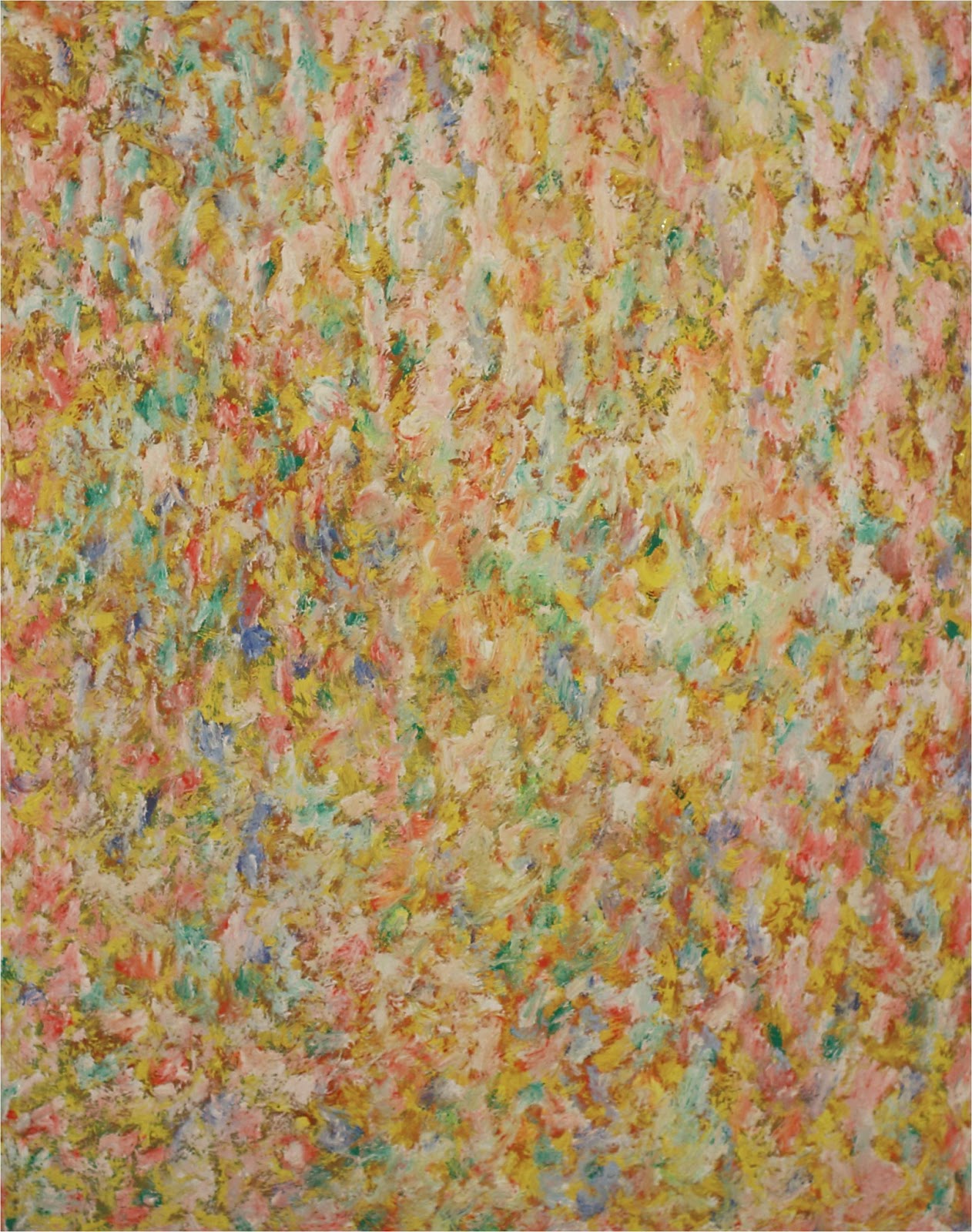
(1964) Oil on canvas
36 5/8 X 28 3/4 inches
© Estate of Beauford Delaney, by permission of Derek L. Spratley, Esquire, Court Appointed Administrator
Scattered Light appears to vibrate with a warm orange glow at first glance. Upon closer inspection one realizes this warm glow is produced by short, thick strokes of yellow, white, green, blue, and red oil pigment applied in dense clusters. For me, Scattered Light’s rich textures and vibrant colors are reminiscent of Monet’s paintings of Rouen Cathedral.
This work is currently hung beside a painting by Joseph Delaney from our collection that is being shown in the KMA’s ongoing flagship exhibition Higher Ground: A Century of the Visual Arts in East Tennessee. Joseph's Marble Collegiate Church (1974-75, oil on canvas, 72 X 47 3/4 inches) depicts a bustling Manhattan crowd dwarfed by a towering church spire and a turbulent sky. Its distinctive frame was designed and built by the artist. In 1986, Joseph returned to Knoxville and was artist-in-residence at University of Tennessee until his death in 1991.

Photo courtesy of Knoxville Museum of Art
Higher Ground is housed in one of the two large top-floor galleries. A permanent installation, it traces the development of fine art in the region over the past century. It tells the largely unknown story of East Tennessee’s rich artistic history and its connections to the larger currents of American art. Featured works are drawn from the KMA collection along with selected works on loan from museums and private collections from around the country.
KMA owns several major paintings by Joseph, but none by Beauford. I consider our lack of Beauford’s work as the single most important acquisition goal for our museum.
Beauford's portrait of his niece Imogene Delaney now hangs in our new temporary exhibition Tradition Redefined: The Larry and Brenda Thompson Collection of African American Art, which is on view through June 16, 2013.

(1963) Oil on canvas
38 ½ x 31 inches
Georgia Museum of Art, University of Georgia
The Larry D. and Brenda A. Thompson Collection of African American Art
GMOA 2011.584
The portrait is made up predominantly of yellow pigment applied in flat, even strokes. Some orange hues appear in the upper 1/3 of the composition. Interestingly, Imogene appears to hover in space because Beauford opted to apply yellow over the area where her armchair would have appeared in order to erase any evidence of its existence.
The Thompsons' extensive collection redefines the landscape of African American art, offering an in-depth, inclusive understanding of artists and their aesthetic and social concerns. Featured artists include Radcliffe Bailey, Romare Bearden, Camille Billops, Beauford Delaney, Joseph Delaney, Lois Mailou Jones, Norman Lewis, and Hale Woodruff. The fact that Tradition Redefined allows viewers to consider Beauford’s and Joseph’s work within the larger context of African American art is one of the major reasons why the KMA was eager to bring the exhibition to Knoxville.
Tradition Redefined hangs in the lower galleries at the KMA. It was organized by the David C. Driskell Center for the Study of the Visual Arts and Culture of African Americans and the African Diaspora at the University of Maryland, College Park.
Beauford at the MRG Chelsea Inaugural Expo
The Michael Rosenfeld Gallery (MRG) holds the largest number of Beauford's paintings among galleries today. It has been and continues to be a great friend of Les Amis de Beauford Delaney. I am taking this opportunity to publicly thank them for their support!
MRG recently relocated to Chelsea after operating for over 20 years at 24 West 57th Street in midtown Manhattan. Beauford's Untitled (Greene Street) was hung by the gallery as part of the inaugural exposition.
,+1950-IMAGE+ONLY.jpg)
(1950) Oil on canvas
47" x 36 1/2"
signed and dated lower left: B. Delaney. 1950
© Estate of Beauford Delaney, by permission of Derek L. Spratley, Esquire, Court Appointed Administrator
This work was part of the African American Art Calendar 2011, created by MRG and published by Pomegranate Press in Petaluma, CA, in which it was the illustration for the month of October. It was shown at INsite/INchelsea: The Inaugural Exhibition for MRG from December 18, 2012-March 9, 2013.
Prior to the gallery's acquisition of this work, it was owned by Clarke Gallery in Mamaroneck, NY. Clarke Gallery obtained it from a private collection, the owner of which obtained it from Beauford.
Michael Rosenfeld Gallery
100 11th Avenue at 19th Street
New York, NY 10011
Telephone: 212-247-0082
Internet: http://www.michaelrosenfeldart.com
An Unexpected Discovery and a Primer for Art Collection
I met Anne Stills several months ago when she wrote to me to comment on the recent publication of my book entitled Black Paris Profiles. Since that time, we communicate frequently by e-mail to share information about Paris.
I received a couple of messages from Anne a few days ago, each with an image attached. I was delighted to find that the images were of paintings by Beauford!

(1942) Pastel on paper
Image courtesy of Anne Stills

(undated) Pastel on paper
Image courtesy of Anne Stills
Anne found these paintings at a private art dealer's establishment* in NYC while she was purchasing art to add to her collection. The dealer, Jon Mellitz, acquired them over 20 years ago from the Betty Esman estate (Esman was a WPA artist, as was Beauford.) Both pieces measure approximately 23x18 inches and are in good condition. The asking price is $7000 for both paintings.
Because I believe that the concept of art collection is foreign to many and because starting and building a collection requires education and advice, I asked Anne to grant Les Amis an interview to talk about art collection and what it means to her. Find our exchange below:

Photo courtesy of Anne D. Stills
Les Amis: When did you first realize that you wanted to collect art?
Anne D. Stills: I have been collecting one thing or another most my life. We are all collectors, all of us. As a young person I collected dolls. I moved on to jazz albums, fashion magazines, cookbooks and mystery novels. As my taste and exposure to the world grew, I started more costly collections of porcelain teapots, Lladro and Herend figurines, and Hermes scarves. As I settled down and started paying more attention to home, I began to think about collecting art first as a means to decorate and later as a passionate pursuit.
Les Amis: Why is it important for you to collect art?
Anne D. Stills: I am a visual person. I need to be surrounded by beauty. The artwork in my home reflects my personal taste and brings a certain energy, joy and peace to my well being and sensibility. It reminds me of my parents and connects me to the history and experience of black people in America and the African Diaspora.
Les Amis: Which genres do you prefer (painting, sculpture, installations, photography…)?
Anne D. Stills: My collection is still young and evolving, therefore, I prefer to remain open and develop a taste for a broad range of mediums. I started with works on paper, along with vintage black and white photos.
Les Amis: Which types of paintings do you prefer (examples: figurative vs. abstract; portraits vs. landscapes; oils vs. watercolors vs. acrylics…)?
Anne D. Stills: My tastes are quite varied. In the beginning stages of collecting, I found myself drawn to abstract works of art. Later to round out my collection, I acquired figurative works. As a serious collector, I am very deliberate about my selections. It is very important that each piece enhances and fits into the overall theme.
I have a wish list of artists I want to collect. When I am considering a work, I mostly think about what that artist is known for and select art that represents a part of either their earlier or later works or sometimes both.
Les Amis: Is Beauford one of the artists whose work you'd like to collect?
Anne D. Stills: Yes, Beauford Delaney is on my wish list. I am partial to his abstracts and bold use of color.
Les Amis: When did you begin to collect art?
Anne D. Stills: My first awareness and deliberate decision to build a collection of fine art started five years ago. Once I made the decision, I thought long and hard about the strategy and artistic goal for my collection. I first went about educating myself and being exposed to many different types of art and artists. Through this exposure and training, I decided I wanted to focus my collection on African-American artists of the WPA (Works Progress Administration) period. This was a federal program established in 1935 during the Great Depression to offer work to the unemployed. There was an arts project component to help keep artists working. This was also during the time of the Harlem Renaissance with its explosion of cultural nationalism, black heritage, pride and the blossoming of black art and literature. I feel a strong affinity to the works created during this era.
Les Amis: What was your first purchase?
Anne D. Stills: My first acquisition was a Romare Bearden lithograph, Brass Section (Jamming at Minton’s), from the Jazz Series, dated 1979. As a lover of jazz music, this piece spoke to me. I remember gazing at the image and being taken back to the 1970s jazz club scene in Greenwich Village, grooving to the sounds of Miles Davis, Sonny Rollins and the voices of Sarah Vaughan, Carmen McRae and Shirley Horn.
Les Amis: How do you feel about the concept of “black art”?
Anne D. Stills: I believe the concept of black art is very subjective. You can ask different people including art historians and scholars this question and receive different answers. It’s a very broad subject. I am only an art lover, not an expert. However, I came of age in NYC during the late 1960s and early 1970s during a major social upheaval and transformational time. There was a proliferation of black expression, pride and the birth of the Black Movement. As a result, I was nurtured and exposed to the works of “black art” by all the many incredibly talented, prolific writers, musicians and artists that look like me and whom I could identify with. This was my bridge into the art world. It established a comfort level for me. As an example, my love for opera music developed because I was able to go and see Leontyne Price, Jessye Norman and Shirley Verrett…people that looked like me.
Black art has illuminated my path, nurtured my growth and given me the freedom to broaden my horizons and develop a global perspective.
Les Amis: Does your collection represent an investment or simply a passion?
Anne D. Stills: My collection comes out of my love and passion for the history and legacy of African-American artists, their art and our collective experiences. I applaud their ability to document what they saw and express their emotions to create something beautiful that I live with and enjoy each day. That is the driving force behind my building a fine art collection. At some point, however, as my collection grew in size and value, it inevitably evolved into an investment. As an investment, there are certain considerations that require management - things such as insurance, tax, and estate planning.
Les Amis: Do you use the Internet to search for works to collect?
Anne D. Stills: The Internet can certainly be used as a source to search for artwork. I much prefer an interactive and proactive approach, including consulting with my art dealers and attending art auctions, galleries and art fairs. The primary source I have used to collect art is through reputable dealers that I have developed a long-term relationship with. They are familiar with the strategy of my collection and have assisted me with evolving, expanding and growing my body of work.
Les Amis: What are the pros and cons of using the Internet?
Anne D. Stills: The down side of buying art on the Internet is that you may purchase a fraudulent work if you are not experienced and knowledgeable. There can be a lot fraud if you don’t know what you are doing. It’s important to receive certificate of authenticity to document the details and value of your artwork. This may not always be possible using an Internet seller. The positive side, however, is that you are purchasing directly as opposed to through a middle man such as an auction house, thereby, getting a better price.
Some dealers use the Internet to sell their inventory. I once came upon a valuable piece of artwork directly via the Internet. It was put up for auction at a major auction house in the past, however, did not sell. The seller’s asking price was thousands of dollars below the auction house estimate. Unfortunately, I was not able to purchase it because it was not within my budget at the time.
Les Amis: How would you advise someone new to art collection to begin?
Anne D. Stills: All serious art collecting begins with educating yourself and building an art library. A great deal of effort must be put in prior to your first purchase. I would advise the novice collector to spend of lot of time visiting museums and galleries as well as attending local art fairs and auctions. Study art magazines and gallery catalogs. Attend exhibits and establish relationships with contemporary artists, gallery owners, curators and collectors. Study the African-American art collections of important private collectors such as Dr. Walter O. Evans (Savannah College of Art and Design), Dr. Harmon and Harriet Kelley (private collection), and Paul R. Jones collection (University of Delaware and University of Alabama)—these are an extremely educational resource. In time you will train your eye and your gut to identify artists that have created the works that speak to you.
Quality artwork by established emerging artists can be found to fit any taste and budget. To develop a good collection, you must develop your eye.
Les Amis: Are there any references, online courses, or other resources that you would recommend to new collectors?
Anne D. Stills: One of the books I consider the bible of African-American art history is A History of African-American Artists, From 1792 to the Present by Romare Bearden & Harry Henderson. The information, artists and works presented in this book and made during this period laid the groundwork for everything that followed. Another important reference and must have is Collecting African American Art, Works on Paper and Canvas by Halima Taha. This book is invaluable with everything the new collector needs to know. The IRAAA (The International Review of African American Art) magazine published by Hampton University Museum is an excellent resource for identifying emerging artists and what is trending in the art world of black artists.
Three excellent books that I would recommend by art historians and scholars are Black Art in the 20th Century and To Conserve a Legacy: American Art of Historically Black Colleges and Universities, both by Richard Powell; and African American Art and Artists by Samella Lewis. Additional resources would include the online archived catalogs at Swann Galleries, and the auction house Web sites for Sotheby’s and Christie’s.
*For more information about the Beauford Delaney portraits, contact Jon Mellitz at 917-721-3608.
Beauford's Portrait of Charlie Parker
Many thanks to the Michael Rosenfeld Gallery LLC, New York, NY for furnishing the images and information presented in this post.
Several of Beauford's paintings are being shown in the Blues for Smoke exposition at the Whitney Museum of American Art in New York. One of them is an untitled work that is also known as Charlie "Bird" Parker:
-IMAGE+ONLY.jpg)
Oil on canvas
28 3/4" x 23 1/2", signed and dated
© Estate of Beauford Delaney, Courtesy of
Michael Rosenfeld Gallery LLC, New York , NY
This painting is signed and dated in the lower right corner: 1968 Beauf Delaney. It is also signed, inscribed and dated in the upper right corner on the back: Beauford Delaney Paris 1968 France. Billy Dee Williams (Los Angeles, CA) acquired it directly from Beauford in 1968 in the accompaniment of James Baldwin. It is currently held by the Michael Rosenfeld Gallery LLC, New York, NY, which loaned it to the Museum of Contemporary Art in Los Angeles (MOCA) for the current exposition. It appears on page 51 of the exhibition catalog.
In an article about Blues for Smoke, published by the New York Times on February 8, 2013, Holland Cotter discusses the few pieces in the show that come from Europe. Beauford's paintings are a part of this group. About the portrait shown above, Holland states:
Europe — Paris — was the adopted home of the painter Beauford Delaney, who has a wonderful little 1968 portrait here of Charlie Parker, dressed like an African chief in a citrus-yellow robe.
+(detail)-IMAGE+ONLY.jpg)
Oil on canvas
28 3/4" x 23 1/2", signed and dated
© Estate of Beauford Delaney, Courtesy of
Michael Rosenfeld Gallery LLC, New York , NY
Blues for Smoke was shown at The Geffen Contemporary at MOCA from October 21, 2012 - January 7, 2013; the show opened at the Whitney Museum of American Art on February 17 and will hang until April 28, 2013.
Click on the links below to read other Les Amis blog posts about Beauford and the Whitney Museum of American Art:
Where to Find Beauford's Art: Whitney Museum of American Art
Beauford at the Whitney Museum Studio Galleries - 1930
Where to Find Beauford's Art: Clark Atlanta University Art Galleries - Part 4
This final segment of the multi-part article on the Beauford Delaney paintings held by Clark Atlanta University Art Galleries comes from Patricia Sue Canterbury*, curator of the solo exposition entitled Beauford Delaney: From New York to Paris that was mounted by the Minneapolis Institute of Arts in 2004.
The group of works that resides in the collection of the Clark Atlanta University Art Galleries (“CAUAG”) is bound together by the two salient factors of color and origin. All seven works, which range between 1962 and 1978, are suffused with yellow, a shade that dominated the artist’s work—particularly after his relocation to Paris in the 1950s. The sun-drenched shade was a flexible, expressive tool that conveyed the perceived essence of his subject matter. The other aspect that contributes special meaning to the works as a group is the fact that all are a bequest from Delaney’s long-time friend, James Baldwin. My thoughts on a few of my favorites follow below.
Baldwin and Delaney’s history spanned decades and, while it began with the artist in the role of mentor to the younger man, by the 1970s Baldwin would take on a protective role towards the man who had taught him in little but profound ways to look beyond the surface of initial impressions. It was also Delaney who was living proof to the young, aspiring writer that a black man could be, and succeed, as an artist. The friendship begun in New York continued across the Atlantic where both men found in Paris a place where each could explore their respective paths with a freedom that opened within them new approaches and ideas in the pursuit of their crafts.
Given their long history, Delaney portrayed Baldwin on many occasions and those likenesses rank as some of the artist’s most powerfully intuited portraits. Therefore, it is not surprising that out of the three portraits by Delaney in the CAUAG collection, it is his portrayal of James Baldwin that projects to us the interior essence of the sitter.

(1971) Oil on canvas
Bequest of James Baldwin
Image courtesy of Clark Atlanta University Art Galleries
Note: Some question whether the person depicted in this portrait is indeed Baldwin.
As Baldwin’s success as an author rose, he would in turn offer Delaney opportunities to vacation with him in various locations, including his timber and stone villa in St. Paul de Vence in the South of France. CAUAG is fortunate to possess two works that mark Delaney’s presence there. In Village (St. Paul de Vence) the artist captured the nature of a town that, to any visitor, is an unending succession of steeply pitched steps that hug the walls of any structure they desire to reach. Here, Delaney collapses a slice of the town into a single plane with multiple stepped paths and the cellular-shaped interiors of the establishments that border them. It is a portrait of a place well loved, which conveys a sense of his delight in its peculiar quality of place.
,+1972.JPG)
(1972) Oil on canvas
Bequest of James Baldwin
Image courtesy of Clark Atlanta University Art Galleries
Yellow Cyprus (1978), painted six years later, and one year before Delaney’s death, translates his experience of the scene that opened before him from the terrace of Baldwin’s house at St. Paul de Vence. In spite of his delicate mental state by this point in time, he obviously divined larger, cosmic meaning underlying the visual phenomena. To get at it, he restricted the color palette and stripped away the unessential elements that would only distract. The yellow orb of the sun does not simply bathe the landscape in golden light; it invades it and transforms it into an extension of itself and threatens to dematerialize it, outright.

(1978) Oil on canvas
Bequest of James Baldwin
Image courtesy of Clark Atlanta University Art Galleries
Anatomy of an Art Exposition - Part 1
Anatomy of an Art Exposition - Part 2
Why Are So Many of Beauford's Paintings in Museum Storage
Beauford's Self-Portrait at Swann Galleries African-American Fine Art Auction
Once again, Beauford's work was represented at the Swann Galleries African-American Fine Art Auction. The most recent sale was held on February 14, 2013. This time, the painting auctioned was an exquisite self-portrait (Lot 73) that I had not seen before.

(1964) Oil on linen canvas
470x337 mm; 18 1/2x13 1/4 inches.
Signed, dated and inscribed "Paris" in oil, verso.
Image courtesy of Swann Galleries
This painting was last held by the Boston Museum of Fine Arts, which acquired it in 2011. It was previously owned by Louise Taylor, St. Michael, MD; Michael Rosenfeld Gallery, New York (1999); and John Axelrod, Boston (1999). It was exhibited in a show called Selections from the Collection of John P. Axelrod at the Addison Gallery of American Art, Philips Exeter Academy, Andover, MA, August 31 - October 31, 1999 and at the Michael Rosenfeld Gallery, New York, 1999, with the labels on the frame back.
Swann Galleries describes the painting as follows:
This modern self-portrait is a striking example of an important body of work--Beauford Delaney made self-portraits throughout his career, from the 1930s through the 1970s. This work is done at the height of his Paris period, the same year as Delaney's solo exhibition at Galerie Lambert in Paris, where he showed both portraits and abstract canvases. There is another 1964 self-portrait, with a cigarette on a yellow background, in the collection of the Reinfrank family, and a very similar Self-Portrait, 1965, in the collection of the Whitney Museum of American Art and illustrated on the cover of David Leeming's biography, Amazing Grace: a Life of Beauford Delaney.The estimated sale price for this piece was $20,000-$30,000. It sold for $30,000*.
*At auction, there are two prices--the hammer price, or the price at which the item sells during the auction, and the price with the buyer's premium. All auction houses have a buyer's premium that the buyer pays to the auction house on top of the hammer price. Swann's premium is 20%. The prices indicated in this article are hammer prices.
Beauford Returns to the Whitney Museum of American Art
Blues for Smoke is a major interdisciplinary exhibition exploring
a wide range of contemporary art, music, literature, and film through
the lens of the blues and “blues aesthetics.” Mounted by the Los Angeles Museum of Contemporary Art (MOCA), it is now being shown at the Whitney Museum of American Art in Manhattan.
The image below is a screenshot from the page on the Whitney Museum Web site that promotes the exposition. The painting on the right was done by Beauford - it is called Portrait of a Young Musician and is on loan from the Studio Museum in Harlem. It is not dated. (Click on the image for a larger view of the portrait.)

Beauford experienced his first major break as an artist at the Whitney, where he exhibited twelve works (three oils and nine pastels) at a four-person show that ran from February 26 to March 8, 1930. He won first prize for one of his pastels and honorable mention for the other works that he submitted for this show.
There is no indication on their Web site as to why the Whitney chose Portrait of a Young Musician among dozens of others to represent this exhibit. But I think you'll agree that the work is compelling. During a Google search, I found a blog post by a young woman named Kiffe Coco that echoes this sentiment. Coco says that as soon as she laid eyes on the painting, she was deeply intrigued. She goes on to describe how the image evoked thoughts of Paris:
Whitney Museum of American Art
945 Madison Avenue at 75th Street
New York, NY 10021
General Information: (212) 570-3600
info@whitney.org
Click here for information on hours and admission fees.
The image below is a screenshot from the page on the Whitney Museum Web site that promotes the exposition. The painting on the right was done by Beauford - it is called Portrait of a Young Musician and is on loan from the Studio Museum in Harlem. It is not dated. (Click on the image for a larger view of the portrait.)
Screenshot from Whitney Museum Web site
Beauford experienced his first major break as an artist at the Whitney, where he exhibited twelve works (three oils and nine pastels) at a four-person show that ran from February 26 to March 8, 1930. He won first prize for one of his pastels and honorable mention for the other works that he submitted for this show.
There is no indication on their Web site as to why the Whitney chose Portrait of a Young Musician among dozens of others to represent this exhibit. But I think you'll agree that the work is compelling. During a Google search, I found a blog post by a young woman named Kiffe Coco that echoes this sentiment. Coco says that as soon as she laid eyes on the painting, she was deeply intrigued. She goes on to describe how the image evoked thoughts of Paris:
I was introduced to this piece on Tuesday at the Studio Museum of Harlem while working a workshop, and just looking at it, I thought of Paris and then somehow, James Baldwin's image popped into my head. His scarf, his crossed legs, his expression all led me to believe that this guy had been spending some time in the City of Light...Blues for Smoke is being accompanied by a series of performances, events, screenings, and readings, all of which showcase the enduring legacy and innovative possibilities of the blues in contemporary music and live art. It will run until April 28, 2013.
Whitney Museum of American Art
945 Madison Avenue at 75th Street
New York, NY 10021
General Information: (212) 570-3600
info@whitney.org
Click here for information on hours and admission fees.
Where to Find Beauford's Art: Virginia Museum of Fine Arts
The Virginia Museum of Fine Arts has recently acquired one of Beauford's most acclaimed portraits, that of Marian Anderson:

Marian Anderson
(1965) Oil on canvas
J. Harwood and Louise B. Cochrane Fund for American Art
Image source: VMFA Blog
The painting had been on loan to the museum for five months prior to the acquisition. As of December 2012, it is part of their permanent collection. It hangs in the American gallery across the room from Beauford's Greene Street, which the museum acquired in 2010. As part of the museum's inventory, these works now belong to the Commonwealth of Virginia.
The following description comes from the VMFA blog:
(1965) Oil on canvas
J. Harwood and Louise B. Cochrane Fund for American Art
Image source: VMFA Blog
The painting had been on loan to the museum for five months prior to the acquisition. As of December 2012, it is part of their permanent collection. It hangs in the American gallery across the room from Beauford's Greene Street, which the museum acquired in 2010. As part of the museum's inventory, these works now belong to the Commonwealth of Virginia.
The following description comes from the VMFA blog:
In this “memory” portrait — painted in Paris but with an awareness of the Civil Rights struggles underway in America — Delaney expressed his ongoing admiration for Anderson’s sensitive brilliance as a performer and person. The visual harmony of the work epitomizes the artist’s exploration of painterly abstractions that featured the color yellow as a symbol of perfection and transcendence.According to the blog Black Artist News, Marian Anderson is the museum’s first painted portrait of a celebrated historical black figure. Many thanks to milo, creator of Black Artist News, for informing Les Amis of the acquisition!
A Portrait for Sale
Beauford captured the likeness of his friend Richard Gibson in a portrait painted in Paris in 1955:

Click HERE to read the story of how Richard sat for the portrait.
The painting was hung as part of the exposition of Beauford's works that the Philadelphia Museum of Art held in 2005. As Richard is a native of Philadelphia, he was proud to have his portrait shown during this exhibit. Click HERE to read more about this exposition.

Richard owns the painting and is offering it for sale. Interested parties should address an e-mail message to Craig Allen at craig.persmail[at]yahoo[dot]com.
To read Richard's tribute to Beauford, click on the following link:
A Tribute to Beauford...in Gratitude

Portrait of Richard Gibson
Beauford Delaney
Oil on canvas (1955)
Beauford Delaney
Oil on canvas (1955)
The painting was hung as part of the exposition of Beauford's works that the Philadelphia Museum of Art held in 2005. As Richard is a native of Philadelphia, he was proud to have his portrait shown during this exhibit. Click HERE to read more about this exposition.

Richard Gibson standing next to his portrait at the 2005 exposition
Beauford Delaney: From New York to Paris
Philadelphia Museum of Art
Photo courtesy of Richard Gibson
Beauford Delaney: From New York to Paris
Philadelphia Museum of Art
Photo courtesy of Richard Gibson
To read Richard's tribute to Beauford, click on the following link:
A Tribute to Beauford...in Gratitude
Where to Find Beauford's Art: Clark Atlanta University Art Galleries - Part 3
I am pleased to present this multi-part article about Beauford's works at Clark Atlanta University Art Galleries in Atlanta, GA. Many thanks to Tina Dunkley and her assistant Cynthia Ham for providing the interview and images upon which this article is based.
************
The James Baldwin bequest to Clark Atlanta University contained the following paintings by Beauford:

Village (Saint Paul de Vence)
(1972) Oil on canvas
Bequest of James Baldwin
Image courtesy of Clark Atlanta University Art Galleries
Beauford first went to Saint Paul de Vence in 1971, the year that his nephew Sam died. Baldwin invited him there to help him deal with the emotional trauma resulting from Sam's death. He invited Beauford to the property for Christmas that same year.
Beauford would go to Saint Paul de Vence again in 1972, this time as a result of Richard A. Long finding him in fragile mental condition during Long's visit to France. Beauford drew sketches of the town during this trip and created Village and other paintings upon his return to Paris.
In Part 4 of this article, read a personal view of several paintings from the Baldwin bequest.
*Some question whether the person depicted in this portrait is indeed Baldwin.
The James Baldwin bequest to Clark Atlanta University contained the following paintings by Beauford:
- Yellow Cypress, 1972, oil on canvas
- Unknown Portrait (inscription: Saint Paul), 1971, oil on canvas
- Portrait of James Baldwin*, 1971, oil on canvas
- Man in Blue, 1972, oil on canvas
- Abstraction: Yellow and Orange, 1972, watercolor
- Village (Saint Paul de Vence), 1972, oil on canvas
- Abstract: Yellow and Red, 1967, oil on canvas

(1972) Oil on canvas
Bequest of James Baldwin
Image courtesy of Clark Atlanta University Art Galleries
Beauford first went to Saint Paul de Vence in 1971, the year that his nephew Sam died. Baldwin invited him there to help him deal with the emotional trauma resulting from Sam's death. He invited Beauford to the property for Christmas that same year.
Beauford would go to Saint Paul de Vence again in 1972, this time as a result of Richard A. Long finding him in fragile mental condition during Long's visit to France. Beauford drew sketches of the town during this trip and created Village and other paintings upon his return to Paris.
In Part 4 of this article, read a personal view of several paintings from the Baldwin bequest.
*Some question whether the person depicted in this portrait is indeed Baldwin.
Where to Find Beauford's Art: Ink Miami Art Fair - Aaron Galleries
Thanks (in part) to Aaron Galleries near Chicago, Beauford's work is represented at this prestigious show this year. Aaron Galleries is participating in Ink Miami Art Fair, a contemporary art fair which is unique among Miami’s fairs for its focus on contemporary works on paper by internationally renowned artists.
The gallery has selected two exceptional paintings by Beauford for display:
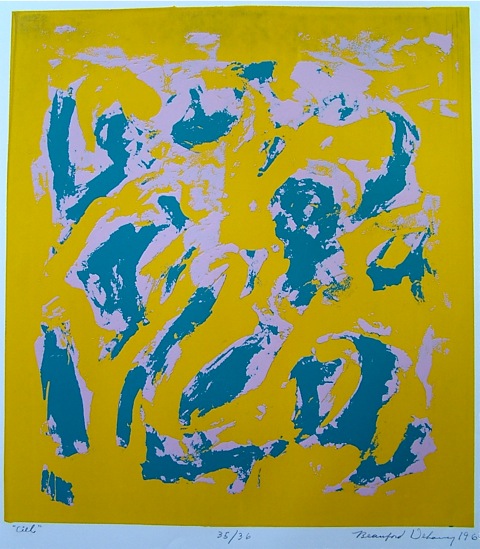
Ciel
(1960) Color silk-screen; Edition: 29/36
19 1/4 x 17 inches
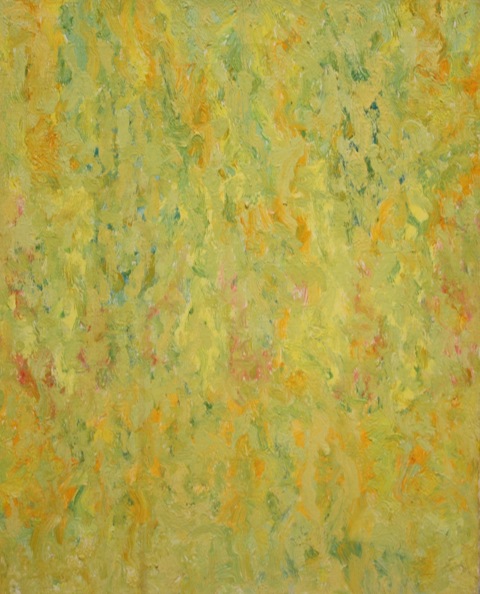
Sollis Toucan
(1963) Oil on canvas
Signed, dated and titled, on the stretcher
16 3/8 x 13 inches
They describe Sollis Toucan as "a little gem." It was previously owned by New York City artist Don Freeman*, who active was active during the 1930s and 1940s.
Aaron Galleries is showing works by the following artists at Ink:
- Eldzier Cortor
- Rashid Johnson
- Charles White
- Joseph Delaney
- Beauford Delaney
- Sam Gilliam
- Wadsworth Jarell
- Margaret Burroughs
- Elizabeth Catlett
Suites of Dorchester 1850 Collins Avenue Miami Beach, FL 33139
The remaining show dates are as follows:
Saturday 10:00AM- 7:00 PM
Sunday 10:00AM- 3:00 PM
Patrick L. Albano
Aaron Galleries
2011 Tower Drive
Glenview, IL 60026
(847) 724-0660 Gallery
(312) 320-0660 Cell
info[at]aarongalleries[dot]com
www.aarongalleries.com
* Freeman's son Roy also owned a painting called Sollis Toucan. To read his story, click here.
Where to Find Beauford's Art: Clark Atlanta University Art Galleries - Part 2
I am pleased to present Part 2 of this multi-part article about Beauford's works at Clark Atlanta University Art Galleries in Atlanta, GA. Many thanks to Tina Dunkley and her assistant Cynthia Ham for providing the interview and images upon which this article is based.
************

Clark Atlanta University Art Galleries
Image from CAUAG Web site
When the shipment arrived in Atlanta, Dunkley began the inventory process anew and was disappointed to find that only twenty-six (26) of the thirty-three (33) works had been sent. Only seven of the eleven Delaney paintings arrived, and some of these were different than the ones indicated on the inventory list.
The shipment contained the following paintings by Beauford:
During our interview, Dunkley emphatically stated that Beauford's works, as well as those of his brother, Joseph, are very important. Both Delaneys exhibited their paintings at the historic Atlanta University Art Annual Exhibition, which was founded by Hale Woodruff in 1942. Joseph Delaney won a cash award of $250 during the fifth annual exhibition in 1946 for a painting called East River. He participated in five shows in all (1942, 1943, 1946, 1947, and 1960).

Excerpt from the "School and College News" column
of The Crisis Magazine
June 1946
Beauford Delaney participated once in the Atlanta University Art Annuals in 1951, submitting an oil painting entitled Blue Harlem. Unfortunately, no measurements or images are available for this work.
Dunkley said it is important that CAUAG have works by both Delaneys in their collection for this reason. She does not recall if the galleries have ever hung their works in the same exhibit, but says that she plans to do so in the future. She likes the fact that the color "yellow" became a predominant theme in Beauford's work, and notes that yellow is the primary color used in most of his paintings in CAUAG's collection.
To learn more about CAUAG's historic art collections, click here.
In Part 3 of this article, learn more about the paintings.
*Some question whether the person depicted in this portrait is indeed Baldwin.

Image from CAUAG Web site
When the shipment arrived in Atlanta, Dunkley began the inventory process anew and was disappointed to find that only twenty-six (26) of the thirty-three (33) works had been sent. Only seven of the eleven Delaney paintings arrived, and some of these were different than the ones indicated on the inventory list.
The shipment contained the following paintings by Beauford:
- Yellow Cypress, 1972, oil on canvas
- Unknown Portrait (inscription: Saint Paul), 1971, oil on canvas
- Portrait of James Baldwin*, 1971, oil on canvas
- Man in Blue, 1972, oil on canvas
- Abstraction: Yellow and Orange, 1972, watercolor
- Village (Saint Paul de Vence), 1972, oil on canvas
- Abstract: Yellow and Red, 1967, oil on canvas
During our interview, Dunkley emphatically stated that Beauford's works, as well as those of his brother, Joseph, are very important. Both Delaneys exhibited their paintings at the historic Atlanta University Art Annual Exhibition, which was founded by Hale Woodruff in 1942. Joseph Delaney won a cash award of $250 during the fifth annual exhibition in 1946 for a painting called East River. He participated in five shows in all (1942, 1943, 1946, 1947, and 1960).

of The Crisis Magazine
June 1946
Beauford Delaney participated once in the Atlanta University Art Annuals in 1951, submitting an oil painting entitled Blue Harlem. Unfortunately, no measurements or images are available for this work.
Dunkley said it is important that CAUAG have works by both Delaneys in their collection for this reason. She does not recall if the galleries have ever hung their works in the same exhibit, but says that she plans to do so in the future. She likes the fact that the color "yellow" became a predominant theme in Beauford's work, and notes that yellow is the primary color used in most of his paintings in CAUAG's collection.
To learn more about CAUAG's historic art collections, click here.
In Part 3 of this article, learn more about the paintings.
*Some question whether the person depicted in this portrait is indeed Baldwin.
Where to Find Beauford's Art: Clark Atlanta University Art Galleries - Part 1
I am pleased to present this multi-part article about Beauford's works at Clark Atlanta University Art Galleries in Atlanta, GA. Many thanks to Tina Dunkley and her assistant Cynthia Ham for providing the interview and images upon which this article is based.
************
I recently had a long chat with Tina Dunkley about the seven Beauford Delaney works held by the Clark Atlanta University Art Galleries (CAUAG).
Dunkley, who has directed the galleries since 1994 and is an artist in her own right, had quite an interesting tale to tell about the acquisition of these paintings. They were part of a bequest to the university made by one of Beauford's dearest friends, James Baldwin.
Dr. Richard A. Long informed CAUAG of the bequest at the time that Dunkley was in the midst of renovating the space in which the collections are now shown - the former reading room of the library in Trevor Arnett Hall. Long provided a list of the works to be given to the university, all of which were located at Baldwin's home in Saint-Paul-de-Vence in southern France. Beauford spent a great deal of time with Baldwin and other friends at this property, and painted here as well.


Baldwin's Property at Saint Paul de Vence
Photos courtesy of Professor Francine Allen, Morehouse College
Dunkley began communicating with the attorney of the Baldwin estate about collecting the works in December 1994.
Because Baldwin's will was in probate and was being contested, Dunkley feared that the university might not be able to acquire the works that Baldwin intended it to have. She asked Avery Glize-Kane, the attorney for the estate, whether the art work was part of the contestation. Relieved to learn that the answer was no, she went to Saint-Paul-de-Vence to claim the items that were to be sent to the university. There were thirty-three (33) works on the list that Long provided. Among them were eleven paintings by Beauford. Other artists represented in the bequest included César, Arman, Paul Jenkins, and Henri Baviera.
As Dunkley went through the process of checking the inventory, she discovered that several paintings on the list were not at Baldwin's home. Glize-Kane could not account for what happened to them. Dunkley arranged for the shipment of the works that she could find and returned to the U.S.
In Part 2 of this article, learn what Dunkley found when the shipment arrived in Atlanta.
I recently had a long chat with Tina Dunkley about the seven Beauford Delaney works held by the Clark Atlanta University Art Galleries (CAUAG).
Dunkley, who has directed the galleries since 1994 and is an artist in her own right, had quite an interesting tale to tell about the acquisition of these paintings. They were part of a bequest to the university made by one of Beauford's dearest friends, James Baldwin.
Dr. Richard A. Long informed CAUAG of the bequest at the time that Dunkley was in the midst of renovating the space in which the collections are now shown - the former reading room of the library in Trevor Arnett Hall. Long provided a list of the works to be given to the university, all of which were located at Baldwin's home in Saint-Paul-de-Vence in southern France. Beauford spent a great deal of time with Baldwin and other friends at this property, and painted here as well.


Photos courtesy of Professor Francine Allen, Morehouse College
Dunkley began communicating with the attorney of the Baldwin estate about collecting the works in December 1994.
Because Baldwin's will was in probate and was being contested, Dunkley feared that the university might not be able to acquire the works that Baldwin intended it to have. She asked Avery Glize-Kane, the attorney for the estate, whether the art work was part of the contestation. Relieved to learn that the answer was no, she went to Saint-Paul-de-Vence to claim the items that were to be sent to the university. There were thirty-three (33) works on the list that Long provided. Among them were eleven paintings by Beauford. Other artists represented in the bequest included César, Arman, Paul Jenkins, and Henri Baviera.
As Dunkley went through the process of checking the inventory, she discovered that several paintings on the list were not at Baldwin's home. Glize-Kane could not account for what happened to them. Dunkley arranged for the shipment of the works that she could find and returned to the U.S.
In Part 2 of this article, learn what Dunkley found when the shipment arrived in Atlanta.
Beauford at the Fall 2012 African-American Fine Art Auction
Swann Galleries held its semi-annual African-American Fine Art auction on Thursday, 18 October 2012. Among the 154 works offered for sale were two Beauford Delaney paintings. The first (Lot 67) is a vibrantly multi-colored abstract:

It measures 495 x 654 mm / 19.5 x 25.75 inches and is signed and dated in ink in the lower right corner. It comes from a private New York collection.
The estimated sale price for this painting was $10,000-15,000.
The second painting (Lot 68) is an unusual abstract dominated by the color pink:

It measures 572 x 394 mm / 22.5 x 15.5 inches and is signed, inscribed "Paris," and dated "July 1964" in blue ink in the lower right corner.
This piece originates from the collection of Al Hirschfeld, a friend and patron of Beauford who partly funded Beauford's first trip to Paris. It was acquired by Phillipe Briet in 1989, who gave it to a dear friend in 1991.
The estimated sale price for this work was $8,000-12,000.
Untitled (Pink Abstract) sold for $8,400, inclusive of Buyer's Premium.* Untitled (Rainbow Abstract) was not purchased during the auction.
I spoke briefly with Nigel Freeman, director of Swann's African-American Fine Art auction, about this. He indicated that each work put up for auction has an unpublicized reserve price, below which the work will not sell. Sometimes, when more than one work by an artist is being auctioned during a given sale, buyers focus more attention on acquiring a particular one. This may result in insufficient bidding on the other works so that their reserve price is not met.
This may have been what occurred during Thursday's sale.
*Buyer's Premium - the fee that the auction house charges in addition to the actual price of the painting. Swann Galleries charges 20% of the sale price as a premium.

Untitled (Rainbow Abstraction)
(1962) Watercolor and gouache on paper
(1962) Watercolor and gouache on paper
Photo courtesy of Swann Galleries
The estimated sale price for this painting was $10,000-15,000.
The second painting (Lot 68) is an unusual abstract dominated by the color pink:

Untitled (Pink Abstract)
(1964) Watercolor on Arches paper
(1964) Watercolor on Arches paper
Photo courtesy of Swann Galleries
It measures 572 x 394 mm / 22.5 x 15.5 inches and is signed, inscribed "Paris," and dated "July 1964" in blue ink in the lower right corner.
This piece originates from the collection of Al Hirschfeld, a friend and patron of Beauford who partly funded Beauford's first trip to Paris. It was acquired by Phillipe Briet in 1989, who gave it to a dear friend in 1991.
The estimated sale price for this work was $8,000-12,000.
Untitled (Pink Abstract) sold for $8,400, inclusive of Buyer's Premium.* Untitled (Rainbow Abstract) was not purchased during the auction.
I spoke briefly with Nigel Freeman, director of Swann's African-American Fine Art auction, about this. He indicated that each work put up for auction has an unpublicized reserve price, below which the work will not sell. Sometimes, when more than one work by an artist is being auctioned during a given sale, buyers focus more attention on acquiring a particular one. This may result in insufficient bidding on the other works so that their reserve price is not met.
This may have been what occurred during Thursday's sale.
*Buyer's Premium - the fee that the auction house charges in addition to the actual price of the painting. Swann Galleries charges 20% of the sale price as a premium.
Christie's Paris Auctions Two Delaney Paintings
On October 10, 2012, Christie's Paris held an auction entitled Rendez-vous - Intérieurs Contemporains (Rendezvous - Contemporary Interiors). Among the works for sale were two abstract Beauford Delaney paintings.
The first untitled work is an aquarelle and gouache on paper. It was Lot 70 at the sale.

It is signed and dated "Beauford Delaney 1962 Paris" in the bottom right corner.
This painting sold for 3500 euros (roughly $4500).
The second work (Lot 71) is a watercolor on paper.

It is signed and dated "Beauford Delaney 61. San Telmo Mallorca" in the bottom right corner.
It also sold for 3500 euros (roughly $4500).
Both paintings came from a private collection and were authenticated for the auction by Sylvain Briet. Prices represent the hammer price (the price at which the work sells at auction) plus the buyer's premium.
Christie's sold many of Beauford's paintings in 2010 during its auction of the Darthea Speyer Collection.
The first untitled work is an aquarelle and gouache on paper. It was Lot 70 at the sale.

Untitled
(1962) Watercolor and gouache on paper
© Christie's Images
It is signed and dated "Beauford Delaney 1962 Paris" in the bottom right corner.
This painting sold for 3500 euros (roughly $4500).
The second work (Lot 71) is a watercolor on paper.

Untitled
(1961) Watercolor on paper
© Christie's Images
It is signed and dated "Beauford Delaney 61. San Telmo Mallorca" in the bottom right corner.
It also sold for 3500 euros (roughly $4500).
Both paintings came from a private collection and were authenticated for the auction by Sylvain Briet. Prices represent the hammer price (the price at which the work sells at auction) plus the buyer's premium.
Christie's sold many of Beauford's paintings in 2010 during its auction of the Darthea Speyer Collection.
Where to Find Beauford's Art: Hampton University Museum
The Hampton University Museum holds the following painting by Beauford:


Untitled Abstract, 1968
13” x 18”
Oil on canvas
Museum Acquisition Fund
Collection of the Hampton University Museum
Hampton, VA
It is currently displayed in the Renaissance and Beyond Gallery, which is located on the second floor.
Catherine St. John, Doctor of Arts in the Department of Humanities and Social Sciences, School of Liberal Arts at Berkeley College in Woodland Park, New Jersey, provided the following commentary on the painting and on Beauford's art as a cultural entity.
Catherine St. John, Doctor of Arts in the Department of Humanities and Social Sciences, School of Liberal Arts at Berkeley College in Woodland Park, New Jersey, provided the following commentary on the painting and on Beauford's art as a cultural entity.
Painting was an act of faith for Beauford Delaney (1901-1979). As both actual presence and spiritual transcendence, the finite limits of his paintings open up to an abstract language grounded by both the eye and by intuition. His painted surfaces transform different sensations of light on to canvas. He creates illusions of inwardly expanding space.
It is to Delaney’s abstractions that we turn for his greatest achievements. Involved in the turbulent and lively demi-monde of post-war Paris, it was here that he began his all-over paintings with their fields of color, their fluid swirls of closely valued tonal gradations. At the service of the effects of light on form, these loosely connected patches of color exhibit variations of touch in which the entire surface functions as something greater than its parts.
His Untitled Abstract, 1968, 13x18-inch rhythmic oil on canvas in the collection of the Hampton University Museum is created out of his preferred color yellow, not color in a mediating role as something else, but as a means. Beauford Delaney had a life-long involvement with light and color. The concreteness of color rather than its imitative potential is the subject. We see the materiality of paint with little tonal difference of color. All elements seem to be interdependent and our focus is dispersed. It is an assured painting of spontaneous feeling and the love of the creative process.
In Untitled we are given passages of yellow, abstractions of the material world dissolving into pure color and light. In his book Amazing Grace: a Life of Beauford Delaney, his biographer David Leeming notes Beauford’s celebration of the color yellow as the substance of light in relation to spirit. His concern with the play of light and its rather specific qualities make his painted surfaces a place of spiritual significance. His attraction to the color of light is underscored in the titles of his paintings such as Moving Sunlight, Yellow Light Swirling, and Yellow Light.
Delaney favored more the dimensions of easel painting and while Untitled may seem to be a modest work, it gives presence to an important voice in the shaping of American art. This work reflects larger cultural and artistic issues.
Beauford Delaney’s art is an art of originality, autonomy and authenticity. It plays an intrinsic part in the formal language of modernism and exemplifies the complexity and quality of American culture. In the pivotal moment when the distinctly American aesthetic Abstract Expressionism had become canonical, Delaney was steadfast in pursuing the same visual issues as the more recognized painters like Pollock, de Kooning, and Motherwell. Whether stylistically aligned with the dominant strains of Abstract Expressionism or with contemporary French art, his color allusions are compatible with flatness, one of the defining criteria of modernism, and his dissolving shapes and colors so effectively held together give a sense of coherence to the exploration of abstract relational possibilities.
With Beauford Delaney, one experiences a triumph of styles and through his giving presence, he has played an intrinsic part in the cultural phenomenon we call art. His art is a form for the act of painting itself. Delaney believed that there is only one art and it belongs to every one. Ultimately it is to the art that we must turn.
Beauford's Art - Monotypes
In surfing the Web the other day, I came across an interesting tidbit of information about Beauford's art: he created monotypes - prints that are produced using a technique through which a painted image is transferred through pressure to a sheet of paper, producing a unique impression.
Searching further, I found images of two of Beauford's monotypes that Swann Galleries auctioned in 2008 and 2010. The gallery describes the first print as a "possible self-portrait":

Untitled (Smiling Man)
(circa 1960-65) Color oil monotype
Photo courtesy of Swann Galleries
The second work is described as follows:

Untitled (Istanbul, Turkey)
(1966) Oil monotype on thick cream wove paper
Photo courtesy of Swann Galleries
The "self-portrait" sold for $30,000 at auction in 2008, while the painting of Istanbul was unsold in 2010.
The Istanbul painting was illustrated in the catalog of an exposition of American monotypes called Singular Impressions: The Monotype in America that was mounted by the National Museum of American Art at The Smithsonian in 1997. Beauford's painting did not actually hang at this exposition.
Searching further, I found images of two of Beauford's monotypes that Swann Galleries auctioned in 2008 and 2010. The gallery describes the first print as a "possible self-portrait":

(circa 1960-65) Color oil monotype
Photo courtesy of Swann Galleries
The second work is described as follows:
This striking and large montoype dates from the summer of 1966 when Beauford Delaney traveled to Istanbul to visit James Baldwin after attending the Venice Biennale.

(1966) Oil monotype on thick cream wove paper
Photo courtesy of Swann Galleries
The "self-portrait" sold for $30,000 at auction in 2008, while the painting of Istanbul was unsold in 2010.
The Istanbul painting was illustrated in the catalog of an exposition of American monotypes called Singular Impressions: The Monotype in America that was mounted by the National Museum of American Art at The Smithsonian in 1997. Beauford's painting did not actually hang at this exposition.
Beauford's Art - The Clamart Years
Last week's posting featured Beauford's home in Clamart, a suburb located 9 km (~5.6 miles) south of Paris.
In James Baldwin's introduction to Beauford's 1964 exposition at the Gallery Lambert in Paris, Baldwin states that Beauford's paintings "underwent a most striking metamorphosis into freedom" during his years in Clamart. While I do not pretend to have vast knowledge of what Beauford produced during these years, I am taking the liberty of bringing you a few pieces from this period (1956-late 1961/early 1962) that I consider to be extraordinary. Enjoy!

Untitled (Yellow Abstraction)
(c. 1958-1959) Oil on paper, laid down on canvas
Aaron Galleries

Untitled (Abstract Composition)
(1961) Oil monotype on heavy wove paper
Photo courtesy of Swann Auction Galleries
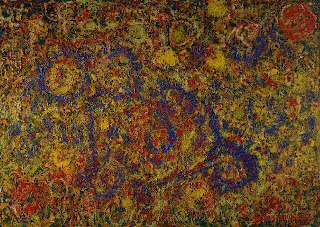
Untitled
(1957) Oil on canvas
© Collection Centre Pompidou, Dist. RMN / Philippe Migeat

Untitled
(c. 1956) Watercolor and gouache on paper
Collection of the Delaney Estate

Nativity Scene
(1961) Oil on canvas
Private collection
In James Baldwin's introduction to Beauford's 1964 exposition at the Gallery Lambert in Paris, Baldwin states that Beauford's paintings "underwent a most striking metamorphosis into freedom" during his years in Clamart. While I do not pretend to have vast knowledge of what Beauford produced during these years, I am taking the liberty of bringing you a few pieces from this period (1956-late 1961/early 1962) that I consider to be extraordinary. Enjoy!

(c. 1958-1959) Oil on paper, laid down on canvas
Aaron Galleries

(1961) Oil monotype on heavy wove paper
Photo courtesy of Swann Auction Galleries

(1957) Oil on canvas
© Collection Centre Pompidou, Dist. RMN / Philippe Migeat

(c. 1956) Watercolor and gouache on paper
Collection of the Delaney Estate

(1961) Oil on canvas
Private collection
Beauford at the Studio Museum in Harlem
The Studio Museum in Harlem presented the first retrospective exposition of Beauford's work in 1978.

The exhibit was mounted with the financial support of the Exxon Corporation and the National Endowment for the Arts and was open to the public from April 9 through July 2. It was the first of the museum's Black Masters series - major retrospectives organized with the intent to recognize the work of master African-American painters whose talent and achievements risked being ignored or forgotten. Hale Woodruff and Charles White were the second and third artists, respectively, whose works were featured in this series.
Richard A. Long, who has provided written (Richard A. Long and Beauford Delaney) and video (Richard A. Long Talks about Beauford - Part 1) tributes to Beauford for this blog, conceived of the exposition and organized the show. He was responsible for gathering Beauford's paintings in Paris and having them shipped to the U.S. for the exhibition. Over 60 paintings were shown and most of these were from Beauford's Paris years. Long presents the story of how he came to be the curator of the Studio Museum exposition in Part 2 of his video tribute to Beauford.
The photo on the cover of the catalog was taken by Ahmed Bioud, one of the seven members of the tutelle (trusteeship) that was created by the French government to take care of Beauford's affairs while he was institutionalized at Sainte Anne's Hospital in Paris. One of the portraits that Beauford painted of Bioud was among the works shown in the exhibit.
The catalog features a foreword by Mary Schmidt Campbell, then executive director of the museum; an introduction by Richard A. Long; the chapbook text "The Amazing and Invariable Beauford Delaney" by Henry Miller; and tributes by James Baldwin and Beauford's brother, Joseph. Representations of the works exposed are reproduced in color and black & white. A chronology of Beauford's life and a brief bibliography of publications that mention or feature him are also included.
The Levis Fine Arts Gallery holds three of the paintings shown in the Studio Museum in Harlem exhibition. Click here to view them.
Where to Find Beauford’s Art: Levis Fine Art Gallery
Today I am excited to announce that significant progress has been made toward the settlement of the Beauford Delaney estate! This has been a long time in coming, as 2012 marks the 33rd anniversary of Beauford's passing. It means that many of his "long, lost" paintings will finally be made available to the public for viewing and for sale.
Three such paintings can be found at Levis Fine Art Gallery in Ossining, New York:

Waning Light: Abstraction
(1963) Oil on canvas

Abstraction in Red
(1963) Oil on canvas

Abstraction #12
(1963) Oil on canvas
All three were painted during Beauford's years at the rue Vercingétorix studio and all were exhibited at the Studio Museum of Harlem retrospective mounted in 1978.
Contact Jim Levis at the gallery for pricing:
Levis Fine Art
Ossining, NY 10562 (~45 minutes from Manhattan by car)
Tel: 914-762-4880
Fax: 914-432-8699
Email: jim@levisfineart.com
Web Site: www.levisfineart.com
Three such paintings can be found at Levis Fine Art Gallery in Ossining, New York:

(1963) Oil on canvas

(1963) Oil on canvas

(1963) Oil on canvas
All three were painted during Beauford's years at the rue Vercingétorix studio and all were exhibited at the Studio Museum of Harlem retrospective mounted in 1978.
Contact Jim Levis at the gallery for pricing:
Levis Fine Art
Ossining, NY 10562 (~45 minutes from Manhattan by car)
Tel: 914-762-4880
Fax: 914-432-8699
Email: jim@levisfineart.com
Web Site: www.levisfineart.com