

From Soundscapes to Composition
George Henry’s Summer 2026 Internship with
The Beauford Delaney Project
This summer, The Beauford Delaney Project welcomed George Henry as an intern through the Wells International Foundation’s Summer 2026 Internship Program. A recent graduate of Amherst College, where they double majored in Black Studies and Computer Science, George brought to the project an unusually rich combination of interests in Black studies, technology, music production, archival reclamation, and sound.
What began as an exploration of Beauford Delaney’s relationship with New York City ultimately became something more ambitious: the creation of original musical compositions that resulted from George’s conversations with Beauford’s visual art.
The project was initially conceived as a series of soundscapes based on locations in New York City associated with Beauford’s life. George planned to visit these sites, capture their contemporary sounds, and use those recordings to evoke the environments in which Beauford lived and worked.
But, as the summer unfolded, the project evolved.
Rather than simply documenting the sounds of places connected to Beauford, George began asking what might happen when those sounds became material for musical composition. The result was the beginning of Art & Sound in Conversation, a new component of The Beauford Delaney Project that invites artists to respond creatively to Beauford’s work while drawing upon research, place, and their own artistic practices.
George’s first composition, “Washington Square I,” was inspired by Beauford’s Washington Square (1952).
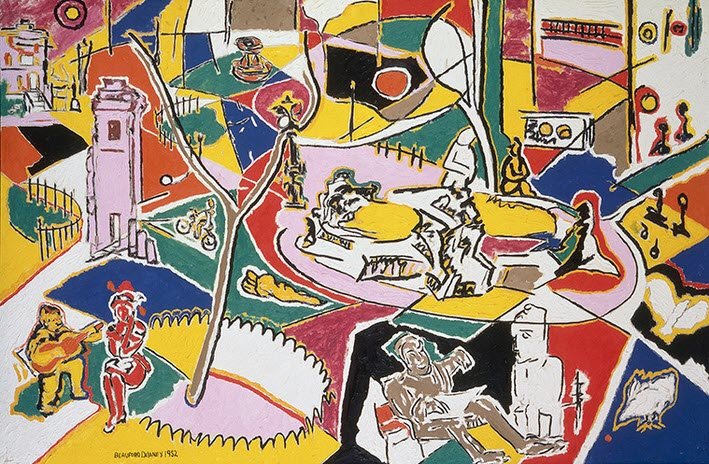
Untitled (Washington Square)
(1952) Oil on canvas
Greenville County Museum of Art
Greenville, SC
© Estate of Beauford Delaney
by permission of Derek L. Spratley, Esquire,
Court Appointed Administrator
Courtesy of Michael Rosenfeld Gallery, LLC, New York, NY
Working in Washington Square Park, they gathered environmental recordings and combined them with musical elements including guitar, piano, and strings. The resulting work does not attempt to reproduce or literally interpret Beauford’s painting. Instead, it offers another way of entering the world suggested by the painting—through movement, atmosphere, texture, and sound.
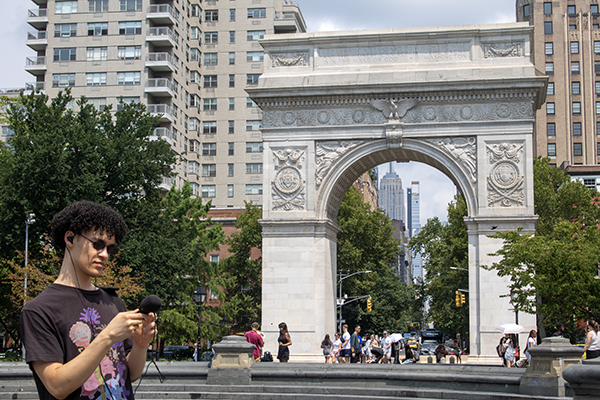
George Henry recording environmental sounds in Washington Square Park
© Wells International Foundation
The process also demonstrated one of the possibilities at the heart of The Beauford Delaney Project: that scholarship need not end with written analysis. Research can become material for artistic inquiry, and artistic inquiry can, in turn, open new ways of understanding an artist and the places that shaped their life.
Listen to “Washington Square I.”
George then created “Dark Rapture,” another original composition. It was inspired by Beauford’s iconic portrait of James Baldwin.
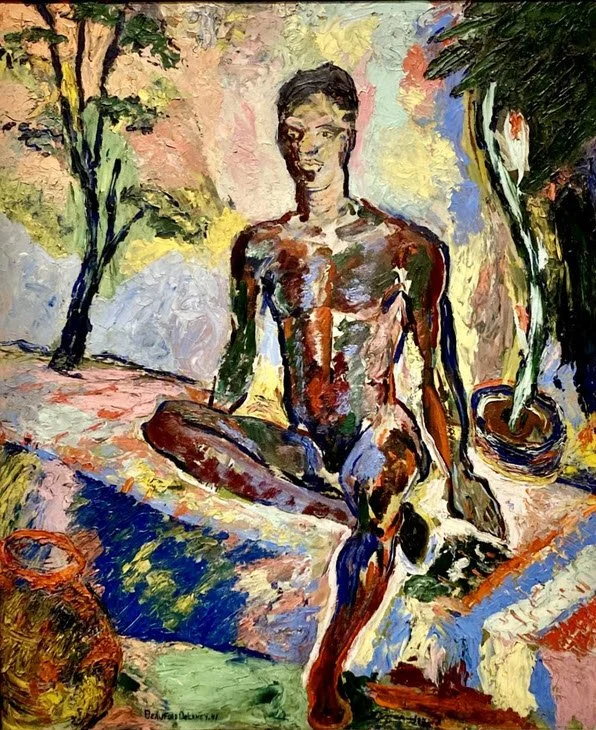
Dark Rapture
(1941) Oil on masonite
Collection of halley k harrisburg and Michael Rosenfeld, New York
© Estate of Beauford Delaney
by permission of Derek L. Spratley, Esquire,
Court Appointed Administrator
Courtesy of Michael Rosenfeld Gallery LLC, New York, NY
With this composition, George explored another set of ideas and sounds that emerged during their experimentation.
He also envisioned the environment in which Beauford painted Baldwin, based on the well-known photo of Beauford in his Greene Street studio.
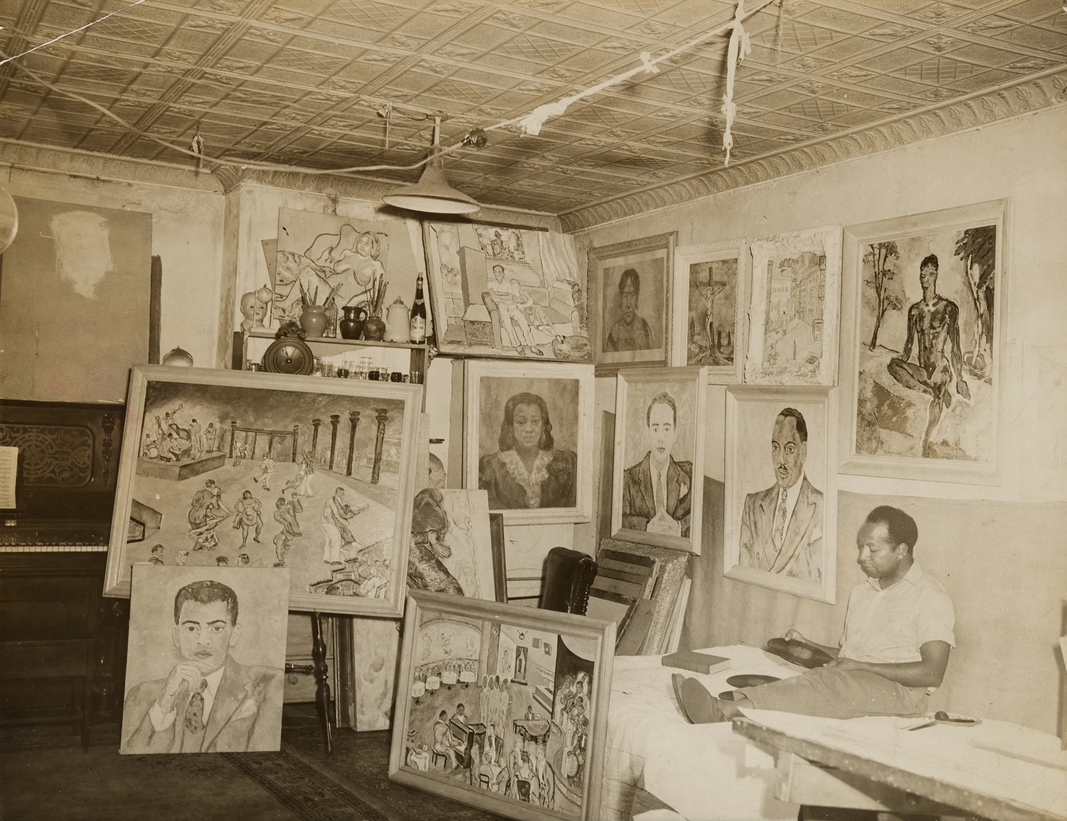
Beauford in his Greene Street studio, New York City, 1944
© Estate of Beauford Delaney
by permission of Derek L. Spratley, Esquire,
Court Appointed Administrator
Held in the Beauford Delaney Papers,
MS.3967,
Betsey B. Creekmore Special Collections and University Archives,
University of Tennessee, Knoxville.
George’s “Washington Square II” was inspired by Beauford’s 1951 depiction of Washington Square Park. For this work, they returned to ideas and sounds from both earlier compositions that they felt did not belong in those works. Some of that material found a new home in “Washington Square II.”
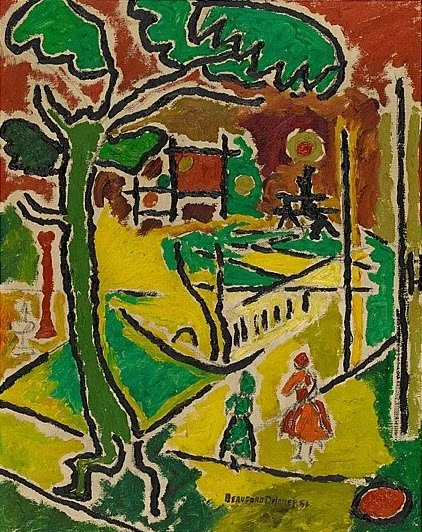
Untitled (Washington Square Park)
(1951) Oil on canvas
© Estate of Beauford Delaney
by permission of Derek L. Spratley, Esquire,
Court Appointed Administrator
Courtesy of Michael Rosenfeld Gallery, LLC, New York, NY
The second Washington Square composition expanded the project's collaborative dimension, bringing other artists and their environments directly into the creative process.
As part of the project, WIF arranged for George to visit the studio of visual artist Khalif Tarik Thompson, whose own work is deeply informed by Beauford’s life and artistic legacy. George interviewed Khalif about his work and his interest in Beauford. Khalif happened to have several visitors in the studio that day, and the conversations and laughter in the background were captured in the recording. Snippets of that ambient sound ultimately found their way into “Washington Square II,” transforming an encounter with another artist into part of the composition itself.
George also invited flutist Maya Keys to contribute an improvised flute performance to “Washington Square II.” Her contribution became part of the finished work, adding another voice to George’s exploration of the relationship between visual art, place, and sound.
Listen to “Washington Square II.”
These experiences prompted WIF to think more intentionally about how future interns might identify and engage artists, scholars, and other contributors whose knowledge, perspectives, and creative practices can enrich their work.
They also demonstrated something fundamental about interdisciplinary practice: collaboration does not always simply add another perspective to a project. Sometimes, it becomes part of the work itself.
Just as important as the finished compositions was the process through which George developed them. Throughout the summer, George faithfully maintained a weekly project journal to document the evolution of their work. Their approach combined independent research, visual observation, field recording, reflection, experimentation, and musical production. The internship became not simply an opportunity to produce finished works, but also an opportunity to test how interdisciplinary methods might generate new forms of scholarship.
The experimentation is now documented, in part, through Studio Notes, a companion component of The Beauford Delaney Project. While Art & Sound in Conversation presents the finished creative works, Studio Notes opens a window onto the creative processes behind them. Together, the two provide both the work and a way of understanding how it came into being.
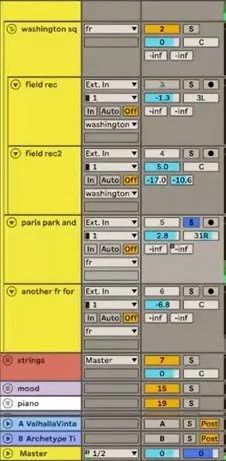
Component of Studio Notes
George’s internship demonstrated the value of giving an emerging scholar and artist room to follow an idea as it develops. The evolution from soundscapes to compositions was not simply a change in terminology. It reflected a deeper discovery about what George could contribute to the project and what the project could become.
Perhaps most significantly, George’s internship embodies a principle central to The Beauford Delaney Project: scholarship can be a generative act. Looking closely at Beauford’s paintings, researching his life, walking through places he knew, listening to those environments, and experimenting with sound did not simply produce information about Beauford. They produced something new.
That is the spirit of Art & Sound in Conversation: not to illustrate Beauford’s work, but to enter into dialogue with it.
As we prepare to bring The Beauford Delaney Project to audiences in Knoxville, George’s work offers a glimpse of what this initiative can become. It demonstrates how young scholars and artists can engage with Delaney across disciplines and generations—and how technology and creative practice can help bring archival and historical inquiry into the present.
The conversation continues.
Resonance: Interpreting Dark Rapture in Sound and Music
Dark Rapture may well be the most fascinating portrait of James Baldwin ever created.
Dark Rapture
(1941) Oil on masonite
Collection of halley k harrisburg and Michael Rosenfeld, New York
© Estate of Beauford Delaney
by permission of Derek L. Spratley, Esquire,
Court Appointed Administrator
Courtesy of Michael Rosenfeld Gallery LLC, New York, NY
In July 2025, Les Amis published an article exploring the many scholarly interpretations of Dark Rapture presented in Amy J. Elias' Speculative Light: The Arts of Beauford Delaney and James Baldwin (2025).
Today, the Wells International Foundation is presenting the first known musical interpretation of this work.
A few weeks ago, we published “Washington Square I,” an original composition and video created by George Henry for the Resonance program that we are developing as part of The Beauford Delaney Project.
“Dark Rapture” is Henry’s second original composition for Resonance: Art & Sound in Conversation.
For Henry, the painting became an exploration of the tension between distance and presence, nostalgia and melancholy, and the surreal and the human. Beginning with a warm, nostalgic piano, they layered field recordings made around Delaney's former studio at 181 Greene Street with strings, brass, choir, synths, and guitar. Familiar sounds are transformed through pitching, reverb, and other processing, creating an atmosphere that is at once grounded in everyday experience and distinctly otherworldly.
Throughout the composition, Henry was also drawn to the idea of breath and human presence. Ghostly vocal textures, environmental recordings, and a shimmering reverb that makes the music seem to breathe contribute to their effort to capture the humanity and essence of the person at the center of Delaney's surreal portrait.
Listen to them express these sentiments and more in the Studio Notes they recorded for the composition.
Henry is hard at work on their third composition, which is inspired by another of Beauford’s paintings of Washington Square.
Wadada Leo Smith and Beauford – The Red Bar
I have always said that Beauford Delaney’s spirit creates magic, evokes magic—is magic.
The story behind legendary trumpetist Wadada Leo Smith’s performance at The Drawing Center during its 2025 solo exhibition entitled In the Medium of Life: The Drawings of Beauford Delaney is a perfect example of this.
Smith and N’da Kulture, an avant-garde musical ensemble formed by Smith in the 1990s, gathered at The Drawing Center on July 25, 2025, to regale a packed house with music Smith composed after encountering Beauford’s Untitled (Red Bar) (1962).
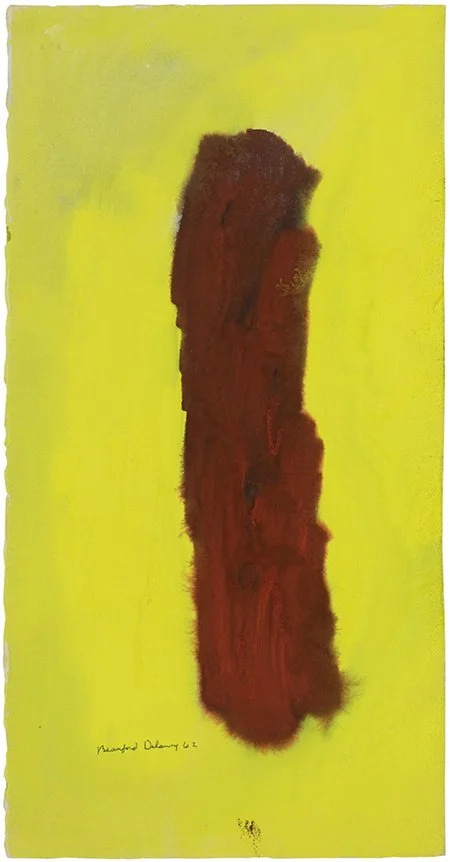
Untitled (Red Bar)
(1962) Gouache on paper
© Estate of Beauford Delaney
by permission of Derek L. Spratley, Esquire,
Court Appointed Administrator
Courtesy of Michael Rosenfeld Gallery, LLC, New York, NY
After the performance, Smith said the following about this work:
“Aimee (Good) had invited me down to see the exhibit. And I looked at everything. Then, when I got to the Red Bar, I understood something that was really clear and direct and unclouded.
“What does the Red Bar represent? It's not a bar, by the way, but it's a structure or a stroke in which any bar can be constructed and only understood by the receiver who understood...”

Wadada Leo Smith
Bimhuis Amsterdam 12 October 2014
Dirk Neven, photographer
CC-BY-2.0
Smith encountered Good when she went to see his exhibition, Kosmic Music, at the American Academy of Arts and Letters. The works shown there represented over 50 years of what Smith calls art scores—artistic representations of a performable musical language called Ankhrasmation.

Kosmic Music, The Dream, 2008
© Wadada Leo Smith
Gel, inks, and acrylic on paper
12x18”
Good heard Smith perform at the Academy and asked him to contact her. When he did, she extended the invitation for him to perform at In the Medium of Life. At the time, she was unaware that he had met Beauford in Paris 56 years before.
Smith granted Les Amis an exclusive interview during which he recounted the story of that meeting.
As part of the iconic Association for the Advancement of Creative Musicians in Chicago, he relocated to Paris with the other members of the group during the summer of 1969. Violinist Leroy Jenkins, who Smith described as a close colleague, was told that a famous painter was going to be present at a luncheon to be held at a Montparnasse restaurant. He invited Smith to come along.
Smith didn’t know anyone at the event, and his only vocal interaction with Beauford was a timid “Hello”:
“… just from observing him, I kind of got a good, beautiful vibe. We didn’t talk, and it was a brief moment in my life.
“But you know, some people believe that eye contact is the essence of meeting. I’m one of those people.”
Smith felt that the invitation to perform at The Drawing Center brought him and Beauford together again in a way that transcended time and space, and he visited In the Medium of Life several times in preparation for the performance. Though he was “only” asked to perform, he felt compelled to compose a piece for the occasion.
When he saw Untitled (Red Bar), Smith was inspired by what he described as a “huge, beautiful patch inside that big Beauford yellow.” He took out his notebook and began writing music for the performance on the spot, knowing that he would “construct several red bars” in the composition. He described them as being sonic vertical stacks that would continuously evolve and constantly shift in this patch of color. He said he added a horizontal line throughout the piece that consisted of different voices represented by the instruments played by the ensemble.
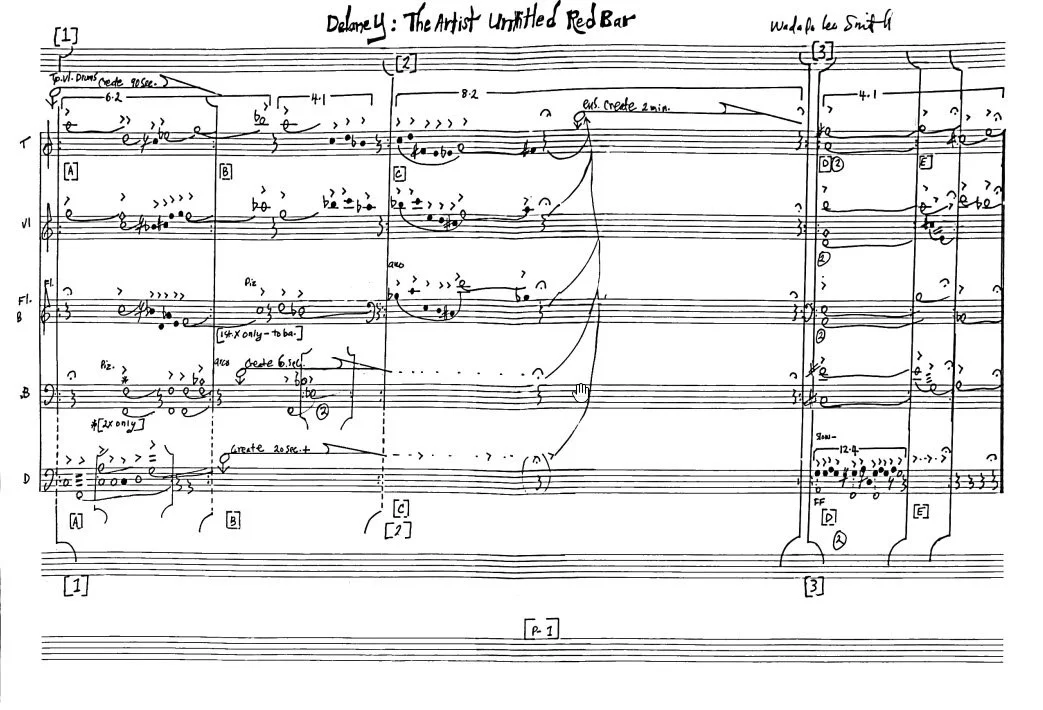
Sheet music for “Delaney: The Artist Untitled Red Bar”
Image courtesy of Wadada Leo Smith
Once he got home, he started thinking about the work and looking at it in the catalog and online. His inspiration “started to churn,” and he began reflecting on how the image could be “infused” or “submerged as a musical quality.” *
Smith said he wanted to capture “a psychological profile of [Beauford’s] creativity” with “The Artist Untitled Red Bar.” He wanted the music to be “Pure. Fresh.” So, he deliberately chose musicians with whom he had never played before and allowed only 30-35 minutes of rehearsal of the piece on the day of the performance.
The ensemble musicians—Tom Chiu on violin, Joe Fonda on double bass and concert flute, Luke Stewart on double bass, and Eli Keszler on drums—had not encountered Beauford’s work prior to the concert. The Drawing Center gave each of them an exhibition catalog after the performance.
Listen to the entire concert HERE.
*This process inspired the work that The Beauford Delaney Project is pursuing through its Resonance program.
Summer Yellow
Did you know that there is a palette of colors called “Summer Yellow”?
When I came across this during a Web search for the term, I wondered for a second whether Beauford might have used this when he painted scores of works featuring the color “yellow.”
Then I remembered that color palettes are defined digitally and that Beauford died long before the hexadecimal color system was developed.
At any rate, I thought of “Summer Yellow” as I was reflecting on the recent solar eclipse and the third canicule (extreme heat wave) that France is experiencing this season.
And of course, Beauford’s gift for painting with this color sprang to mind.
Here are some of my favorite of his abstract works in this color.

Untitled
(1961) Oil on canvas
Delaware Art Museum
Wilmington, Delaware, USA
© Estate of Beauford Delaney
by permission of Derek L. Spratley, Esquire,
Court Appointed Administrator
Courtesy of Michael Rosenfeld Gallery, LLC, New York, NY
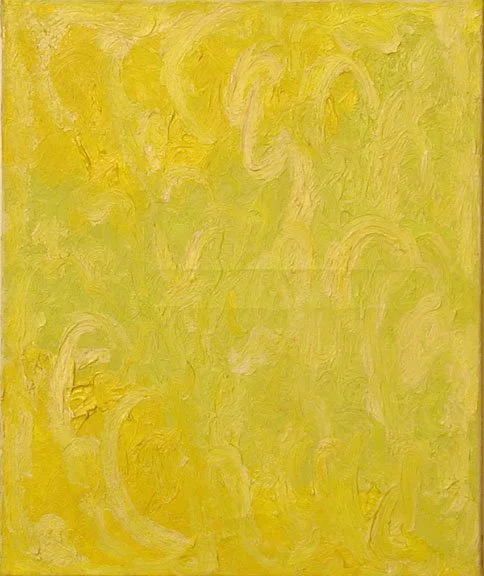
Untitled (Yellow series)
(1962) Oil on linen
Annotated in verso
© Estate of Beauford Delaney,
by permission of Derek L. Spratley, Esquire,
Court Appointed Administrator
Courtesy of Michael Rosenfeld Gallery, LLC, New York, NY
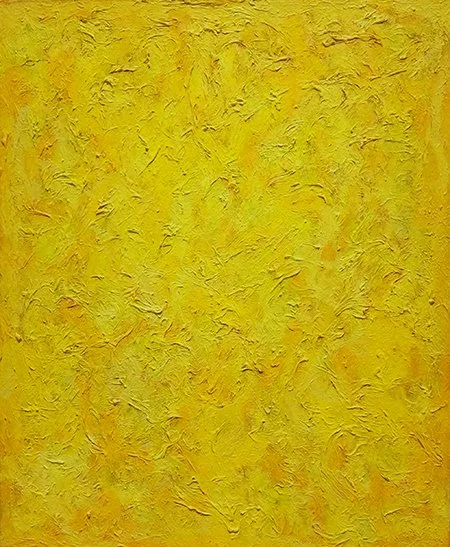
Moving Sunlight
(1965) Oil on canvas
Knoxville Museum of Art, 2018 acquisition
Knoxville, Tennessee, USA
© Estate of Beauford Delaney
by permission of Derek L. Spratley, Esquire,
Court Appointed Administrator
Courtesy of Michael Rosenfeld Gallery, LLC, New York, NY
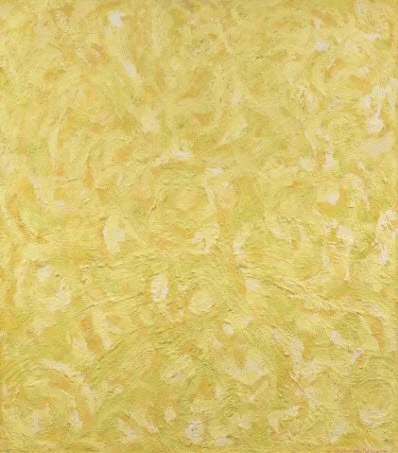
Untitled
(circa 1960) Oil on canvas
Signed at lower right and on back of canvas
© Estate of Beauford Delaney,
by permission of Derek L. Spratley, Esquire,
Court Appointed Administrator
Courtesy of Michael Rosenfeld Gallery, LLC, New York, NY

Untitled, Paris
(1967) Oil on panel
Signed lower left
Counter-signed, dated and located on the reverse
© Estate of Beauford Delaney
by permission of Derek L. Spratley, Esquire,
Court Appointed Administrator
Courtesy of Michael Rosenfeld Gallery, LLC, New York, NY
Washington Square I—Launching Resonance: Art and Sound in Conversation
Untitled (Washington Square)
(1952) Oil on canvas
Greenville County Museum of Art
Greenville, SC
© Estate of Beauford Delaney
by permission of Derek L. Spratley, Esquire,
Court Appointed Administrator
Courtesy of Michael Rosenfeld Gallery, LLC, New York, NY
One of the aspirations of The Beauford Delaney Project is to preserve and deepen our understanding of Beauford’s extraordinary artistic legacy.
Another is to explore how that legacy continues to inspire new acts of creativity.
Today, we are delighted to share an important milestone toward that goal.
This week, we published “Washington Square I,” an original composition and video by George Henry. It is the first musical contribution to Resonance: Art and Sound in Conversation, an ongoing series of The Beauford Delaney Project that explores contemporary creative responses to Beauford's work.
The “Art and Sound” component of the Resonance series was markedly influenced by Wadada Leo Smith, whose reflections on composing music inspired by one of Beauford's paintings helped shape our thinking about how artists might enter into sustained dialogue with his work. Through Resonance, The Beauford Delaney Project provides an ongoing framework for that kind of engagement, inviting musicians to contribute both original compositions and reflections on their creative process to a growing digital archive.
Henry, a recent graduate of Amherst College with degrees in Black Studies and Computer Science, is the first musician to contribute to this initiative. After spending time with Beauford's paintings, they chose one of Beauford’s Washington Square works as the inspiration for their composition. (Like many subjects that captivated Beauford throughout his career, he painted Washington Square multiple times.)
Instead of seeking to translate the painting into music, “Washington Square I” is an artistic response to it—a conversation across disciplines in which music and painting retain their own voices while enriching one another.
Documenting Creative Practice
An important aspect of Resonance is that it documents not only the finished work but also the creative journey that led to it.
Alongside “Washington Square I,” Henry recorded a companion Studio Notes video and wrote a narrative in which they reflect on their process, discuss their encounter with Beauford's painting, and offer viewers a glimpse into the development of the composition.
By preserving these reflections alongside the music, The Beauford Delaney Project is creating an archive of creative practice as well as creative work. We anticipate that these conversations will become valuable resources for future artists, scholars, educators, and anyone interested in understanding how Beauford continues to inspire new generations.
This commitment to documenting process reflects a broader vision for the project. Whether through music, creative writing, or other modes of inventive collaboration, Resonance seeks to illuminate not only what artists create, but also how they think, observe, question, and respond.
A Growing Archive
The publication of “Washington Square I” follows closely on the release of original writings by students from Teens of Color Abroad, created during our July 2026 workshop at the Leo Marchutz School of Painting and Drawing in Aix-en-Provence. These works are the inaugural contributions to our Resonance: Art and Writing in Conversation series.
Together, these contributions mark the beginning of a living archive of contemporary creative responses to Beauford's work—an archive that will continue to grow as musicians, writers, scholars, and artists from diverse disciplines add their own voices to the conversation.
Henry is already at work on a second composition inspired by another of Beauford Delaney's Washington Square paintings, continuing an exploration of a subject that fascinated Beauford himself.
We are deeply grateful to Henry for helping inaugurate this new chapter of Resonance: Art and Sound in Conversation. Their generosity, curiosity, and artistic imagination have helped establish a model for the kinds of interdisciplinary conversations we will nurture in the years ahead.
Read Henry’s narrative about their creative process HERE.
And stay tuned as The Beauford Delaney Project continues to build a living archive of contemporary works created through thoughtful reflection and dialogue with Beauford's art.
Resonance Begins: Young Writers in Conversation with Beauford
When ten New York City high school students traveled to southern France this summer, they didn't simply learn about Beauford—they entered into a conversation with his art.
The illustrated poems and narratives and the recorded recitations created during Teens of Color Abroad’s (TOCA’s) two-week excursion to Aix-en-Provence mark an important milestone for The Beauford Delaney Project. They are the first contributions to Resonance, a growing collection of creative responses inspired by Beauford's life and work.
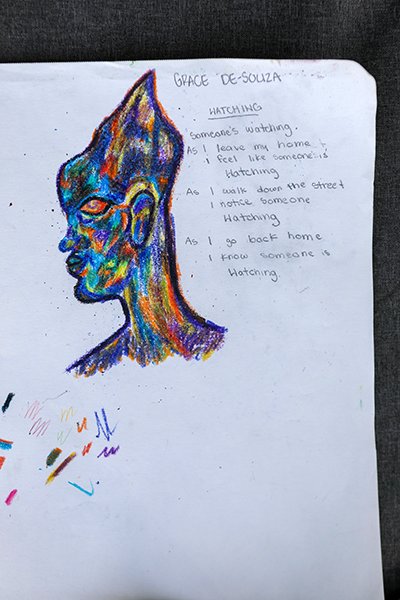
“Watching” and rendition of The Eye
Text and illustration by Grace De-Souza
Image courtesy of Teens of Color Abroad
All rights reserved*
When I first envisioned The Beauford Delaney Project, my conversations with colleagues and collaborative partners always centered on undergraduate, graduate, and postdoctoral students engaging with Beauford's life and work.
But when I was asked if I wanted to provide an opportunity for TOCA youth to experience Beauford’s magic and introduce him to the Leo Marchutz school in the process, I happily accepted the invitation.
This experience broadened my vision for the project. The thoughtfulness of the students' observations, the originality of their poems and narratives, and the confidence with which they shared their work convinced me that high school students—and other community groups of similar age—also have an important place in this creative conversation.
One discovery was especially meaningful. When TOCA's documentarian later shared photographs of the students' illustrated writings, I noticed that two students had chosen to write about paintings that had been introduced only during the orientation session before the trip to Aix-en-Provence - Can Fire in the Park and Untitled (oil on raincoat fragment).
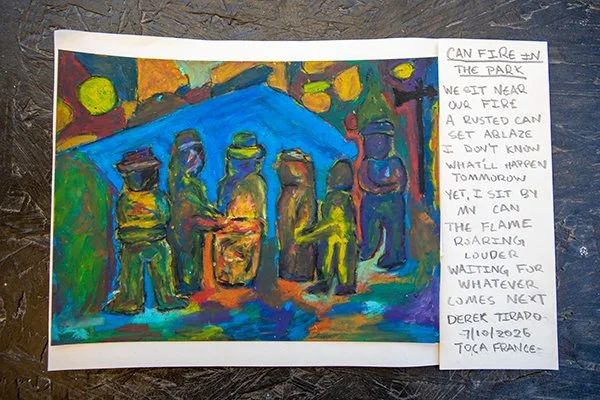
Can Fire in the Park
Text and illustration by Derek Tirado
Image courtesy of Teens of Color Abroad
All rights reserved*

“Strokes”inspired by Untitled (oil on raincoat fragment)
Text and illustration by Alyssa Quiles
Image courtesy of Teens of Color Abroad
All rights reserved*
I was equally delighted to discover that several students had created works inspired by images in the Resonance of Form and Vibration of Color exhibition catalog they received at the conclusion of the workshop.
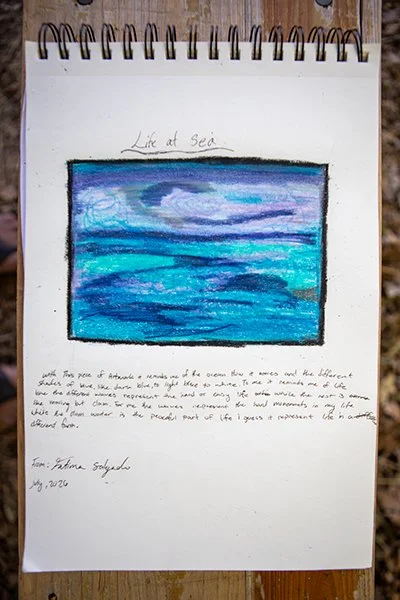
“Life at Sea” inspired by Grèce
Text and illustration by Fatima Salgado
Image courtesy of Teens of Color Abroad
All rights reserved*
These unexpected choices indicated that the students' engagement with Beauford's art extended beyond the paintings we discussed together that afternoon.
For me, they also affirmed that creative encounters with his work can continue long after a workshop ends.
Resonance has found its first voices!
Explore the photo gallery for the 2026 Writing from Art workshop HERE.
*Reproduction or alteration without prior written consent is strictly prohibited.
A Look Back at Beauford-Inspired Verse
As poets gather at the UT Downtown Gallery in Knoxville for an ekphrastic poetry reading inspired by the Degrees of Separation exhibition, I am reminded that long before the launch of The Beauford Delaney Project, the Les Amis blog has featured poems and essays by writers who found inspiration in Beauford's life and art.
In celebration of today's poetry reading in Knoxville, I’m sharing links to earlier posts that feature poems and images of the works that inspired them.
Click on the links to enjoy the poetry and associated narratives.
Cid Corman’s Poetic Tribute to Beauford
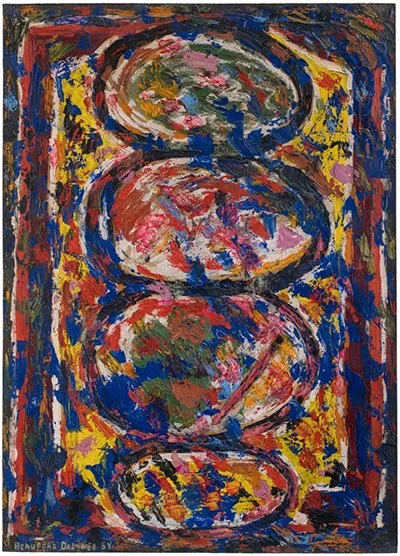
Chartres
(1954) Oil on paperboard
© Estate of Beauford Delaney,
by permission of Derek L. Spratley, Esquire,
Court Appointed Administrator
Courtesy of Michael Rosenfeld Gallery, LLC, New York, NY
Life
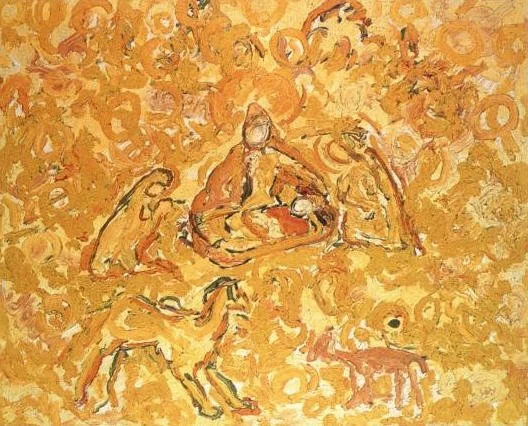
Nativity Scene
(1961) Oil on canvas
© Estate of Beauford Delaney
by permission of Derek L. Spratley, Esquire,
Court Appointed Administrator
Courtesy of Michael Rosenfeld Gallery, LLC, New York, NY
Grievances from a Soul of Sorrow
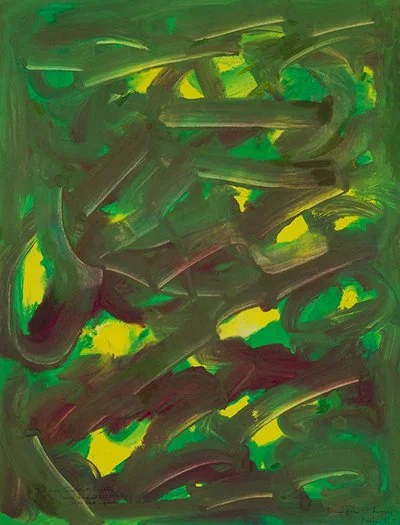
Untitled
(1962-1964) Gouache on paper
Signed and dated "Paris, 1964"
Inscribed: "for Amy(?) Erica + Tully, Paris August 20, 1962, with fond regards"
© Estate of Beauford Delaney,
by permission of Derek L. Spratley, Esquire,
Court Appointed Administrator
Courtesy of Michael Rosenfeld Gallery, LLC, New York, NY
Sunlight Drifters
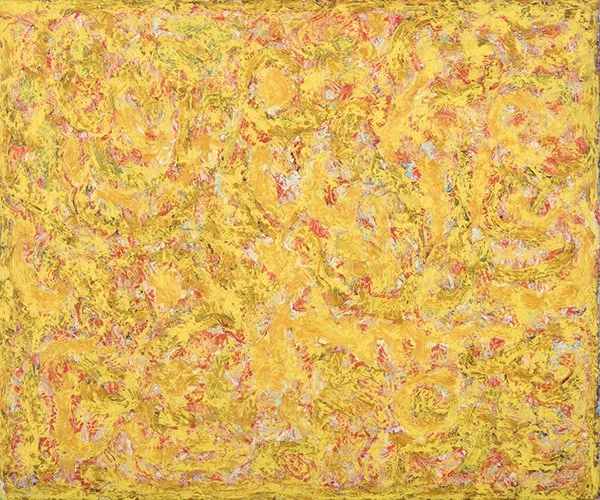
Untitled
(1966) Oil on canvas
© Estate of Beauford Delaney
by permission of Derek L. Spratley, Esquire,
Court Appointed Administrator
Courtesy of Michael Rosenfeld Gallery, LLC, New York, NY
Woman in an Abstract Field - After Beauford Delaney
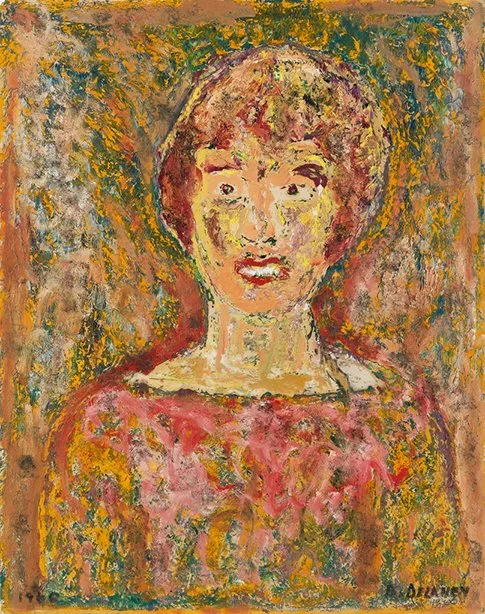
Untitled (Woman in an Abstract Field)
(1966) Oil monotype, with hand-painted additions in oil,
on cream wove paper
Image courtesy of Swann Auction Galleries
© Estate of Beauford Delaney
by permission of Derek L. Spratley, Esquire,
Court Appointed Administrator
Courtesy of Michael Rosenfeld Gallery, LLC, New York, NY
Teens of Color Abroad Discover Beauford
Teens of Color Abroad (TOCA) is a U.S. nonprofit organization dedicated to offering students of color immersive global language learning and cultural exchange opportunities. Through four distinct programs, they are changing the world one travel experience at a time.
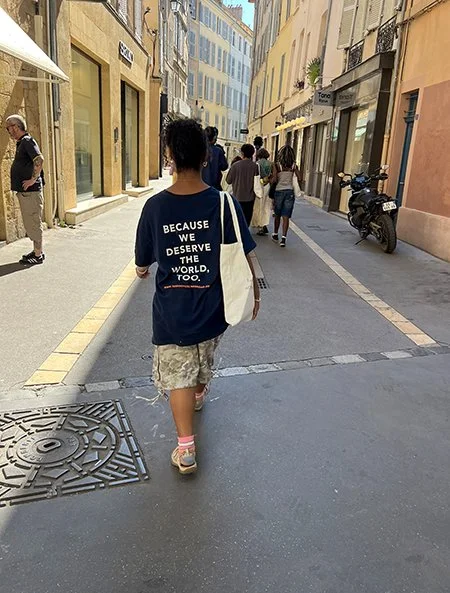
Student wearing a TOCA t-shirt in Aix-en-Provence
© Entrée to Black Paris
The Wells International Foundation (WIF) and TOCA collaborated for the first time this summer through WIF’s Entrée to Black Paris Cultural Awareness Program. Entrée to Black Paris (ETBP) presented a creative writing workshop for ten students from TOCA’s two-week high school study abroad program, using Beauford Delaney’s life and artwork as their creative anchor.
And WIF is providing a dedicated space for the students’ writing and artwork on The Beauford Delaney Project’s digital hub.
TOCA students participated in a program entitled “Painting in Provence: A Seminar in Vision” that is offered by the Leo Marchutz School of Painting & Drawing in Aix-en-Provence, France.
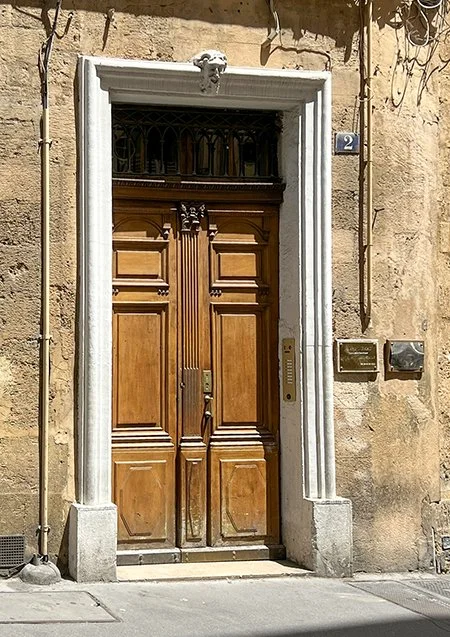
Entrance to the Leo Marchutz School of Painting and Drawing
© Entrée to Black Paris
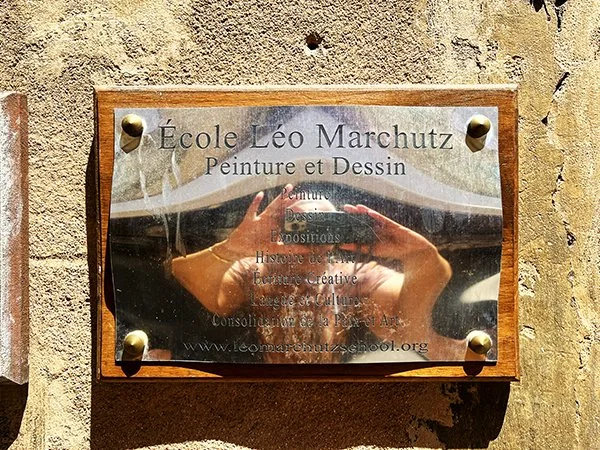
Plaque for Leo Marchutz School of Painting and Drawing
© Entrée to Black Paris
Prior to their arrival in Aix, ETBP provided students with an orientation exercise that gave an overview of Beauford’s life story and introduced them to his work. The students responded to questions about three selected paintings and works on paper to prepare them for the creative writing they were to undertake during their time abroad.
The day before the workshop, Leo Marchutz Board President and Director of Artistic Studies Alan Roberts taught the students a lesson on color theory during which he talked about Beauford.

Color Theory session with Director of Artistic Studies Alan Roberts
Image courtesy of Teens of Color Abroad (TOCA)
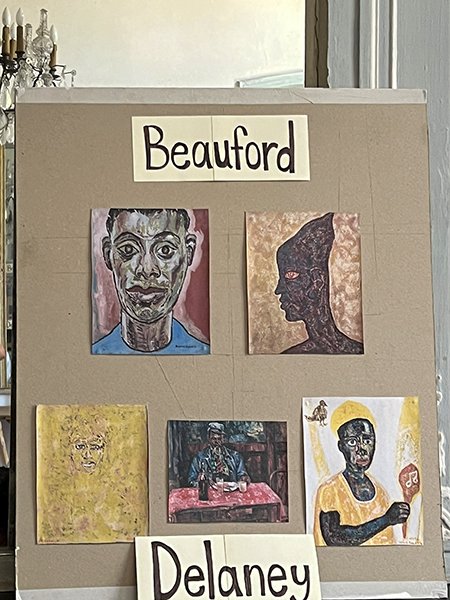
Display of several Beauford Delaney works
© Entrée to Black Paris
Dr. Monique Y. Wells delivered the “Writing from Art” workshop the following day. She discussed the orientation exercise with the students and gave a brief presentation that
described why she is so passionate about Beauford,
demonstrated the evolution of Beauford’s artistic practice, and
introduced the four works of art that were to serve as the inspiration for their creative writing.
Each student selected one of the four artworks to spark their creativity. Once their pieces were written, everyone took turns presenting their work to the entire group.
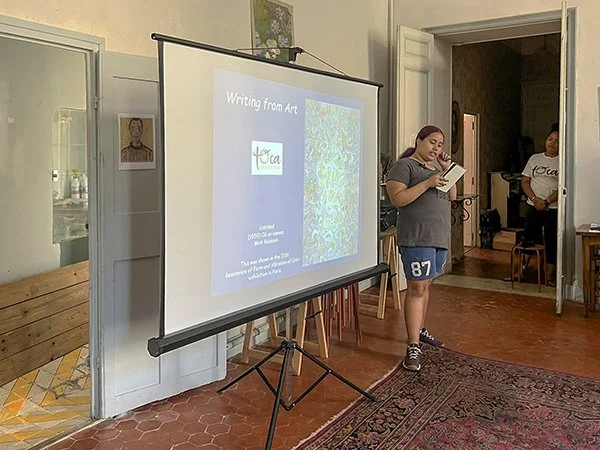
Alyssa Quiles on Untitled (1959)
© Entrée to Black Paris
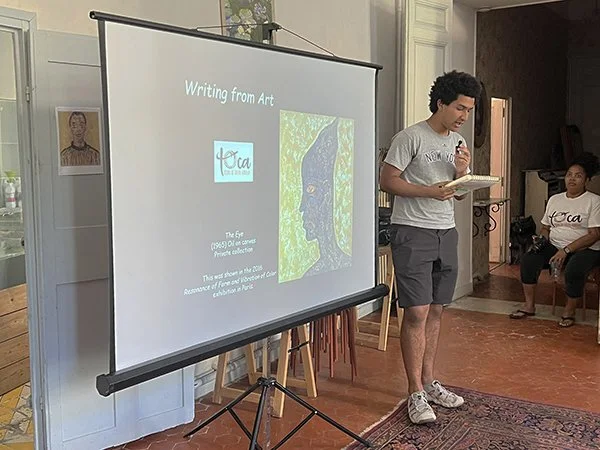
Derek Tirado on The Eye (1965)
© Entrée to Black Paris
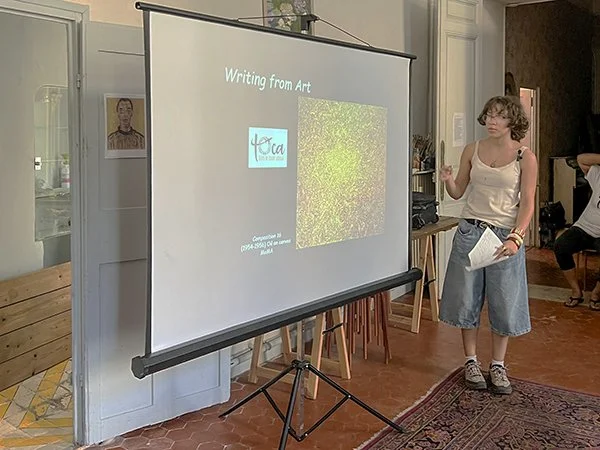
Annabella Hernandez Lopez on Composition 16 (1954-1956)
© Entrée to Black Paris
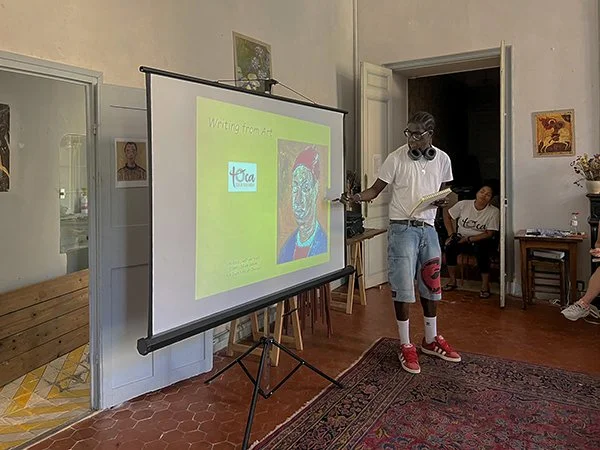
Saliou Diop on Untitled (Self-portrait) (1944)
© Entrée to Black Paris
Participants in the Marchutz School’s five-week “Painting in Provence: Seminar in Vision” program for adults and adults from TOCA and the Marchutz school—including Director Alan Roberts—also participated in the workshop. They were just as inspired as TOCA students and presented their writing to the group as well.
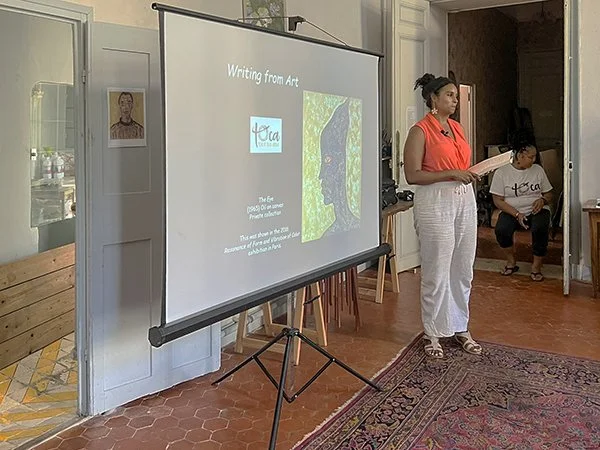
TOCA Director of Global Programs Miriam Piña on The Eye (1965)
© Entrée to Black Paris
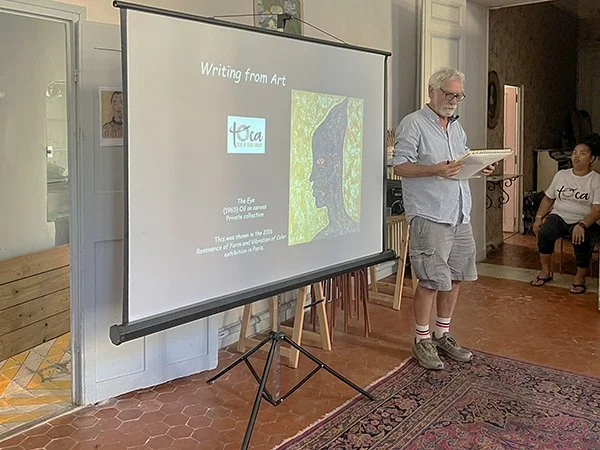
Leo Marchutz Director Alan Roberts on The Eye (1965)
© Entrée to Black Paris
After the workshop, Dr. Wells distributed copies of the catalog from the Beauford Delaney: Resonance of Form and Vibration of Color exhibition that WIF mounted in Paris in 2016. Some students were inspired to write new creative pieces about other works of art from that show.
The students are now immortalizing their words on drawing paper, paired with their own illustrations. These pieces, along with videos of the students reciting their poetry and prose, will soon be available for viewing on The Beauford Delaney Project’s digital hub.
WIF views this inspiring collection as the true kickoff to the Project’s mission: to establish a vibrant, multimedia platform for research and creative projects inspired by Beauford’s legacy.
Remembering Ella
Ella Fitzgerald died just over 30 years ago on June 15, 1996.
She was one of Beauford’s favorite performers, and he honored her with an extraordinary portrait.
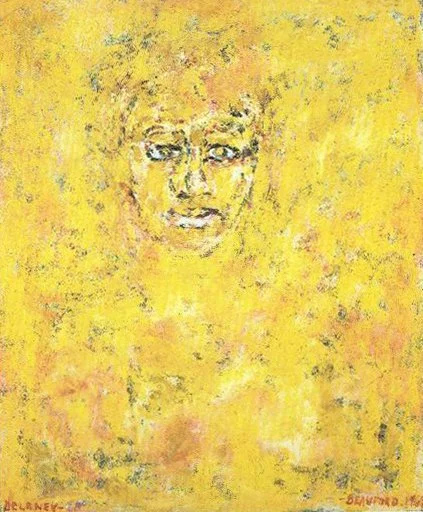
Portrait of Ella Fitzgerald
(1968) Oil on canvas
Permanent collection of the SCAD Museum of Art, Savannah
Gift of Dr. Walter O. and Mrs. Linda J. Evans
© Estate of Beauford Delaney
by permission of Derek L. Spratley, Esquire,
Court Appointed Administrator
Courtesy of Michael Rosenfeld Gallery, LLC, New York, NY
Descriptions of the painting invariably include commentary on Beauford’s use of the color “yellow” to capture Fitzgerald’s essence.
Many have intrigued me.
I am sharing excerpts from a few of these below.
It would have been easy for Delaney to create a standard portrait of Lady Ella, but that would have been an incomplete rendering of the power and the light she made possible through her voice and her music …. The way in which the yellow dominates the painting, almost like the way light pushes itself into a dark room to illuminate it, is just the way Fitzgerald’s voice moves into the ears and hearts of her listeners.
I think it is this dynamism of Fitzgerald’s voice and message that Delaney wished to capture in his painting of her. His use of the color yellow is not solely about an obsession with light, but also an opportunity to look into the internal landscape of a person, and he takes full advantage of this opportunity with Ella.Sojourner Ahébee, “A New Sight: Light & the Color Yellow in Beauford Delaney’s Portraits”
********************It is often said, and is written on the SCAD Museum website entry for Delaney’s Portrait of Ella Fitzgerald, that yellow to Delaney meant “illumination and healing.” But I think there may be some difference in the yellows he uses when they run through and around a face, and when they are in one of the purely abstract paintings. When I look at the yellows in which there is a face, I often feel that I am squinting, that there are edges and injuries. It is a yellow connected to bodies, browns, roses, greens, not only to light and landscape.
Rachel Cohen, “Beauford Delaney and Ella Fitzgerald: In Yellow”
********************Ella’s portrait is one of the more abstract ones Beauford created during his career. This is not a painting where the main goal was to capture her likeness. Instead, Beauford created a visual representation of the power and light that existed as a result of her music. Only certain details of her face are visible; the rest is shrouded in clouds of yellows and oranges. Ella Fitzgerald was a force – she illuminated any room her voice was being projected in. Beauford captured the feelings of chaos and tenderness you feel simultaneously when listening to her.
Maija Brennan, Beauford Delaney: A Study in Portraiture
********************One thing I did not know about Ella Fitzgerald was that she was horribly shy and extremely meek when it came to recognizing her own talent ….
That blew me away. I look at this painting of Beauford Delaney and listen to Ella Fitzgerald with this new knowledge of her shyness and hear something very different in her music …. I have a deeper, more profound appreciation for what Delaney conveys in this portrait of her.
Colony Little, “Artist a Day Challenge No. 24: Beauford Delaney x Ella Fitzgerald”
********************He depicts the First Lady of Song not in sweaty performance … but in a state of high-priestess contemplation—”the quiet place” from which, as [Toni] Morrison has said, all art truly emerges.
Robert O’Meally, “Baldwin and Delaney Tell the Story Using Yellows and the Blues” in Speculative Light: The Arts of Beauford Delaney and James Baldwin
Christie’s Sells Beauford’s Portrait of Peter Eyre
Christie’s London offered Beauford’s portrait of Peter Eyre for sale at its Post-War to Present sale on June 25, 2026.
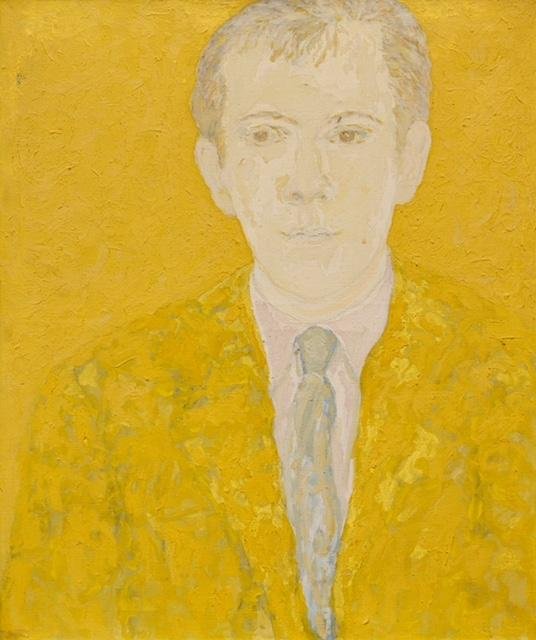
Portrait of a Young Man
(1960) Oil on canvas
© Estate of Beauford Delaney
by permission of Derek L. Spratley, Esquire,
Court Appointed Administrator
Courtesy of Michael Rosenfeld Gallery, LLC, New York, NY
The estimated sale price was 60,000£ – 80,000£.
The work sold for 101,600£, including a 27% buyer’s premium.
In Les Amis’ interview with Eyre (December 2025), we learned that the painting hung in the office of gallerist Paul Facchetti during Beauford’s 1960 solo exhibition at the gallery.
We have published a couple of articles about this exhibition:
Beauford’s Solo Show at the Paul Facchetti Gallery
A Look at Two Beauford Delaney 1960 Abstracts
Beauford’s predominent use of yellow in the Eyre portrait reminds me of the closing words of Richard J. Powell’s essay entitled “The Color of Ecstasy,” which he included in the catalog for the 2002-2003 itinerant exhibition The Color Yellow:
Beauford Delaney’s artistic preoccupation with the color yellow is governed by its capacity to illumine …. Delaney sought in his work and throughout his entire life to experience that state of perfect bliss in nature and society, to reach that nearly unattainable note or apogee of emotional discernment in the arts, and to know that ecstatic feeling of an “excessive and deliberate joy” in life. Oddly enough, by placing himself and his audience in his dense and luxurious yellow zone, he realized these grand ambitions.
Christie’s to Auction Beauford’s Portrait of Peter Eyre
In December 2025, Les Amis published an extensive article about actor Peter Eyre and the portrait Beauford painted of him in 1960:
Beauford’s Portrait of Peter Eyre
Peter Eyre
(1960) Oil on canvas
© Estate of Beauford Delaney
by permission of Derek L. Spratley, Esquire,
Court Appointed Administrator
Courtesy of Michael Rosenfeld Gallery, LLC, New York, NY
On June 25, 2026, Christie’s is auctioning this work during its Post-War to Present sale. They have listed the title as Portrait of a Young Man.
Beauford signed the work and wrote his Clamart address on the rear of the canvas.
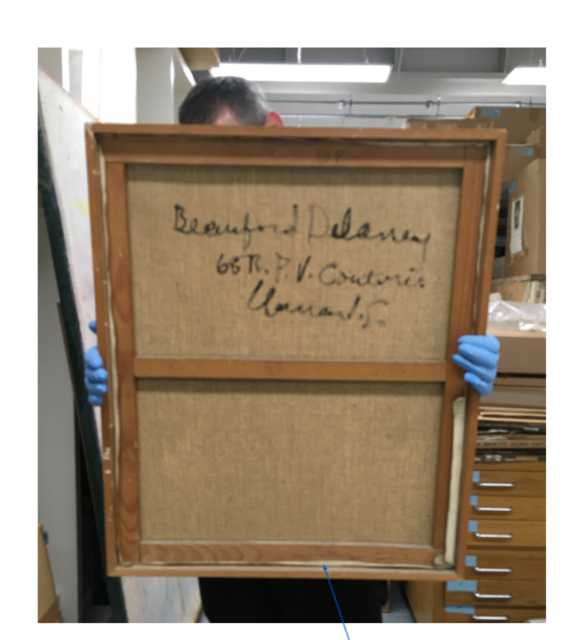
Rear of Peter Eyre portrait
Image courtesy of Peter Eyre
Aside from the indication that Eyer’s mother, Dorothy Pelline Eyre, acquired the painting directly from Beauford and that Peter inherited it from her (“Thence by descent to the present owner”), the Web page provides no narrative text to describe the work or any relationship between the Eyres and Beauford.
The estimated sale price is 60,000£ – 80,000£.
Christie’s notes that an Artist’s Resale Right applies to its sale.
Click HERE to view their Web page for this work.
Beauford Delaney: Degrees of Separation
From June 5 through August 8, 2026, the University of Tennessee (UT) Downtown Gallery is showing Beauford Delaney: Degrees of Separation—an exhibition that revisits Beauford’s work and worlds through the lens of the relationships he forged from his hometown of Knoxville to Paris, the last place he called home.
Curated by Derek Spratley, Esquire, Court Appointed Administrator of the Beauford Delaney estate, and Mike Berry, Curator at the UT Downtown Gallery, the show explores “the deeply reciprocal influence the artist had on those he encountered throughout his travels across the domestic and international stage.”
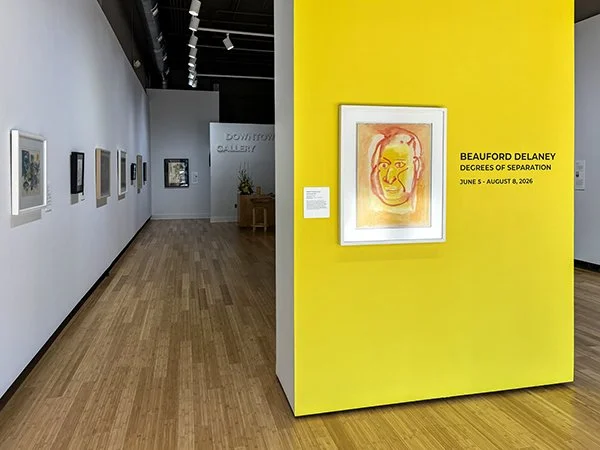
Entrance to Beauford Delaney: Degrees of Separation
Image courtesy of the Estate of Beauford Delaney
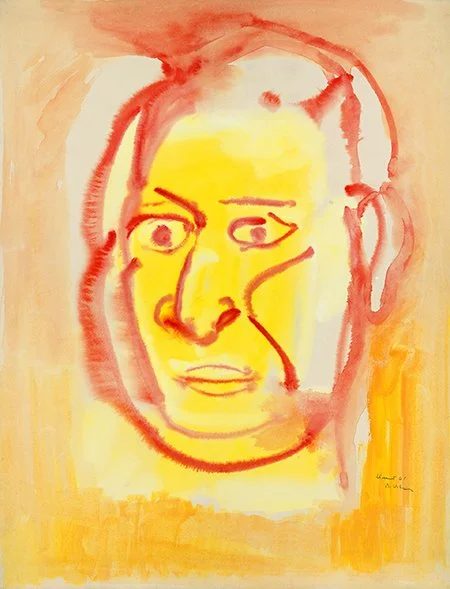
CLAMART ‘61
Private Collection
© Estate of Beauford Delaney
by permission of Derek L. Spratley, Esquire,
Court Appointed Administrator
Courtesy of Michael Rosenfeld Gallery, LLC, New York, NY
The exhibition opened on June 5, 2026 at 6:30 PM with a First Friday event called Gallery Talk. Attendees listened to remarks made by curators Spratley and Berry as well as Dr. Mary Campbell, Associate Professor of Art History at UT Knoxville and Stephen Wicks, Barbara W. & Bernard E. Bernstein Curator at the Knoxville Museum of Art.
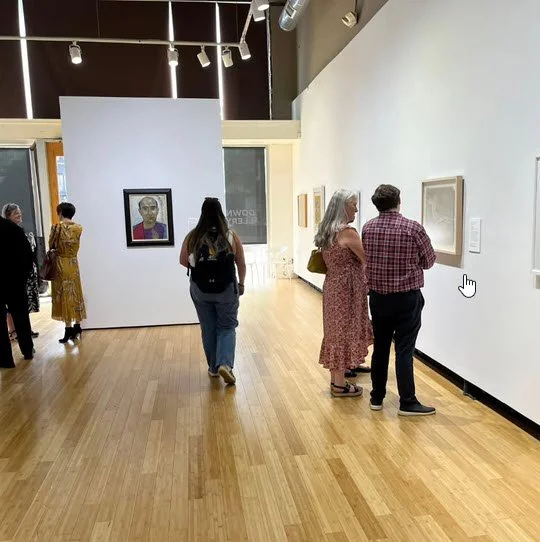
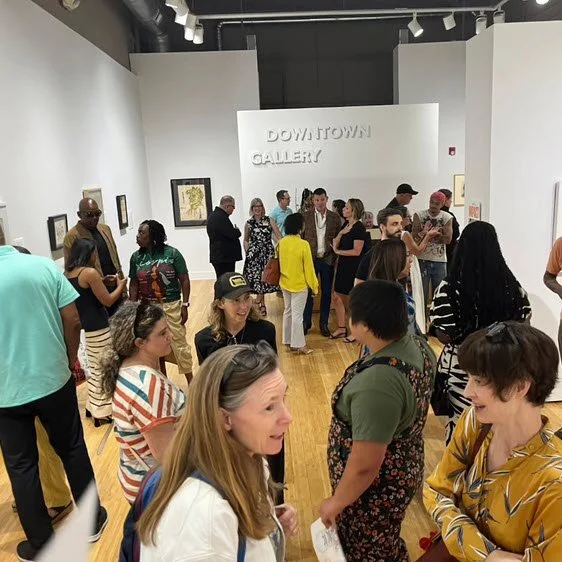
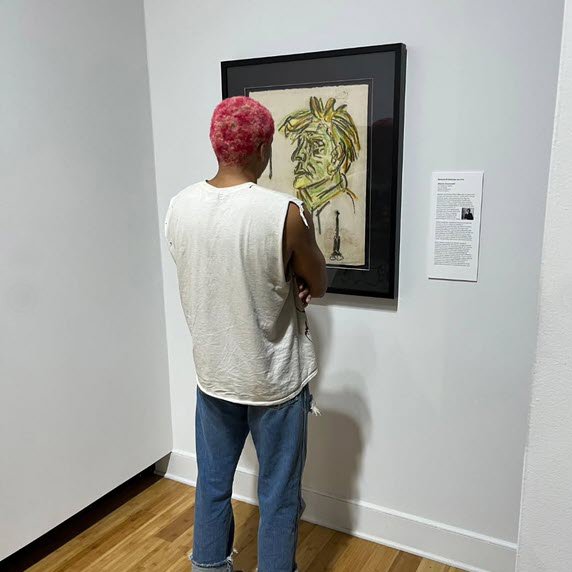
Opening reception for Beauford Delaney: Degrees of Separation
Images courtesy of the UT Downtown Gallery
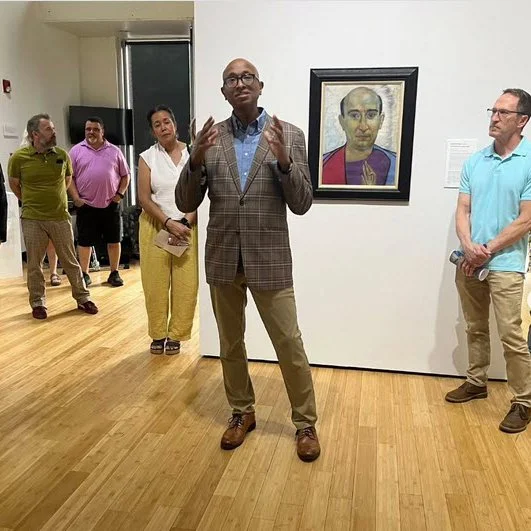
Derek Spratley, Esquire
Court Appointed Administrator of the Beauford Delaney estate
Image courtesy of UT Downtown Gallery
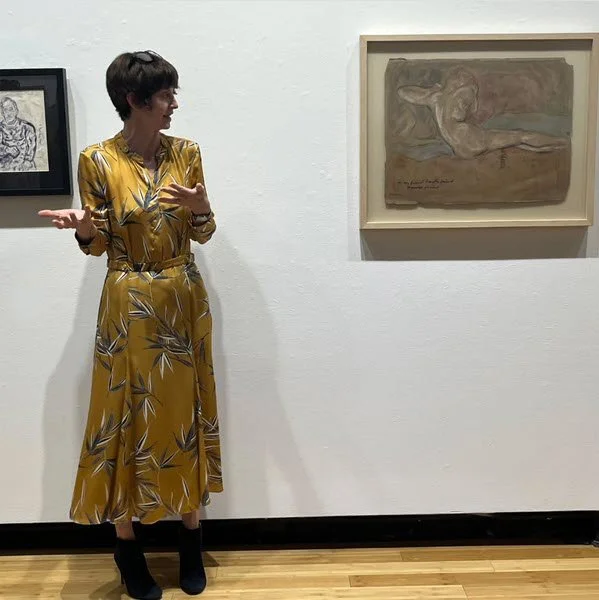
Dr. Mary Campbell
Associate Professor of Art History at UT Knoxville
Image courtesy of UT Downtown Gallery
Portraits of three of the most important people in Beauford’s life are displayed in the exhibit:
James Baldwin,
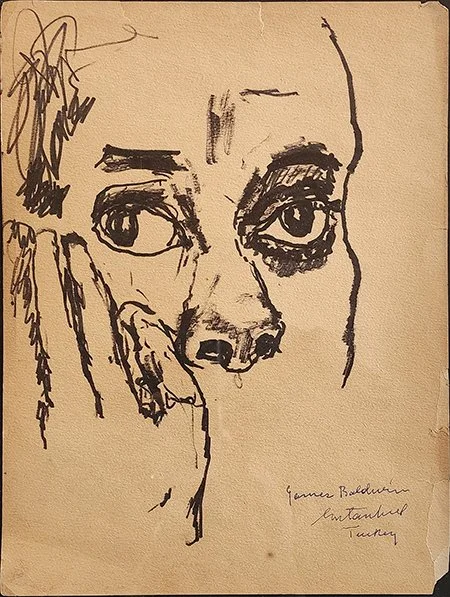
James Baldwin, Istanbul, Turkey
(ca. 1965) Ink on paper
Private Collection
© Estate of Beauford Delaney,
by permission of Derek L. Spratley, Esquire,
Court Appointed Administrator
Courtesy of Michael Rosenfeld Gallery, LLC, New York, NY
Dante Pavone,
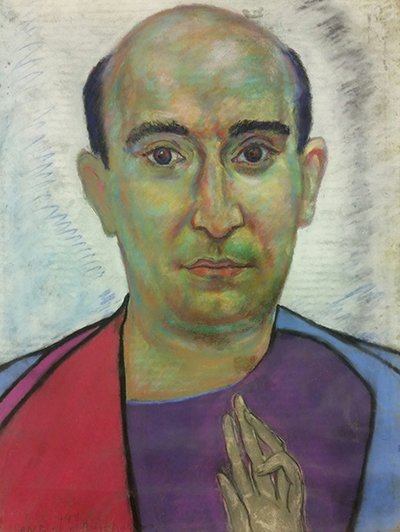
Dante Pavone
(1948) Pastel on paper
Knoxville Museum of Art
© Estate of Beauford Delaney,
by permission of Derek L. Spratley, Esquire,
Court Appointed Administrator
Courtesy of Michael Rosenfeld Gallery, LLC, New York, NY
and Henry Miller.
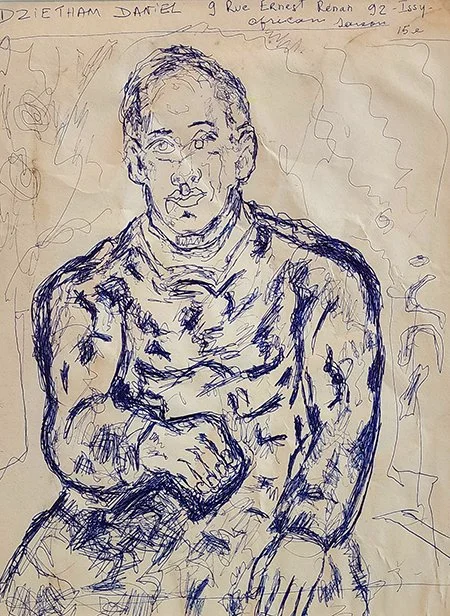
Sketch of Henry Miller
Ink on paper
Private Collection
© Estate of Beauford Delaney
by permission of Derek L. Spratley, Esquire
Court Appointed Administrator
Courtesy of Michael Rosenfeld Gallery, LLC, New York, NY
In addition to works by Beauford, the exhibition features works by friends and paintings and drawings from the Ewing Gallery Permanent Collection by Beauford’s brother, Joseph Delaney.
On Saturday, July 25, the gallery will host an afternoon of exphrastic poetry (poetry inspired by visual art). Curated by Dr. Natalie Graham, Inaugural Poet Laureate, Orange County, CA 2022-2024, the performance will feature readings by award-winning local and international poets.
As part of Downtown Knoxville’s First Friday Art Walk, the UT Downtown Gallery is open until 9 PM on the first Friday of each month.
UT Downtown Gallery
106 S. Gay Street
Knoxville TN 37902
Telephone: 865-673-0802
HOURS
W-F: 11am – 6pm
SAT: 10am – 3pm
FIRST FRIDAY: 2pm-9pm
Beauford’s Portrait of Gaylord
The Worcester Art Museum (WAM) holds Beauford's Portrait of Gaylord in its permanent collection.
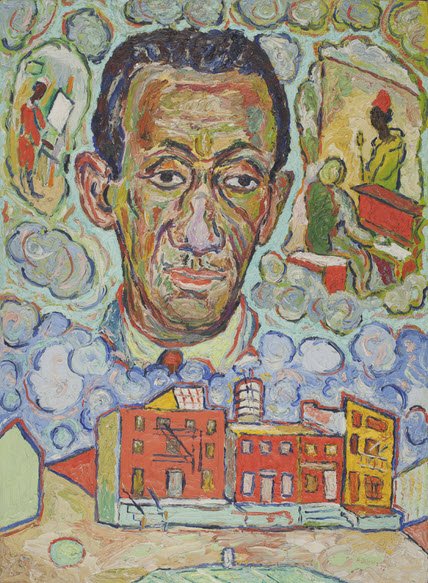
Portrait of Gaylord
(1944) Oil on canvas mounted on artist board
© Estate of Beauford Delaney
by permission of Derek L. Spratley, Esquire,
Court Appointed Administrator
Courtesy of Michael Rosenfeld Gallery, LLC, New York, NY
Central to the museum's mission are its collaborations with many of the city’s colleges and universities, serving over 35,000 students annually. It uses its art collection to support the colleges’ curricula and engage students, faculty, and staff in planning and implementing projects that benefit all audiences.
In the fall of 2021, Kristina Wilson, professor of art history at Clark University, taught a course entitled “Art, the Public, and Worcester’s Cultural Institutions,” in which students researched works in the Museum’s collection to create content for a new podcast. “WAM x University” launched in the spring of 2022 and is available for streaming on Spotify. Its success opened the door for future classes and other colleges and universities to contribute new seasons, as an ongoing project for students to present research in new forms.
For the 50th episode of the podcast, Clark University student Lee McKinnon presents an analysis of Portrait of Gaylord that portrays it as a representation of resistance and protest.

Listen to the ~16-minute episode by clicking HERE.
More on Beauford’s Still Life with Idol
Last week, Les Amis published an article about Sotheby's sale of a Beauford Delaney work entitled Still Life with Idol.
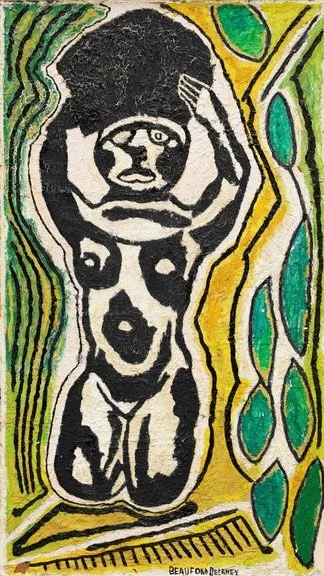
Lot 336
Still Life with Idol
signed (lower center)
oil on Masonite in artist's chosen frame
36 by 21 in.
91.4 by 53.3 cm.
Executed in 1945.
© Estate of Beauford Delaney
by permission of Derek L. Spratley, Esquire,
Court Appointed Administrator
Courtesy of Michael Rosenfeld Gallery, LLC, New York, NY
In that post, we discussed the differences in title, media, and year of creation ascribed to the work on Sotheby's Website and in the biography entitled Amazing Grace: A Life of Beauford Delaney.
Sylvain Briet worked alongside his brother, Philippe, at the Philippe Briet Gallery in New York. He graciously provided us with additional information about this painting.
He told us that the gallery sold the painting to Jean de Gunzburg and that de Gunzburg already owned it when the gallery displayed it at the Beauford Delaney: The New York Years [1929-1953] exhibition in April - May 1994. He confirmed that it is an oil on masonite.
Briet also told us that neither his brother nor Jean de Gunzburg knew of the title Still Life with Idol and that the work was listed in the exhibition as Untitled, circa 1945. He mentioned that many of the works shown during the gallery's 1994 show also hung in the Seventh Annual Exhibition of Paintings and Sculpture at the Pyramid Club in Philadelphia in 1947.
Beauford's Still Life with Idol Offered by Sotheby's
On Saturday, May 16, 2026, Sotheby's is auctioning Beauford's Still Life with Idol during its Contemporary Day Auction featuring works from the collection of Jean and Terry De Gunzburg.
Lot 336
Still Life with Idol
signed (lower center)
oil on Masonite in artist's chosen frame
36 by 21 in.
91.4 by 53.3 cm.
Executed in 1945.
© Estate of Beauford Delaney
by permission of Derek L. Spratley, Esquire,
Court Appointed Administrator
Courtesy of Michael Rosenfeld Gallery, LLC, New York, NY
According to Sotheby’s, the present owner acquired the work from Philippe Briet Gallery, New York, in 1994. The painting appears to be the work shown second from the left in an installation photograph from the gallery’s Beauford Delaney: The New York Years [1929-1953] exhibition, which was held from April through May 1994.

Beauford Delaney: The New York Years (1994)
© Sylvain Briet
Several years ago, Sylvain Briet shared with Les Amis an invitation card and graphic image produced for the 1994 exhibition. Although the title of the work was not identified on the material provided, Les Amis later located what appears to be the same composition reproduced in the first edition of David Leeming’s biography entitled Amazing Grace: A Life of Beauford Delaney (1998; Oxford University Press).
In the biography, the work is identified as Earth Mother.
Les Amis subsequently included the image in a 2017 post entitled "Beauford's Reflections on Leaving New York".
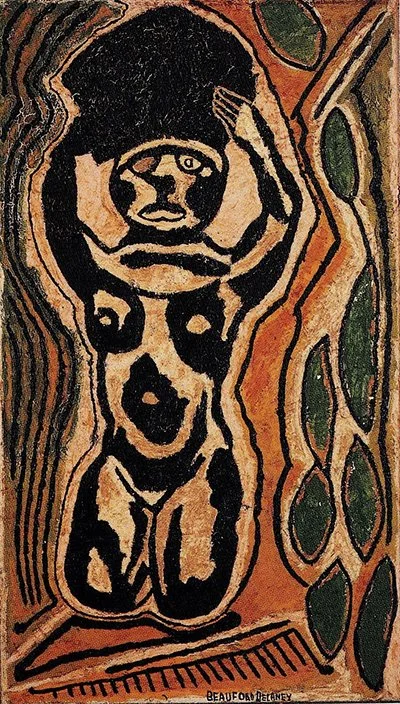
Earth Mother
(1950) Oil on canvas
© Estate of Beauford Delaney
by permission of Derek L. Spratley, Esquire,
Court Appointed Administrator
Courtesy of Michael Rosenfeld Gallery, LLC, New York, NY
The caption accompanying the black-and-white reproduction of Earth Mother in the second edition of Amazing Grace (2024; Karma Books) lists dimensions that correspond to those given for Still Life with Idol on Sotheby’s Website.

Earth Mother as presented in
Amazing Grace: A Life of Beauford Delaney (2024; Karma Books)
© Les Amis de Beauford Delaney
The Sotheby’s image differs noticeably in coloration from the earlier reproduced image.
David Leeming’s Amazing Grace: A Life of Beauford Delaney identifies the work as Earth Mother (1950, oil on canvas); Sotheby’s identifies it as Still Life with Idol (1945, oil on Masonite).
The estimated sale price of Still Life with Idol is $60,000 - $80,000.
For information about the auction, click HERE.
More Beauford-Inspired Music
I am always intrigued when I learn about musical compositions inspired by Beauford's art.
A few days ago, I learned that a piece called "Brilliant Brushstrokes” (2025) by Dr. Ryan Lindveit was commissioned by the University of Tennessee, Knoxville Wind Ensemble (John Zastoupil, conductor) and debuted at the College Band Directors National Association (CBDNA) National Conference at Texas Christian University in Fort Worth, TX on March 27, 2025.
It was inspired by Beauford's untitled raincoat painting, which is part of the permanent collection at the Minneapolis Institute of Art.
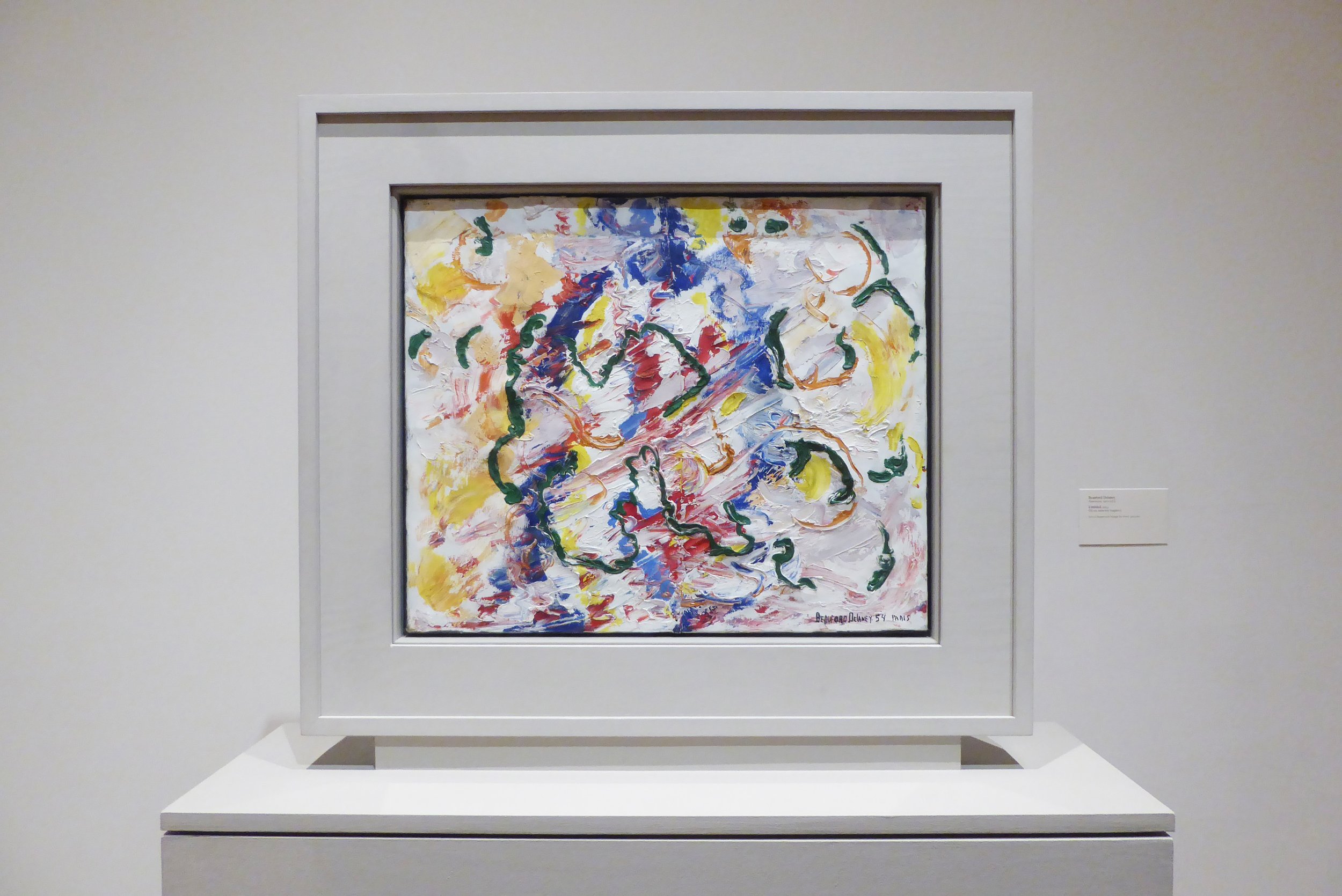
Untitled (raincoat painting)
(1954) Oil on raincoat fragment
Gift of Jacques and Solange du Closel
© Estate of Beauford Delaney
by permission of Derek L. Spratley, Esquire,
Court Appointed Administrator
Courtesy of Michael Rosenfeld Gallery, LLC, New York, NY
The University of Washington Wind Ensemble and Symphonic Band performed this composition as the closing for its April 30, 2026 Scenes and Portraits concert at the school's Katharyn Alvord Gerlich Theater in Meany Hall.
"Brilliant Brushstrokes" was selected as the best composition for Category B (Wind Ensemble) of the 2026 RED NOTE New Music Festival Composition Competition. It is the first movement of Lindveit's new multimovement work titled Color Theory, which was inspired by the myriad ways artists, animals, and filmmakers use color.
Dr. Lindveit is the Teaching Assistant Professor of Music Theory & Composition in the College of Music at the University of Tennessee, Knoxville.
Listen to "Brilliant Brushstrokes" here:
The Calypso
Run by Trinidad-native Connie Williams, the Calypso is described by biographer David Leeming as "a small restaurant across from the Provincetown Playhouse on MacDougal Street" in Greenwich Village.
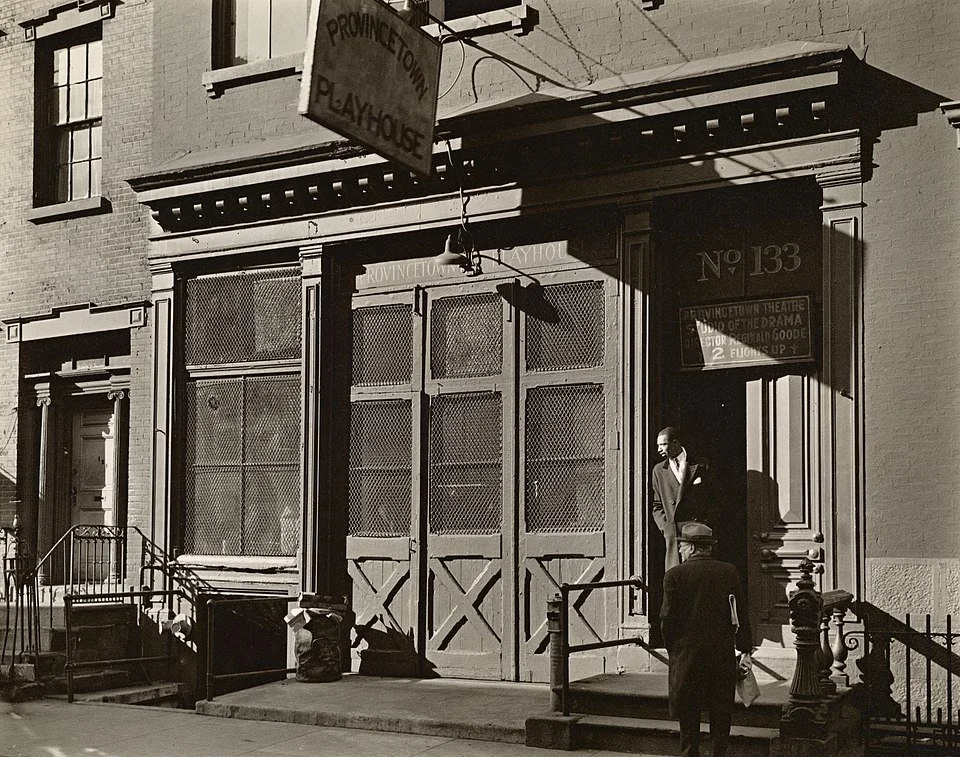
Provincetown Playhouse, 133 MacDougal Street, Manhattan
29 December 1936
Berenice Abbott for Works Progress Administration
Image in public domain
A photograph of its façade, published by Trinidad & Tobago Newsday, shows a modest, basement-level storefront with a worn street number and tropical decor on either side of the entrance (view image HERE).
Find images of Connie Williams inside the Calypso by Berenice Abbott (circa 1948) HERE ...
... and HERE (Williams is wearing a patterned dress).
Leeming devotes a single paragraph to the restaurant (which he calls a "café) in Amazing Grace, his biography of Beauford. He devotes almost two entire pages to the establishment in James Baldwin, his biography of Baldwin.
Beauford introduced Baldwin to Williams in 1943 after Baldwin's stepfather died and Baldwin moved from Harlem to Greenwich Village. Williams hired Baldwin as a waiter, and Leeming indicates that she became a surrogate mother to him. He says that Baldwin, Beauford, and a young Black writer named Smith Oliver "held court" at the Calypso after hours.
Beauford produced at least three portraits of Baldwin during this period.
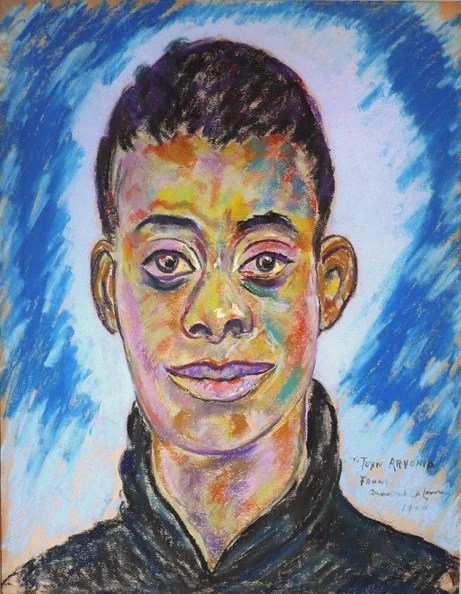
Portrait of James Baldwin
(1944) Pastel on paper
Knoxville Museum of Art
© Estate of Beauford Delaney
by permission of Derek L. Spratley, Esquire,
Court Appointed Administrator
Courtesy of Michael Rosenfeld Gallery, LLC, New York, NY

Portrait of James Baldwin
(1945) Oil on canvas
Philadelphia Museum of Art
© Estate of Beauford Delaney
by permission of Derek L. Spratley, Esquire,
Court Appointed Administrator
Courtesy of Michael Rosenfeld Gallery, LLC, New York, NY
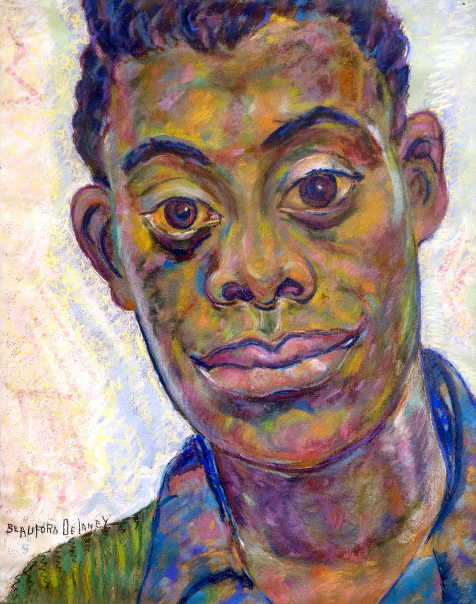
James Baldwin
(1945) Pastel on paper
Photo credit: Ben Conant
Courtesy of Macdowell
© Estate of Beauford Delaney
by permission of Derek L. Spratley, Esquire,
Court Appointed Administrator
Courtesy of Michael Rosenfeld Gallery, LLC, New York, NY
In Amazing Grace, Leeming describes Beauford's fondness for the Calypso due to the multiple races of people with various sexual proclivities who made up its clientele. He provides a "laundry list" of intellectuals and celebrities who frequented the place, including C. L. R. James, Claude McKay, Alain Locke, Malcolm X, and Henry Miller. Even Beauford's brother, Joseph, was an occasional customer, though the two did not socialize when they were both present.
Leeming also describes costume parties that Williams organized and that Beauford loved to attend. He says that Beauford often played the guitar and sang at these events.
In Baldwin: A Love Story, Nicholas Boggs states that Beauford and Williams threw Baldwin a goodbye party at the Calypso before he left for France in November 1948.
Swann Auction Galleries Sells Four Beauford Delaney Works
Swann Auction Galleries sold all four of the Beauford Delaney works it offered during its April 2, 2026 African American Art auction.
Two were figurative portraits and two were abstracts. All were works on paper.
Untitled (Portrait of a Young Man in Suit and Tie) was valued at $7,000 - $10,000.

Lot 9
Untitled (Portrait of a Young Man in Suit and Tie)
(circa 1940) Color pastels on pale gray wove paper
23 1/2 x 18 1/2 in. (59.7 x 47 cm.)
Image courtesy of Swann Auction Galleries
© Estate of Beauford Delaney
by permission of Derek L. Spratley, Esquire,
Court Appointed Administrator
Courtesy of Michael Rosenfeld Gallery, LLC, New York, NY
It sold for $24,130.
Untitled (Portrait of a Young Man) was also valued at $7,000 - $10,000.

Lot 10
Untitled (Portrait of a Young Man)
(circa 1937-40) Color pastels on pale green wove paper
24 1/2 x 18.875 in. (62.5 x 48 cm.)
Image courtesy of Swann Auction Galleries
© Estate of Beauford Delaney
by permission of Derek L. Spratley, Esquire,
Court Appointed Administrator
Courtesy of Michael Rosenfeld Gallery, LLC, New York, NY
It sold for $35,560.
The estimated sale prices for the abstract works were 3-4 times more than those assigned to the portraits.
Ibiza sold for $69,850 (estimated sale price - $30,000 - $40,000).

Lot 55
Ibiza
(1956) Watercolor on heavy wove paper
Signed, titled and dated ‘56 in ball point pen and ink, lower right
18 x 11 3/4 in. (45.7 x 29.8 cm.)
Image courtesy of Swann Auction Galleries
© Estate of Beauford Delaney
by permission of Derek L. Spratley, Esquire,
Court Appointed Administrator
Courtesy of Michael Rosenfeld Gallery, LLC, New York, NY
The untitled abstract sold for $45,720 (estimated sale price - $20,000 - $30,000).

Lot 63
Untitled (Abstract Composition)
Watercolor on cream laid paper, 1963
Signed, dated and inscribed "Paris" in graphite, lower right
17 1/2 x 12 in. (44.5 x 30.5 cm.)
Image courtesy of Swann Auction Galleries
© Estate of Beauford Delaney
by permission of Derek L. Spratley, Esquire,
Court Appointed Administrator
Courtesy of Michael Rosenfeld Gallery, LLC, New York, NY
All sale prices include a 27% buyer's premium.
For information about the results of this auction, click HERE.
Four Beauford Delaney Works to be Auctioned on April 2, 2026
On April 2, 2026, Swann Auction Galleries will offer two of Beauford's early portraits and two of his vibrant abstracts—all works on paper—for auction at its African American Art Sale.
Swann offered both portraits for purchase at its Autumn 2017 sale of African American Fine Art.
Lot 9
Untitled (Portrait of a Young Man in Suit and Tie)
(circa 1940) Color pastels on pale gray wove paper
23 1/2 x 18 1/2 in. (59.7 x 47 cm.)
Image courtesy of Swann Auction Galleries
© Estate of Beauford Delaney
by permission of Derek L. Spratley, Esquire,
Court Appointed Administrator
Courtesy of Michael Rosenfeld Gallery, LLC, New York, NY
Lot 10
Untitled (Portrait of a Young Man)
(circa 1937-40) Color pastels on pale green wove paper
24 1/2 x 18.875 in. (62.5 x 48 cm.)
Image courtesy of Swann Auction Galleries
© Estate of Beauford Delaney
by permission of Derek L. Spratley, Esquire,
Court Appointed Administrator
Courtesy of Michael Rosenfeld Gallery, LLC, New York, NY
Both works are valued at $7,000 - $10,000.
Biographer David Leeming writes of Beauford having two solo exhibitions in Autumn 1938—one at the 8th Street Playhouse in NYC and one at Gallery C in Washington—where most of the works shown were portraits. I have not been able to determine whether Untitled (Portrait of a Young Man) was one of them.
Regarding the abstracts to be auctioned, Ibiza is a signed and dated watercolor on heavy wove paper. It is depicted in the catalog for the Beauford Delaney: From New York to Paris exhibition mounted by the Minneapolis Institute of Arts in 2004.
Lot 55
Ibiza
(1956) Watercolor on heavy wove paper
Signed, titled and dated ‘56 in ball point pen and ink, lower right
18 x 11 3/4 in. (45.7 x 29.8 cm.)
Image courtesy of Swann Auction Galleries
© Estate of Beauford Delaney
by permission of Derek L. Spratley, Esquire,
Court Appointed Administrator
Courtesy of Michael Rosenfeld Gallery, LLC, New York, NY
This work is dissimilar to others for which Beauford expressly mentioned Ibiza in the title. Read about them HERE.
The second abstract is untitled. It is a signed and dated watercolor on paper as well. Swann reports that Beauford gave it to Ruth Watt Métraux, a friend of Gloria and James Jones (who were great supporters of Beauford), and that the work was passed on to the current owner by descent.
Lot 63
Untitled (Abstract Composition)
Watercolor on cream laid paper, 1963
Signed, dated and inscribed "Paris" in graphite, lower right
17 1/2 x 12 in. (44.5 x 30.5 cm.)
Image courtesy of Swann Auction Galleries
© Estate of Beauford Delaney
by permission of Derek L. Spratley, Esquire,
Court Appointed Administrator
Courtesy of Michael Rosenfeld Gallery, LLC, New York, NY
The colors of the untitled abstract fairly glow. For me, they evoke the life and hope of spring.
The estimated sale price of Ibiza is $30,000 - $40,000.
The estimated sale price of Untitled (Abstract Composition) is $20,000 - $30,000.
For information about the sale, click HERE.
More of Beauford's Blues
I recently came across an article on color psychology that described various reactions to and interpretations of the color "blue."
It reminded me that Les Amis has published two articles about Beauford's use of this color:
And it inspired me to look for additional works that feature light blue, a color that is frequently associated with relaxation, tranquility, and peace.

Untitled
(1960) Gouache and watercolor on paper
© Estate of Beauford Delaney
by permission of Derek L. Spratley, Esquire,
Court Appointed Administrator
Courtesy of Michael Rosenfeld Gallery, LLC, New York, NY
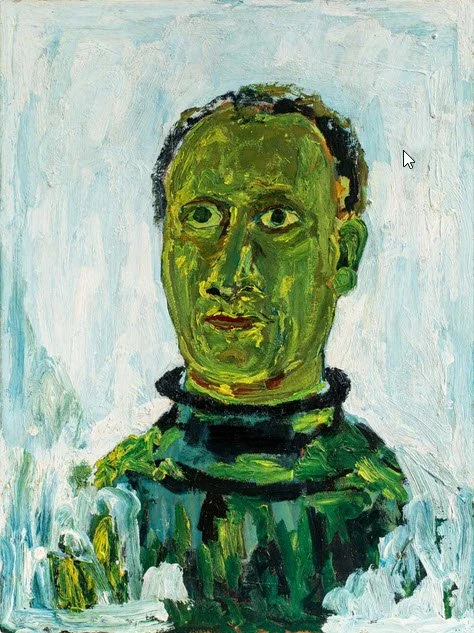
Self-portrait
(Undated) Oil on board
© Estate of Beauford Delaney
by permission of Derek L. Spratley, Esquire,
Court Appointed Administrator
Courtesy of Michael Rosenfeld Gallery, LLC, New York, NY

Untitled
(1962) Oil on canvas
© Estate of Beauford Delaney
by permission of Derek L. Spratley, Esquire,
Court Appointed Administrator
Courtesy of Michael Rosenfeld Gallery, LLC, New York, NY