

Watercolors by Beauford
In the March 14, 2015 article entitled "More on Knoxville Museum of Art Acquisition of Beauford Delaney Paintings," Barbara W. and Bernard E. Bernstein Curator Stephen Wicks talked about the large number of watercolors that were part of Beauford's estate.
I recently re-read this article and was inspired to have a look at images of the watercolors that I've published on the blog over the years. Here are a few of my favorites.

(1965) Watercolor on wove paper
Signed, dated and inscribed "avec amour" in ink.
Image courtesy of Swann Auction Galleries
© Estate of Beauford Delaney
by permission of Derek L. Spratley, Esquire,
Court Appointed Administrator

(1961) Watercolor on paper
Signed and dated "Beauford Delaney 61. San Telmo Mallorca" in the bottom right corner.
© Christie's Images
© Estate of Beauford Delaney
by permission of Derek L. Spratley, Esquire,
Court Appointed Administrator

(1962) Watercolor
Signed and dated at bottom left
Photo courtesy of ADER
by permission of Derek L. Spratley, Esquire,
Court Appointed Administrator

(1963) Watercolor on thick wove paper
Signed, dated and inscribed "Clermont Seine" in blue ink at the lower left.
Image courtesy of Swann Auction Galleries
© Estate of Beauford Delaney
by permission of Derek L. Spratley, Esquire,
Court Appointed Administrator

(1961) Watercolor on paper
© Christie's Images
© Estate of Beauford Delaney
by permission of Derek L. Spratley, Esquire,
Court Appointed Administrator

(1963) Watercolor on wove paper
Signed and dated "July 19, 1963" in ink, lower right
Image courtesy of Swann Auction Galleries
© Estate of Beauford Delaney
by permission of Derek L. Spratley, Esquire,
Court Appointed Administrator
Beauford on Art Sphere Inc.
Over the past few years, I've written a couple of posts about art lessons inspired by Beauford's work:
Museums Use Beauford's Art to Reach Out to Children
Today I found another example of this.
Art Sphere Inc. has a section on its Web site called Art Basics, through which it encourages youth to build art skills and express creativity through a series of brief online lessons and downloadable handouts. They have created a handout that presents Beauford's relationship with James Baldwin, talks about Beauford's painterly style, and encourages readers to use their imaginations to color images of Beauford and Baldwin. The black and white tracings are inspired by Errol Sawyer's photo portrait of Beauford and Beauford's 1945 portrait of Baldwin.

Rue Guilleminot
France 1973
© Errol Sawyer

(1945) Oil on canvas
Philadelphia Museum of Art
© Estate of Beauford Delaney
by permission of Derek L. Spratley, Esquire,
Court Appointed Administrator
Find the Art Sphere Inc. page here:
Brandeis University's Greene Street Painting on Display at Rose Art Museum
Rose Art Museum at Brandeis University is proudly touting its Beauford Delaney abstract, entitled Abstraction (Greene Street), as part of its re: collections, Six Decades at the Rose Art Museum exhibition.

(1950) Oil on canvas
Gift of Mr. Maurice Geller, -.1050.
© Estate of Beauford Delaney,
by permission of Derek L. Spratley, Esquire,
Court Appointed Administrator
Image courtesy of Michael Rosenfeld Gallery LLC, New York, NY
Curatorial Intern Sam Forman describes the work as follows:
Greene Street (1950) is filled with swirling colors that evoke a sense of motion around its stationary black figures, reflecting the vibrancy of city life even in still moments. One cannot quite tell who is who and what is what—where are these figures? Why are they together? What is nearby? The green-yellow-orange mound in the center appears to be a fire à la Can Fire in the Park (1946), an example of Delaney placing explicit focus on a community-building and -sustaining source of warmth and light. Every object in this piece, human or otherwise, feels slightly out of focus due to the meandering lines and multi-hued outlines, bringing the viewer back to those questions about the scene and its contents. The abstract nature of Greene Street (1950) lets the scene reflect an infinite number of moments as the figures can be anyone and anywhere.
The Rose’s Greene Street (1950) is rather different from some other Greene Street paintings. The Greene Street (1940) in the collection of the Museum of Fine Arts, Boston, features more defined objects, although it maintains the abstraction of the Rose’s. A Greene Street (1946) sold by art collector Jonathan Boos retains this characteristic: a streetlight, fire hydrant, and food carts are readily identifiable. These other pieces of the same name also lack the human focus that the Rose’s does: whereas ours features prominently three people, there is one person in the 1946 piece and none in the 1940 piece.

Rose Art Museum, Brandeis University, 2021
Photograph by Isometric Studio, Brooklyn, New York
Image courtesy of the Rose Art Museum
Rose Art Museum granted Les Amis an exclusive interview regarding Abstraction (Greene Street) 1950. Find it below.
Les Amis: When did the museum acquire Greene Street, 1950?
Rose Art Museum: Greene Street belonged to Brandeis University prior to 1961, when the museum was founded. It was gifted to the University with the credit line, “Gift of Mr. Maurice Geller.” Upon the Rose’s founding, it entered the museum’s collection. It was first displayed on January 18, 1971 at Brandeis University in the Morton May Memorial Hall, now the Shapiro Admissions Center.
Les Amis: Is the painting on permanent display?
Rose Art Museum: No. The Rose does not display any works permanently, but it is currently on view within the exhibition re: collections, Six Decades at the Rose Art Museum.
Les Amis: Has it ever been displayed at the Rose Museum prior to the current exhibition?
Rose Art Museum: It has been displayed on the Brandeis campus, but there is no record of it being exhibited at the Rose prior to May 2021, when we opened re: collections.
Les Amis: What is the full exhibition history of the painting?
Rose Art Museum: Aside from its display in the Morton May Memorial Hall in 1971, one exhibition is in our record: "Beauford Delaney: The New York Years / [1929-1953]," April 9-May 28, 1994, Philippe Briet Gallery, New York. This is the exhibition in which University officials discovered the whereabouts of Greene Street two decades after it was stolen.

Beauford Delaney: The New York Years
Invitation card (interior)
Courtesy of Sylvain Briet
Les Amis: Might your Greene Street painting be the one shown in a 1950 exhibition at the Whitney Museum?
Rose Art Museum: We are unsure—Whitney research and archives experts may be able to help. I found a “catalogue number 88” listed with Delaney’s name in that exhibition but cannot access anything specific. The New York Times also potentially has an article on the exhibition, accessible with a subscription to the newspaper.
Les Amis: What is the full provenance of the painting?
Rose Art Museum: There is no provenance record at the Rose, aside from the gift by Maurice Geller.
Les Amis: I understand that Greene Street was stolen in 1971 and the whereabouts of the painting were unknown for several years before it was recovered in 2000. Please provide details about the theft and the recovery.
Rose Art Museum: The November 21, 2000 edition of The Justice, Brandeis’ oldest newspaper, ran “Stolen painting’s brush with adventure ends” about how Greene Street was stolen around April 1971 after its display in the Shapiro Admissions Center. In 1994 the work appeared in a gallery show in New York City, detailed above. Brandeis General Counsel Judith Sizer worked for six years to bring it back, contacting the New York Police Department which held the painting in that time, and fighting another claimant to ownership of the painting. In 2000 Ed Callahan, Brandeis’s director of public safety, got the NYPD to release the work and return it to the University.
Les Amis: Did Beauford name the painting or was the name ascribed by someone else?
Rose Art Museum: Delaney had numerous paintings that are now called Greene Street, either as their name or connected to their actual untitled status. The full name of the Rose’s is Abstraction (Greene Street) and I can find no information on who named it, Delaney or otherwise.

Installation view, re: collections, Six Decades at the Rose Art Museum
Rose Art Museum, Brandeis University, 2021
Photograph by Isometric Studio, Brooklyn, New York
Image courtesy of the Rose Art Museum
re: collections will be on view for three years, with several rotations.
Rose Art Museum
Brandeis University
415 South Street
Waltham, MA 02453
Telephone: 781-736-3434
roseartmuseum@brandeis.edu
Hours: Wednesday - Sunday 11 AM - 5 PM
Admission is free.
Case Antiques Sells Beauford Delaney Abstract for $348,000
On July 24, Case Antiques placed an "unusual" Beauford Delaney painting up for auction.

Untitled
(c. 1972) Oil on canvas
63 3/4 x 51 1/4 inches
© Estate of Beauford Delaney
by permission of Derek L. Spratley, Esquire,
Court Appointed Administrator
The estimated sale price was $60,000-$70,000.
On Monday evening, July 26, Sarah Campbell Drury, Vice President of Fine and Decorative Arts at Case, contacted me to tell me that the painting sold for a whopping $348,000!
Case's press release describes the work as "a rhythmic abstract oil on canvas" that is "a bit of departure from the modernist urban scenes and atmospheric abstractions which typically define Delaney’s work."
On the sales page for the painting, Case posted an image of Beauford's niece, Ogust Delaney Stewart, sitting in the storage facility in which the painting had been stored. The painting can be seen at the right side of the image.
Barbara W. and Bernard E. Bernstein Curator of the
Knoxville Museum of Art
Multiple phone and internet bidders competed for the abstract, with the hammer eventually falling to an anonymous phone bidder. The sales price includes a 20% buyer's premium and applicable taxes and fees.
The painting resembles an abstract acquired by San Francisco MoMA last year.

(1974) Oil on canvas
San Francisco Museum of Modern Art
63 3/4 x 51 1/4 inches
© Estate of Beauford Delaney
by permission of Derek L. Spratley, Esquire,
Court Appointed Administrator
Beauford's African Motif
This month, France is wrapping up a pan-African and multidisciplinary project called Africa2020, which focuses on innovation in the arts, sciences, technology, entrepreneurship and the economy.
In thinking about innovation, the arts, and Africa, I thought about Beauford's many works that were inspired by the continent throughout the years. I share images of a few of them below.

by permission of Derek L. Spratley, Esq.,
Court Appointed Administrator
Image courtesy of Sylvain Briet

Untitled (Fang, Crow and Fruit)
(1945) Oil on canvas
Brooklyn Museum
Brooklyn, NY
© Estate of Beauford Delaney
by permission of Derek L. Spratley, Esq.,
Court Appointed Administrator

(c. 1968) Oil monoprint on paper
Knoxville Museum of Art
Knoxville, TN
© Estate of Beauford Delaney
by permission of Derek L. Spratley, Esquire,
Court Appointed Administrator

Self-portrait in a Paris Bath House
(1971) Oil on canvas
Knoxville Museum of Art
Knoxville, TN
© Estate of Beauford Delaney
by permission of Derek L. Spratley, Esquire,
Court Appointed Administrator

Man in African Dress
(c. 1972) Oil on canvas
© Estate of Beauford Delaney
by permission of Derek L. Spratley, Esquire,
Court Appointed Administrator
Image courtesy of Michael Rosenfeld Gallery LLC
New York, NY
Case Antiques to Auction Beauford Delaney Painting on July 24
Case Antiques is placing an "unusual" Beauford Delaney painting up for auction on July 24.
Untitled
(c. 1972) Oil on canvas
63 3/4 x 51 1/4 inches
© Estate of Beauford Delaney
by permission of Derek L. Spratley, Esquire,
Court Appointed Administrator
The estimated sale price is $60,000-$70,000.
(1974) Oil on canvas
San Francisco Museum of Modern Art
63 3/4 x 51 1/4 inches
© Estate of Beauford Delaney
by permission of Derek L. Spratley, Esquire,
Court Appointed Administrator
Pre-approval is required to bid on this lot. Contact Case Antiques, Inc. for details at 865-558-3033 or BID@CASEANTIQUES.COM.
Musing with a Master Abstract Expressionist - Part 2
In Part 1 of this article, I presented images of three Beauford-inspired paintings created by Osiris Munir, President/CEO of Ankh Entertainment, host of the 15 Minutes interview series, and visual artist. Based on an interview with her, I began to explore the similarities between her life and that of Beauford.
Part 2 looks at more of these similarities and share her musings about the conversation she'd like to have with Beauford.
TRAVEL
Beauford traveled extensively in France and in Europe, often through invitations by friends. As often as possible, he painted wherever he went.

(1966) Oil on thick, cream wove paper
© Estate of Beauford Delaney
by permission of Derek L. Spratley, Esquire,
Court Appointed Administrator
Munir enjoys traveling as well:
One of the similarities in the life of myself and Beauford Delaney’s is our love of travel and living outside of a box. I traveled and lived in Europe for a year. When I found out about the St. Germain district of Paris, I lost it. It seemed far more interesting and engaged than anything I had experienced in the U.S. The experience left me longing for deeper engagement with international culture and cultural activities and lifestyle outside the U.S.
APPRECIATION OF COLOR
In his New York Times obituary on Beauford, C. Gerald Fraser quotes NYT art critic John Russell, who said that Beauford was an “uninhibited colorist (though never an unintelligent one).” Biographer David Leeming refers to Beauford's primary interest in light and color many times in Amazing Grace: A Life of Beauford Delaney.
Munir speaks eloquently about her interpretation of the "muted" colors of The Three Are One and certain works by Beauford:
Orange is the color of the Sun - it offers hope and sheds light on untruths so that truth may be seen and lies may be exposed. Raw umber is an earth color - Giving a sense of belonging to something greater than myself and living a grounded and organic lifestyle as close to natural as possible. It is the darkness that hides beneath a smile or behind teeth that laugh. White for me is the clarity in thought and vision one gains after hours of looking deeply into a web of shapes, designs, and patterns . . . the visions that come and go as quickly as they came . . . the pain experienced when trying to fit into a world that is unwilling to allow you to just be.

(c. 1958-1959) Oil on paper, laid down on canvas
Image courtesy of Aaron Galleries
© Estate of Beauford Delaney,
by permission of Derek L. Spratley, Esquire,
Court Appointed Administrator

Osiris Munir
(2021) Oil on paperboard
WRITING
Beauford journaled extensively about his harshly critical inner voices and his use of art to appease them, to silence them, and finally, to represent them on canvas as one would a person sitting for a portrait.

(1965) Oil on canvas
Private Collection
© Estate of Beauford Delaney
by permission of Derek L. Spratley, Esquire,
Court Appointed Administrator
He often shared feelings of loneliness and frustration in letters to his closest friends.
Through her book entitled Nita, Munir "painstakingly deals with topics of the human soul such as anger, forgiveness, loneliness, fear, depression, and mental health."
LACK OF FINANCIAL RESOURCES
Beauford was often without sufficient funds to pay for the paints and other supplies that would allow him to work and keep his inner voices at bay. Because of this, and because had a propensity to give money away when he did have it, his friends would buy him canvases and other art supplies so he could continue to work. The story of his "raincoat painting," which he created by painting on an old raincoat that he cut up and used for canvas, is well known.

(1954) Oil on raincoat fragment
Photos courtesy of Sue Canterbury
© Estate of Beauford Delaney,
by permission of Derek L. Spratley, Esquire,
Court Appointed Administrator
Munir recounts a similar experience:
I use brick paperboard for lack of having all of what I need . . . I never have additional money to buy great canvas, brushes and paints to use. They are either given to me or I have to overlook an important bill to buy what I need instead. Occasionally, I am able to get extra money to buy supplies to use for my one-room studio.
**********
When asked what she would discuss with Beauford if she were able to sit down with him today, Munir responded:
If I could sit down with Beauford Delaney in 2021, we would talk about his being born too early and being prepared to fight for the rights of the LGBTQIA+ and the freedom for all people.
We would laugh about how the movement of the African aka Black American to free himself of slave mentality and to release the pain of the past and move towards the future without fear and how long and hard the journey has been and how much further we may or may not have to go. How slavery and the stigma of color and may never end but certainly has garnered global attention.
We would talk about politics and how it affects the life of the artist. How he is a muse and comfort to many. What he thought about European’s perspective on abstract art and its many forms of expression. How none are free until all are free.
We would talk about James Baldwin and his brilliance and how the two of them were ahead of their time.
We would talk about drug laws and whether they help or hurt us. We would talk about art. Colors. Sounds and feelings. I would ask what he thought of the philosophy of Bruce Lee.
We would talk about pain and suffering and how it makes for the brilliance and shine others see in us.
Musing with a Master Abstract Expressionist - Part 1
Osiris Munir is President/CEO of Ankh Entertainment and host of the 15 Minutes interview series. She is also a visual artist.
Munir learned about Beauford through various contacts with me. Inspired by his work, she recently created three previously unseen abstract works and shared images of them with the Wells International Foundation and Les Amis de Beauford Delaney. She calls them The Three Are One.


Osiris Munir
(2021) Oil on paperboard
They call to my mind Beauford's Untitled (Yellow Abstraction), shown below.

(c. 1958-1959) Oil on paper, laid down on canvas
Image courtesy of Aaron Galleries
© Estate of Beauford Delaney,
by permission of Derek L. Spratley, Esquire,
Court Appointed Administrator
Prior to a series of challenging life events that led her to the investigation of intuitive abstract art, Munir:
. . . hated art and thought it a rip off of one’s time and money. I knew nothing of Pollock, Hofmann, Kandinsky, Rothko, Krasner, Monet, Picasso, and Georgia O’Keefe until a neighbor turned me onto Bob Ross. I began watching YouTube study channels. . . .
I did not hear of Beauford until the introduction and the telling of his story by Monique Wells, founder of the Wells International Foundation. Of course, I was fascinated. Until then I knew nothing of abstract art outside of the aforementioned. Monique told me of her search for his grave and how it was without a head stone ... how he died in a mental institute in Paris.
As a veteran diagnosed with a variety of mental disorders, Munir readily understands and resonates with the suffering of the mentally disturbed. She finds art to be a great tool and channel for releasing an abundance of creative energy. Simultaneously and intrinsically drawn to Beauford's life and work, she describes his work (and her own) as being purposeful and intentional. She says that Beauford seemed to take obscure thoughts that were disconnected in some ways and harmonized them in arrays of colorful expression.
To create The Three Are One, Munir used oil on brick paperboard. This was inspired by Beauford's Burning Bush, which is currently held at the Newark Art Museum. She loves the texture of oil:It seems to find its way through my fingers into my hands and onto a canvas, brick, or piece of wood. It looks like velvet when applied to a primed canvas. It looks elegant and rich to me. It calls me and speaks to me from a place that is unexplainable. Oil seems to have the property and gift of manifestation for me. It seems to move with my eyes and fingers ... [Using it makes me feel] like another entity outside of myself is painting, not me.
Munir chose the colors for these works based on Tarot cards by Madame Marie Laveau of New Orleans, which she says are similar to colors used by Beauford and others of that time. She offered the following comment about this:
Some of his (Beauford's) pieces use muted colors wherein they seem flat until you take a closer look. After looking closer at these pieces, the feeling and sense of how each color moves on paper and canvas carries a certain exposure of light.
Next week: Osiris Munir talks in depth about similarities between her life and Beauford's, and muses about the conversation she'd have with him if they could sit down together today.
Beauford Delaney and Free Lunch - Part 2
Last week, I introduced "Beauford Delaney (Instrumental)," a track on Volume 3 of the newly released three-volume recording entitled Free Lunch,. Intrigued by the music, I interviewed recording artist Free (Lee) Tillman about it. Read Part 1 of "Beauford Delaney and Free Lunch" HERE.
Part of our interview explored Tillman's associations between "Beauford Delaney (Instrumental)" and specific pieces of Beauford's art.
I asked him what he would say if he had to describe the instrumental Beauford Delaney as a color, and he responded "It would be a cloudy gray."
He then shared links to images of some of the darker pieces of Beauford's work that come to his mind when he thinks about the song. The works are pictured below.

Watercolor
Signed at bottom right, dated, and annotated "Souvenir" at bottom left
© Estate of Beauford Delaney,
by permission of Derek L. Spratley, Esquire,
Court Appointed Administrator

Oil on paper mounted on canvas
Image courtesy of www.ha.com
© Estate of Beauford Delaney
by permission of Derek L. Spratley, Esquire,
Court Appointed Administrator

© Estate of Beauford Delaney
by permission of Derek L. Spratley, Esquire,
Court Appointed Administrator
The majority of music Tillman makes is instrumental, yet he was inspired to insert a mysterious voice into "Beauford Delaney (Instrumental). Listening carefully, you will hear a woman saying "Sometimes I wish we could vanish." When I asked Tillman about this, he told me that he also created a vocal version of "Beauford Delaney" for his album. He shared that recording with me and commented about it as follows:
"This song happens to be one of only two songs on the album that has alternative versions where I provided vocals. The song “Theaster Gates” has a spoken word passage and the song Beauford Delaney has me rapping on it. I provided the instrumental versions in case people didn’t want to hear my voice."
Regarding a possible relationship between the single line of spoken words in the instrumental version and the lyrics of the vocal version, he said:
"There is no direct relationship. When I originally made the song, it felt like it needed a human voice, so I added the vocal sample. It's not meant to be completely intelligible. It's meant to sound like something you might hear in a dream. I then decided to create something more direct, so I added my own vocals. One thing let me to the next, but I wouldn't say that they're directly related as far as what's being said."
Listening to the vocal version of "Beauford Delaney" and comparing it to the instrumental version, the two Beauford Delaney works shown below came to my mind. I sent images of them to Tillman and asked him to share his reactions to them.

(1967) Oil on canvas
© Estate of Beauford Delaney
by permission of Derek L. Spratley, Esquire,
Court Appointed Administrator

(1967) Oil on canvas
Private collection
© Estate of Beauford Delaney
by permission of Derek L. Spratley, Esquire,
Court Appointed Administrator
His response:
"The blue painting feels like the instrumental. The portrait feels like the vocal version."
To wrap up our interview, I asked Tillman the following questions:
Les Amis: Relating to the theme of your album, Free Lunch, if you could have lunch with Beauford today, what would you want to discuss with him?
Free Tillman: I would love to talk with him about the Harlem Renaissance and what it was like living in Greenwich Village.
Les Amis: What might you ask his advice about?
Free Tillman: How to convey one's political and social beliefs through abstract art.
Beauford Delaney and Free Lunch - Part 1

After listening to the recording multiple times, I contacted Tillman to ask for an interview. He responded quickly and affirmatively.
I learned that Free (Lee) Tillman became aware of Beauford because of his fascination with the Harlem Renaissance. While he is more familiar with the writers and musicians of the time, anyone who was involved with the Harlem Renaissance is an inspiration to him.

Beauford in his Greene Street studio, New York City, 1944
© Estate of Beauford Delaney,
by permission of Derek L. Spratley, Esquire,
Court Appointed Administrator
Tillman is also fascinated by James Baldwin and encountered Beauford's name in connection with Baldwin. He learned about Beauford mostly from reading online articles and watching YouTube videos, and he was aware that Beauford painted several portraits of Baldwin. He has never seen any of Beauford's works in person.
Serendipitously, Tillman and Beauford share the same birthday, and Beauford died the year Tillman was born. Tillman is something of a visual artist as well - he creates his own visual backdrops for his performances and he also draws (though he has not produced anything he would be willing to show anyone yet).
The majority of the twenty-two (22) tracks on Volume 3 of Free Lunch are named after artists - people such as Amy Sherald, Faith Ringgold, Ed Clark, and Sam Gilliam. I asked Tillman why. He responded:
Over the past few years, I’ve been studying art history on my own. Trying to understand different movements and where certain ideas came from. This year there was a documentary released called “Black Art: In the Absence of Light” which focuses a lot on the 1976 LACMA exhibition Two Centuries of Black American Art. It features a lot of Black artists, new and old, that I had never heard of before. As I was wrapping up this project, Black art was on my mind, and I thought it would be an interesting idea to name all the songs after Black artists. Maybe someone would see all the names, do some research and find out something new. I’m familiar with the work of all the artists named but I do not know any of them personally.
I explained that Beauford did not want to be viewed as a black artist, or even as an American artist. He strongly felt that "ARTIST" was the only term required to define him professionally. I also explained that this in no way indicated that Beauford wanted to cast aside his identity as a black person.
Tillman then asked whether Beauford adopted Abstract Expressionism as a style because he did not want to be defined as a "Black artist." I replied that I believe Beauford became an Abstract Expressionist painter because it allowed him to express the incredible emotion and energy that always churned within him, particularly when his inner voices became more insistent and more cruel.
Come back next week to read about Tillman's associations between "Beauford Delaney (Instrumental)" and specific pieces of Beauford's art.
Judd Tully on Beauford's Studio Museum Retrospective
A few months after Beauford's death (March 26, 1979), art critic and journalist Judd Tully wrote an exposé of sorts regarding the Studio Museum of Harlem's retrospective show of Beauford's work and the disposition of his estate.

Tully says that steps were taken to eliminate French bureaucratic obstacles and settle debts so the show could take place, but he does not specifically indicate who took these steps. He indicates that Exxon Corporation and the National Endowment of the Arts funded the Studio Museum exhibition and that the tutelle responsible for handling Beauford's affairs was dissolved.
What follows is biographical information admixed with statements that various artist acquaintances made about Beauford and his work during his lifetime.
Near the end of the article, Tully states that "...Beauford Delaney remains a tantalizing enigma to the all too color-conscious art historians. He has eluded history for the moment."
Forty-two years later, fueled by the work launched by Les Amis de Beauford Delaney in 2009, history is "catching up."
Read the entire article here: https://juddtully.net/reviews/beauford-delaney/
Beauford on Google Arts and Culture
Google Arts & Culture is a non-profit initiative whose mission is to preserve and bring the world’s art and culture online so it’s accessible to anyone, anywhere. They work with cultural institutions and artists around the world to help them digitize, manage and publish their collections online, all for free.
The site has dedicated a section to Beauford. It presents eight works that represent a wide range of works - from figurative to abstract, from landscapes to portraits - that he created during his New York and Paris years.

(1946) Oil on canvas
© Estate of Beauford Delaney,
by permission of Derek L. Spratley, Esquire,
Court Appointed Administrator
The text presented on these pages is scant, and for some works, only the details about the media, year of creation, and location are provided.
Still, it is worth visiting the site as a reminder of the breadth of Beauford's artistic genius!
Click HERE to see the works.
PIASA to Auction Magnificent Portrait by Beauford
Portrait of Vassiliki Pikoula was the largest portrait displayed in the 2016 Beauford Delaney: Resonance of Form and Vibration of Color exhibition in Paris. You can see it in the upper left corner of the image below.

The portrait is up for auction at PIASA's Afrique + Art moderne et contemporaine (Africa + Modern and Contemporary Art) sale on Wednesday, May 19, 2021.

Vassiliki Pikoula
(1970) Oil on canvas
130 x 97 cm / 51 x 38 inches
Signed and dated, lower right
© Estate of Beauford Delaney
by permission of Derek L. Spratley, Esquire,
Court Appointed Administrator
Screenshot of photo from PIASA catalog - © Xavier Defaix
The auction catalog presents a beautiful narrative that describes the night Darthea Speyer hosted a reception for her gallery's 1973 solo exhibition of Beauford's work. Among the attendees was the celebrated jazz saxophonist, Ornette Coleman.
Pikoula, the Greek artist who was the subject of the portrait, was also in attendance that evening.
The estimated sale price for this work is 150,000 - 200,000 euros.
For information about the auction, call +33 (0)1 53 34 10 10 or send email to contact@piasa.fr.
Results of April 2021 Swann Auction Galleries African American Art Sale
Untitled (African Figure) sold for $125,000, including buyer's premium*.

Untitled (African Figure)
(1968) Oil on cotton canvas
610x502 mm; 24x19 3/4 inches
Signed and dated in oil, lower left
Image courtesy of Swann Auction Galleries
© Estate of Beauford Delaney
by permission of Derek L. Spratley, Esquire,
Court Appointed Administrator
Untitled (Tent Interior) sold for $137,000 (including buyer's premium), far exceeding the estimated sale price of $30,000 to $40,000.
For more information about the April 22, 2021 African American Art auction, click HERE.
*The buyer's premium is 25% of the hammer price, up to and including $100,000; 20% of the hammer price above $100,000 up to and including $1,000,000; 12% of the hammer price after $1,000,000.
Two Beauford Delaney Works at Swann Auction Galleries' African Art Sale
Untitled (African Figure) was created when Beauford lived at his rue Vercingétorix studio. It comes from the original collection of James and Gloria Joyce, whom James Baldwin introduced to Beauford in July 1958. The Joyces would go on to commission several paintings from Beauford, including a portrait of James Joyce.
Untitled (African Figure)
(1968) Oil on cotton canvas
610x502 mm; 24x19 3/4 inches
Signed and dated in oil, lower left
Image courtesy of Swann Auction Galleries
© Estate of Beauford Delaney
by permission of Derek L. Spratley, Esquire,
Court Appointed Administrator
The estimated sale price of this work, which has been assigned Lot Number 67, is $120,000 - $180,000.
The mirror image of Untitled (African Figure), a multi-hued oil monoprint on paper, was displayed by the Knoxville Museum of Art during its Through the Unusual Door exhibition in 2020.

(circa 1968) Oil monoprint on paper
Knoxville Museum of Art, 2018 Beauford Delaney Purchase
© Estate of Beauford Delaney
by permission of Derek L. Spratley, Esquire,
Court Appointed Administrator
Photo © Les Amis de Beauford Delaney
Beauford in the News
In today's post, I'm presenting three announcements about Beauford that I recently found online.
SFMOMA announces major gift from the Pamela J. Joyner and Alfred J. Giuffrida Collection
SAN FRANCISCO, CA - The San Francisco Museum of Modern Art announced a major gift of 31 paintings, sculptures and drawings by 20 American artists from the Pamela J. Joyner and Alfred J. Giuffrida Collection—celebrated for its intergenerational holdings of abstract art of the African diaspora. The addition of important historical works by Elizabeth Catlett, Beauford Delaney, Norman Lewis and Richard Mayhew, among many others, has inspired a reexamination of SFMOMA’s permanent collection and is having a transformative impact on its galleries.

(1970) Oil on canvas
© Estate of Beauford Delaney
by permission of Derek L. Spratley, Esquire,
Court Appointed Administrator
Read the entire article HERE.
Beauford Delaney’s Metamorphosis into Freedom
ASHEVILLE, NC - Featuring more than 40 paintings and works on paper, Beauford Delaney’s Metamorphosis into Freedom examines Beauford's career within the context of his 38-year friendship with writer James Baldwin.

(1950) Pastel on paper
Knoxville Museum of Art, 2017 purchase with funds provided by
the Rachael Patterson Young Art Acquisition Reserve
© Estate of Beauford Delaney
by permission of Derek L. Spratley, Esquire,
Court Appointed Administrator
Image by Bruce Cole
Read about the exhibition and associated programming HERE.
Swann Auction Galleries African American Art Sale
NEW YORK, NY - Untitled (African Figure) is one of two Beauford Delaney works up for auction during Swann Auction Galleries' upcoming African American Art Sale.
(1968) Oil on cotton canvas
Signed and dated in oil, lower left
Image courtesy of Swann Auction Galleries
© Estate of Beauford Delaney
by permission of Derek L. Spratley, Esquire,
Court Appointed Administrator
Read about this painting HERE.
Springtime
Spring has definitely sprung in Paris!
In today's blog, I'm posting a few abstract paintings by Beauford that I think perfectly represent the season.
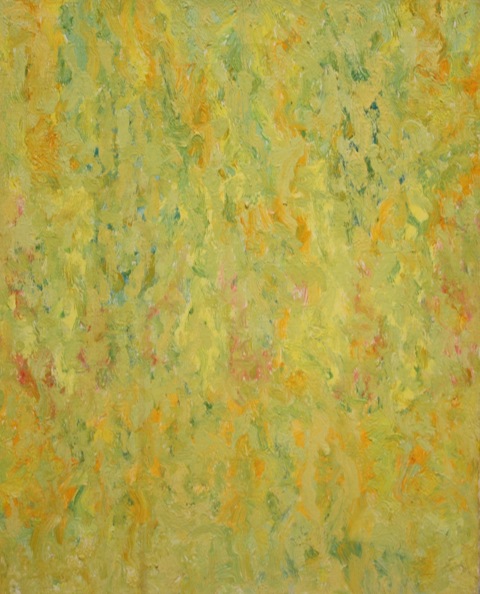
by permission of Derek L. Spratley, Esquire,
Court Appointed Administrator

by permission of Derek L. Spratley, Esquire,
Court Appointed Administrator

by permission of Derek L. Spratley, Esquire,
Court Appointed Administrator

Watercolor on paper
Private collection
© Estate of Beauford Delaney
by permission of Derek L. Spratley, Esquire,
Court Appointed Administrator

(1968) Gouache on paper
Private collection
© Estate of Beauford Delaney
by permission of Derek L. Spratley, Esquire,
Court Appointed Administrator
If you celebrate Easter, I wish you a happy one!
Les Amis Celebrates Women's History Month - Part 4
For the last installment of the Les Amis Celebrates Women's History Month series, I'm featuring images of three sketches that Beauford created for Unsung Americans Sung, the book edited by Beauford's friend, W. C. Handy.
Phillis Wheatley

Phyllis Wheatley
Pencil sketch
© Estate of Beauford Delaney
by permission of Derek L. Spratley, Esquire,
Court Appointed Administrator
Beauford's sketch was undoubtedly inspired by the 1773 engraving that graced the cover of Phillis (Phyllis) Wheatley's Poems on Various Subjects, Religious and Moral.

Portrait of Phillis Wheatley
Attributed to Scipio Moorhead
Image in Public Domain
Wheatley was the first black woman to publish a book of poetry in the U.S. Read about her here.
Sissieretta Jones

Pencil sketch
© Estate of Beauford Delaney
by permission of Derek L. Spratley, Esquire,
Court Appointed Administrator

c. 1911 Addison N. Scurlock
H. Lawrence Freeman Collection
Rare Book & Manuscript Library
Columbia University
Fair Use Claim
Florence Mills

Pencil sketch
© Estate of Beauford Delaney
by permission of Derek L. Spratley, Esquire,
Court Appointed Administrator

1927 James Van Der Zee
Vintage gelatin silver print
Pennsylvania Academy of the Fine Arts
Fair Use Claim
Les Amis Celebrates Women's History Month - Part 3
During this first celebration of Women's History Month on the Les Amis blog, I've brought you images of Beauford's mom, Delia, and images of two renowned singers whose images Beauford captured on canvas.
Today, I am sharing images of two little known works in which Beauford portrayed an icon of African-American and women's history: Harriet Tubman.
The first work is a pencil sketch that appears in a book called Unsung Americans Sung, which was edited by W. C. Handy and published in 1944.
 Harriet Tubman
Pencil sketch
© Estate of Beauford Delaney
by permission of Derek L. Spratley, Esquire,
Court Appointed Administrator
It was likely inspired by the photograph shown below:

Harriet Tubman (1911), full-length portrait,
seated in chair, facing front,
probably at her home in Auburn, New York
Source: Library of Congress
Public Domain
The second is a work on paper, most recently shown at the Transcending Race and Time exhibition at the University of Tennessee (UT) Downtown Gallery in Knoxville.

Portrait of Harriet Tubman at the UT Downtown Gallery
(1953) Mixed Media on Paper
© Estate of Beauford Delaney
by permission of Derek L. Spratley, Esquire,
Court Appointed Administrator
A black and white image of this work appears in David Leeming's biography entitled Amazing Grace: A Life of Beauford Delaney.

In Amazing Grace, the portrait is (mis)labeled as Delia Delaney, as shown in the image above.
The reasoning behind the assertion that the label in the book is incorrect is as follows:
1) The Beauford Delaney estate has recorded the name of the work as Harriet Tubman.
2) The person in the work looks very much like Harriet Tubman and not very much like Delia Delaney.

Horatio Seymour Squyer
National Portrait Gallery
Public Domain
Harriet Tubman's birth year has never definitively been established (c. 1820), but we know that she died on March 10, 1913.
To learn more about this famous abolitionist and women's suffragist, click HERE.
Les Amis Celebrates Women's History Month - Part 2
Beauford portrayed two legendary female singers on canvas: Marian Anderson and Ella Fitzgerald.

(1965) Oil on canvas
Virginia Museum of Fine Arts
J. Harwood and Louise B. Cochrane Fund for American Art
© Estate of Beauford Delaney
by permission of Derek L. Spratley, Esquire,
Court Appointed Administrator

(1968) Oil on canvas
Permanent collection of the SCAD Museum of Art, Savannah
Gift of Dr. Walter O. and Mrs. Linda J. Evans
© Estate of Beauford Delaney
by permission of Derek L. Spratley, Esquire,
Court Appointed Administrator
The Anderson portrait inspired British opera singer Peter Brathwaite to create his own version of it as part of the 2020 Getty Museum Challenge to use everyday items at home to recreate a work of art. He launched his own project called "Rediscovering Black Portraiture" and recreated 93 works with amazing results.
Brathwaite poses in all his renditions of classic portraits of black people, from Mansa Musa to Barack Obama. Women were not off limits - he recreated portraits of the Queen of Sheba, the Virgin of Guadelupe, and other women in addition to Marian Anderson.
Brathwaite painted a raincoat to reproduce Anderson's jacket and painted his face to resemble the hue of Anderson's skin in Beauford's portrait. (No mention is made of whether he was aware of Beauford's raincoat painting, which is held by the Minneapolis Institute of Art.)
He created an 8-part tweet from the information posted about the reproduction on his Website.
To see the diptych of the photo of Brathwaite as Marian Anderson and the image of Beauford's portrait of her, click HERE.