

More on Beauford's Paris: Ile Saint-Louis
Prompted by last week's posting on Beauford's Paris: Ile Saint-Louis, Beauford's dear friend Burt Reinfrank confirmed that the building that I photographed for the article is indeed the one where James Jones and his family lived on Ile Saint-Louis. Here's a better photo of it:

10, quai d'Orléans
© Discover Paris!

Entrance to 10, quai d'Orléans at 2, rue Budé
© Discover Paris!
Burt and James Jones were on the board of the American Center. Burt commented that Beauford was frequently a guest at the Jones' home for Sunday afternoon pasta. Jones' wife Gloria had the custom of making pasta on Sundays and the couple would have an open house of sorts, inviting numerous people over to enjoy the food and camaraderie.
Burt affirmed Jones' love of Beauford's paintings and told me how Jones arranged to have Life Magazine photograph him in Beauford's rue Vercingétorix studio in an effort to give Beauford some publicity.

Composite of photo from August 4, 1967 Life Magazine article
Photographer: Loomis Dean
Thanks Burt, for contributing yet another anecdote to the Les Amis blog!

© Discover Paris!

© Discover Paris!
Burt and James Jones were on the board of the American Center. Burt commented that Beauford was frequently a guest at the Jones' home for Sunday afternoon pasta. Jones' wife Gloria had the custom of making pasta on Sundays and the couple would have an open house of sorts, inviting numerous people over to enjoy the food and camaraderie.
Burt affirmed Jones' love of Beauford's paintings and told me how Jones arranged to have Life Magazine photograph him in Beauford's rue Vercingétorix studio in an effort to give Beauford some publicity.

Photographer: Loomis Dean
Thanks Burt, for contributing yet another anecdote to the Les Amis blog!
Beauford's Paris: Ile Saint-Louis

© Discover Paris!
American writer James Jones and his family lived in an apartment building on quai'd'Orléans, Ile Saint-Louis from 1958-1975. James Baldwin introduced him to Beauford in Paris in 1958. According to David A. Leeming's biography Amazing Grace: A Life of Beauford Delaney
 , the Joneses became so fond of Beauford that they eventually gave him a key to their apartment and invited him over frequently. They also commissioned several paintings from him. Jones supported his application for a Fairfield Foundation grant in 1964 and gave Beauford a tribute at his October 1964 one-man show at the Galerie Lambert (no longer in existence) at number 14 on the island's main thoroughfare, rue Saint-Louis en l'Ile. Five years later, Jones would comment at another of Beauford's shows that he was "the complete artist, not just in the medium of paint but in the medium of life."
© Discover Paris!
Most of the information that I have found about the Jones' abode indicates that it was located at 10, quai d'Orléans. One story published by the James Jones Literary Society indicates that the Joneses lived on the second floor. As I walked along the quay yesterday, I decided to look for the building and take a photo of the place where Beauford spent so much time over the years. Curiously, I found no edifice that bears the number 10 on its façade.
Because of a description in Frommer's Paris from $95 a Day, which indicates that the Joneses lived on the corner of rue Budé and quai d'Orléans, I must assume that the "round cornered" building pictured below is indeed the place. (12, quai d'Orléans is plainly indicated on the façade of the building on the opposite corner of the intersection.)

© Discover Paris!
The corner windows in this building overlook the Seine, where the Joneses and their visitors - including Beauford - enjoyed a view of pont Saint-Louis and the flying buttresses at the rear of Notre Dame Cathedral.
33rd Anniversary of Beauford's Passing
Monday, March 26th will be the 33rd anniversary of Beauford's death.
The photo below graces the stone that Les Amis de Beauford Delaney had installed at Beauford's final resting place in Thiais Cemetery in 2010.

Portrait of Beauford Delaney
(ca. 1950)
Possibly by Gjon Mili
Beauford was "all about art." I'd like to celebrate this anniversary date by sharing with you some of my favorite works by this magnificent artist and humble human spirit.

Untitled (Abstract Composition)
(1961) Oil monotype on heavy wove paper
Photo courtesy of Swann Auction Galleries

Woman in White
(1964-65) Oil on canvas
Photo from Bill Hodges Gallery Web site

Still Life with Pears
(1946) Oil on canvas
Image from the Artsmia.org Website

Portrait of a Man in Green
Beauford Delaney
Oil (undated)
Photo from catalog of Beauford Delaney: A Retrospective
Studio Museum in Harlem


The photo below graces the stone that Les Amis de Beauford Delaney had installed at Beauford's final resting place in Thiais Cemetery in 2010.

(ca. 1950)
Possibly by Gjon Mili
Beauford was "all about art." I'd like to celebrate this anniversary date by sharing with you some of my favorite works by this magnificent artist and humble human spirit.

(1961) Oil monotype on heavy wove paper
Photo courtesy of Swann Auction Galleries

(1964-65) Oil on canvas
Photo from Bill Hodges Gallery Web site

(1946) Oil on canvas
Image from the Artsmia.org Website

Beauford Delaney
Oil (undated)
Photo from catalog of Beauford Delaney: A Retrospective
Studio Museum in Harlem

Composition 16
(1954-56) Oil on canvas
© Estate of Beauford Delaney; Private Collection
© Estate of Beauford Delaney; Private Collection
Courtesy of Michael Rosenfeld Gallery, LLC, New York , NY

Beauford Delaney
Self-portrait
Oil on canvas (1944)
Art Institute of Chicago
Beauford at the Armory Show 2012
The Armory Show was held from March 8-11, 2012 at Piers 92 and 94 in Manhattan. Pier 92 was dedicated to international dealers specializing in historically significant Modern and contemporary art. The Michael Rosenfeld Gallery had exhibit space at Pier 92 and showed three of Beauford's paintings among the works of forty artists:

Untitled
(1958) Gouache on paper
25 1/2" x 19 5/8", signed and dated
© Estate of Beauford Delaney
Courtesy of Michael Rosenfeld Gallery LLC, New York , NY

Untitled
(1959) Gouache on paper
25 5/8" x 19 3/4", signed and dated
© Estate of Beauford Delaney
Courtesy of Michael Rosenfeld Gallery LLC, New York , NY

Untitled
(1959) Gouache on paper
25" x 19 5/8", signed and dated
© Estate of Beauford Delaney
Courtesy of Michael Rosenfeld Gallery LLC, New York , NY
All of these works were produced during Beauford's Paris years, when he lived in the suburban town of Clamart. During the summer of 1958, he began using color in his paintings to convey the tumult of his inner life - to embrace and confront it as opposed to repelling it through painting as he had done previously. By the end of the year, he was preparing for two group shows to be held in 1959.

(1958) Gouache on paper
25 1/2" x 19 5/8", signed and dated
© Estate of Beauford Delaney
Courtesy of Michael Rosenfeld Gallery LLC, New York , NY

(1959) Gouache on paper
25 5/8" x 19 3/4", signed and dated
© Estate of Beauford Delaney
Courtesy of Michael Rosenfeld Gallery LLC, New York , NY

(1959) Gouache on paper
25" x 19 5/8", signed and dated
© Estate of Beauford Delaney
Courtesy of Michael Rosenfeld Gallery LLC, New York , NY
All of these works were produced during Beauford's Paris years, when he lived in the suburban town of Clamart. During the summer of 1958, he began using color in his paintings to convey the tumult of his inner life - to embrace and confront it as opposed to repelling it through painting as he had done previously. By the end of the year, he was preparing for two group shows to be held in 1959.
Radio France Interview: Philippe Briet and Darthea Speyer Talk about Beauford
I had the unexpected pleasure of receiving a call from Catherine de la Clergerie of Radio France a few days ago. She told me that she remembers seeing Beauford frequently at Le Select in Montparnasse and wanted to offer me a recording of part of an interview that Radio France recorded with Philippe Briet and Darthea Speyer at the Darthea Speyer Gallery in 1992. The subject: Beauford!

Darthea Speyer Gallery
© Discover Paris!
The roughly 30-minute recording begins with the voice of Darthea Speyer explaining why she decided to mount a retrospective of Beauford's work in 1992. She mentioned that Philippe Briet had mounted a Beauford retrospective a few years earlier and said that she felt she should have done one herself years ago. She also reflected that she should have mounted her first one-man show (1973) of Beauford's work earlier, before his health began to decline.
The majority of the interview featured Phillipe Briet. Briet explained how he discovered Beauford's work at the Studio Museum of Harlem and how each painting that he was able to view evoked in him "profound joy." He recounted how he sought out those who had loaned Beauford's works to the retrospective that was held at the Studio Museum of Harlem in 1978, Richard A. Long as curator of the retrospective, and eventually Darthea Speyer and Solange du Closel in Paris.
What was most interesting about the interview was listening to Briet talk about Beauford as a person. Though he never met Beauford, he expressed definite opinions about Beauford's personality and characteristics. He described Beauford as "one of the most positive beings that one could know in the 20th century." He saw Beauford as a "mystic," someone who was interested in the "soul" of things. He expressed his belief that Beauford's life was one of "solitude, reflection, and concentration."

Philippe Briet
Photo courtesy of Catherine de la Clergerie
Briet said that if he had to cite the work of American abstract expressionist painters whose work "approached" that of Beauford with regard to "sensitivity," he would select Clyfford Still and Mark Tobey. He believed that Beauford's interest in light could not be compared to that of the Impressionists, who were concerned with the physical aspects of light and its effect on objects. He thought that Beauford's work was much more powerful and compared it to that of Rembrandt.
Regarding Beauford's habit of draping his studios in white sheets, Briet considered that this represented Beauford's desire to "see" silence, to be able to look into eternity, to look into time. He saw gravity and pain in Beauford's face as Beauford represented himself in his self-portraits. He thought that the fact that Beauford painted both abstract and figurative works might represent what Beauford saw through his own eyes when he was alone (abstract) juxtaposed with what others saw in the absolute sense (figurative).
Briet said that few artists have the ambition and the pride to have a sense of eternity. This is what he looked for in art - works that made him reflect on time and would make those seeing the works centuries later reflect on time as well. He considered such works to be true art and felt that Beauford's work had this quality.

© Discover Paris!
The roughly 30-minute recording begins with the voice of Darthea Speyer explaining why she decided to mount a retrospective of Beauford's work in 1992. She mentioned that Philippe Briet had mounted a Beauford retrospective a few years earlier and said that she felt she should have done one herself years ago. She also reflected that she should have mounted her first one-man show (1973) of Beauford's work earlier, before his health began to decline.
The majority of the interview featured Phillipe Briet. Briet explained how he discovered Beauford's work at the Studio Museum of Harlem and how each painting that he was able to view evoked in him "profound joy." He recounted how he sought out those who had loaned Beauford's works to the retrospective that was held at the Studio Museum of Harlem in 1978, Richard A. Long as curator of the retrospective, and eventually Darthea Speyer and Solange du Closel in Paris.
What was most interesting about the interview was listening to Briet talk about Beauford as a person. Though he never met Beauford, he expressed definite opinions about Beauford's personality and characteristics. He described Beauford as "one of the most positive beings that one could know in the 20th century." He saw Beauford as a "mystic," someone who was interested in the "soul" of things. He expressed his belief that Beauford's life was one of "solitude, reflection, and concentration."

Photo courtesy of Catherine de la Clergerie
Briet said that if he had to cite the work of American abstract expressionist painters whose work "approached" that of Beauford with regard to "sensitivity," he would select Clyfford Still and Mark Tobey. He believed that Beauford's interest in light could not be compared to that of the Impressionists, who were concerned with the physical aspects of light and its effect on objects. He thought that Beauford's work was much more powerful and compared it to that of Rembrandt.
Regarding Beauford's habit of draping his studios in white sheets, Briet considered that this represented Beauford's desire to "see" silence, to be able to look into eternity, to look into time. He saw gravity and pain in Beauford's face as Beauford represented himself in his self-portraits. He thought that the fact that Beauford painted both abstract and figurative works might represent what Beauford saw through his own eyes when he was alone (abstract) juxtaposed with what others saw in the absolute sense (figurative).
Briet said that few artists have the ambition and the pride to have a sense of eternity. This is what he looked for in art - works that made him reflect on time and would make those seeing the works centuries later reflect on time as well. He considered such works to be true art and felt that Beauford's work had this quality.
Beauford at the Whitney Studio Galleries - 1930
According to David A. Leeming, author of Amazing Grace: A Life of Beauford Delaney :
:
Beauford's first major break as a painter came in January 1930 when he approached a woman named Mungo Park about his work. Park worked at the Whitney Studio Galleries, which would become the Whitney Museum of American Art the following year.
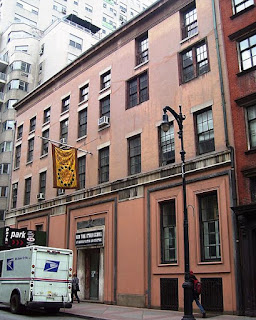
Original location of the Whitney Studio Galleries
8-12 West 8th Street, Manhattan
Photo by Beyond My Ken from Wikipedia
Park looked at Beauford's portfolio of drawings and introduced him to Juliana Force, director of purchasing and exhibition at the Whitney. Force offered Beauford the chance to exhibit his art at a four-person show that ran from February 26 to March 8, 1930, with the only stipulation being that he produce additional pieces for the event. He worked diligently, and entered the exhibit with three oil portraits and nine pastels.

Juliana Force
Photo from Flickr
Beauford won first prize at this show for a pastel drawing of Billy Pierce, who was his employer at the time. Pierce was the owner of a dance school where Beauford had begun making a name for himself with his pastel and charcoal drawings of the school's dancers and clients. These drawings were part of the portfolio that Beauford showed to Mungo Park to earn a place in the show.
The remaining drawings that Beauford entered in the Whitney show were all awarded honorable mention.
As a result of his interaction with Miss Park and Mrs. Force, the Whitney offered Beauford a job as caretaker and offered him living space and a studio in the basement of the building. This was the beginning of his stay in Greenwich Village.
:Beauford's first major break as a painter came in January 1930 when he approached a woman named Mungo Park about his work. Park worked at the Whitney Studio Galleries, which would become the Whitney Museum of American Art the following year.

8-12 West 8th Street, Manhattan
Photo by Beyond My Ken from Wikipedia
Park looked at Beauford's portfolio of drawings and introduced him to Juliana Force, director of purchasing and exhibition at the Whitney. Force offered Beauford the chance to exhibit his art at a four-person show that ran from February 26 to March 8, 1930, with the only stipulation being that he produce additional pieces for the event. He worked diligently, and entered the exhibit with three oil portraits and nine pastels.

Photo from Flickr
Beauford won first prize at this show for a pastel drawing of Billy Pierce, who was his employer at the time. Pierce was the owner of a dance school where Beauford had begun making a name for himself with his pastel and charcoal drawings of the school's dancers and clients. These drawings were part of the portfolio that Beauford showed to Mungo Park to earn a place in the show.
The remaining drawings that Beauford entered in the Whitney show were all awarded honorable mention.
As a result of his interaction with Miss Park and Mrs. Force, the Whitney offered Beauford a job as caretaker and offered him living space and a studio in the basement of the building. This was the beginning of his stay in Greenwich Village.
Beauford at the Roko Gallery for Negro History Week 1949
For Les Amis' last blog posting for Black History Month 2012, I am pleased that I have unearthed a tidbit of information to share about Beauford and the celebration of African-American history in the U.S. I found it in David Leeming's biography entitled Amazing Grace: A Life of Beauford Delaney.
Beauford exhibited paintings at the now defunct Roko Gallery in February 1949 in a group show of African-American artists as a celebration of Negro History Week. One of the works shown was his Still Life with Pears (aka Still Life with Fruit), shown below:
Still Life with Pears
(1946) Oil on canvas
Image from the Artsmia.org Website
This painting was particularly admired by art critic Elaine de Koonig, who described it as being a "violent impasto."
According to Leeming, most of the paintings that Beauford entered into this show were "expressionistic." But he also exhibited a painting of a "specifically African-American subject" called Harlem Blue. It depicted a nighttime Harlem scene that Beauford rendered in the style of his Greene Street paintings.
.Beauford exhibited paintings at the now defunct Roko Gallery in February 1949 in a group show of African-American artists as a celebration of Negro History Week. One of the works shown was his Still Life with Pears (aka Still Life with Fruit), shown below:
(1946) Oil on canvas
Image from the Artsmia.org Website
This painting was particularly admired by art critic Elaine de Koonig, who described it as being a "violent impasto."
According to Leeming, most of the paintings that Beauford entered into this show were "expressionistic." But he also exhibited a painting of a "specifically African-American subject" called Harlem Blue. It depicted a nighttime Harlem scene that Beauford rendered in the style of his Greene Street paintings.
Two Beauford Delaneys Sold at 2012 African-American Fine Art Auction
As I reported a couple of weeks ago, Swann Galleries proposed three Beauford Delaney works it its February 2012 African-American Fine Art auction. Here are the results:
Lot 22 (my favorite of the three paintings) sold for $15,000*, the lower limit of the estimated sales price.
Lot 22
Untitled (Abstract Composition)
(1961) Oil monotype on heavy wove paper
Photo courtesy of Swann Auction Galleries
Lot 129 is unsold.

Lot 129
Untitled
(1962) Gouache and watercolor on wove paper
Photo courtesy of Swann Auction Galleries
Lot 130 sold for $14,000*. The upper limit of the estimated sale price was $15,000.

Lot 130
Untitled (Abstraction in Green)
(1964) Gouache on thick wove paper
Photo courtesy of Swann Auction Galleries
Swann Galleries generally holds two African-American Fine Art auctions each year - one in February and one in October. If any of Beauford's works will be offered for sale during the next auction, I'll report on it here!
*At auction, there are two prices--the hammer price, or the price at which the item sells during the auction, and the price with the buyer's premium. All auction houses have a buyer's premium that the buyer pays to the auction house on top of the hammer price. Swann's premium is 20%. The prices indicated in this article are hammer prices.
Lot 22 (my favorite of the three paintings) sold for $15,000*, the lower limit of the estimated sales price.
Untitled (Abstract Composition)
(1961) Oil monotype on heavy wove paper
Photo courtesy of Swann Auction Galleries
Lot 129 is unsold.

Untitled
(1962) Gouache and watercolor on wove paper
Photo courtesy of Swann Auction Galleries
Lot 130 sold for $14,000*. The upper limit of the estimated sale price was $15,000.

Untitled (Abstraction in Green)
(1964) Gouache on thick wove paper
Photo courtesy of Swann Auction Galleries
Swann Galleries generally holds two African-American Fine Art auctions each year - one in February and one in October. If any of Beauford's works will be offered for sale during the next auction, I'll report on it here!
*At auction, there are two prices--the hammer price, or the price at which the item sells during the auction, and the price with the buyer's premium. All auction houses have a buyer's premium that the buyer pays to the auction house on top of the hammer price. Swann's premium is 20%. The prices indicated in this article are hammer prices.
Where to Find Beauford’s Art: Bill Hodges Gallery
Bill Hodges is a champion of Beauford’s art. He has shown Beauford’s work in past expositions at his Manhattan gallery and presents images of ten Beauford Delaney paintings on his Web site.
One of the paintings shown on the site – Woman in White – is in Hodges’ personal collection:
Woman in White
(1964-65) Oil on canvas
Photo from Bill Hodges Gallery Web site
Several images on the Web site are found in two catalogs from the past expositions in which Hodges showcased Beauford’s work. They are entitled African American Artists - III and Abstractionist Visions: Works on Paper. A third catalog – African-American Artists - II – contains images that are not displayed on line.
I found the images from Abstractionists Visions to be absolutely stunning! Unfortunately, I am not able to reproduce them for you on this blog. To see some of them, visit www.billhodgesgallery.com/aaindex.html and click on Beauford’s name. (I have noted that the images in the catalog are much more vibrant and powerful than the ones online.)
Hodges makes several observations about Beauford’s paintings in the Abstractionists Visions catalog. He states that Beauford’s “use of strong and vibrant colors is utterly remarkable,” and expresses his conviction that the strength of the works on paper that he included in the exposition “far exceed many works on canvas.” He goes even further, stating that he had “yet to see a canvas by Delaney that exceeds the vigor of the works on pages 5, 6, and 7” (from left to right, images #3, #6, and #8 of the reproductions of abstract paintings on the Web site).
Contrary to what is indicated on the Web site, the painting below (which was not included in any of the catalogs) has not yet been sold.

Untitled*
Abstraction in Pink, Yellow, and Green
(1964) Oil on paper
Photo from Bill Hodges Gallery Web site
To see Woman in White, and to pick up your catalogs, visit the Bill Hodges Gallery:
Bill Hodges Gallery
24 West 57th St.
New York, NY 10019
Tel: 212-333-2640
Fax: 212-333-2644
Gallery Hours
Tuesday to Friday: 10am-6pm
Saturday: 12:30pm-5:30pm
*A viewing of Untitled can be requested by calling the gallery in advance of your visit.
One of the paintings shown on the site – Woman in White – is in Hodges’ personal collection:
(1964-65) Oil on canvas
Photo from Bill Hodges Gallery Web site
Several images on the Web site are found in two catalogs from the past expositions in which Hodges showcased Beauford’s work. They are entitled African American Artists - III and Abstractionist Visions: Works on Paper. A third catalog – African-American Artists - II – contains images that are not displayed on line.
I found the images from Abstractionists Visions to be absolutely stunning! Unfortunately, I am not able to reproduce them for you on this blog. To see some of them, visit www.billhodgesgallery.com/aaindex.html and click on Beauford’s name. (I have noted that the images in the catalog are much more vibrant and powerful than the ones online.)
Hodges makes several observations about Beauford’s paintings in the Abstractionists Visions catalog. He states that Beauford’s “use of strong and vibrant colors is utterly remarkable,” and expresses his conviction that the strength of the works on paper that he included in the exposition “far exceed many works on canvas.” He goes even further, stating that he had “yet to see a canvas by Delaney that exceeds the vigor of the works on pages 5, 6, and 7” (from left to right, images #3, #6, and #8 of the reproductions of abstract paintings on the Web site).
Contrary to what is indicated on the Web site, the painting below (which was not included in any of the catalogs) has not yet been sold.

Abstraction in Pink, Yellow, and Green
(1964) Oil on paper
Photo from Bill Hodges Gallery Web site
To see Woman in White, and to pick up your catalogs, visit the Bill Hodges Gallery:
Bill Hodges Gallery
24 West 57th St.
New York, NY 10019
Tel: 212-333-2640
Fax: 212-333-2644
Gallery Hours
Tuesday to Friday: 10am-6pm
Saturday: 12:30pm-5:30pm
*A viewing of Untitled can be requested by calling the gallery in advance of your visit.
Beauford at Cannes
Several months ago, I reported that filmmaker Zachary Miller planned to create a short film (under 30 minutes in length) about Beauford. I am pleased to bring you this update on the project.

Miller's film, which remains unedited and untitled as of today, will be showcased in the Short Film Corner at the 2012 Cannes Film Festival. Showing the film here will increase its chances of being picked up by other international festivals. It will benefit from the use of the label "Short Film Corner," which reinforces its potential and increase its chances of professional distribution.
As part of the Short Film Corner, the film about Beauford will not be in the Short Film Competition. It will be referenced on www.shortfilmcorner.com and in the Catalogue du Court, which is published by the Cannes Film Festival.
The dates for this year's festival and the Short Film Corner are May 16-27, 2012.

Miller's film, which remains unedited and untitled as of today, will be showcased in the Short Film Corner at the 2012 Cannes Film Festival. Showing the film here will increase its chances of being picked up by other international festivals. It will benefit from the use of the label "Short Film Corner," which reinforces its potential and increase its chances of professional distribution.
As part of the Short Film Corner, the film about Beauford will not be in the Short Film Competition. It will be referenced on www.shortfilmcorner.com and in the Catalogue du Court, which is published by the Cannes Film Festival.
The dates for this year's festival and the Short Film Corner are May 16-27, 2012.
Where to Find Beauford's Art: Swann Galleries 2012 African-American Fine Art Sale
As I reported in my first article about Swann Galleries last October, the auction house launched its department of African-American Fine Art in 2007. Swann Galleries is the only major auction house conducting regular sales of African-American fine art today. The works that it sells are consigned by individuals, libraries, schools, museums, and dealers the world over. Thus far, Swann Galleries has put twenty-eight (28) of Beauford’s paintings up for auction.
For the February 2012 African-American Fine Art auction, Swann Galleries is proposing three Beauford Delaney works that were painted when Beauford lived in Paris. The gallery catalog notes that his Paris paintings reflect “a sensitivity to light and a quieter voice than the noise and tumult depicted in his views of Greenwich Village.”
The first one (my favorite of the three) is an oil painting in blue, black, orange, and yellow:
Lot 22
Untitled (Abstract Composition)
(1961) Oil monotype on heavy wove paper
Photo courtesy of Swann Auction Galleries
It is signed, dated and inscribed "La ...." in ink at the lower right. No further description of the work is provided. The estimated sale price is $15,000 to $25,000.
The second and third paintings are studies in green:
Lot 129
Untitled
(1962) Gouache and watercolor on wove paper
Photo courtesy of Swann Auction Galleries
Lot 130
Untitled (Abstraction in Green)
(1964) Gouache on thick wove paper
Photo courtesy of Swann Auction Galleries
The catalog describes Lot 129 as “lush” and “atmospheric” and indicates that the painting is signed and dated in ink at the lower right. It quotes art historian Michael D. Plante as saying the following about the work: "nothing is described nor contoured; the viewer is left to be seduced by Delaney's painterly touch." The estimated sale price is $10,000 - $15,000.
The catalog description of Lot 130 is limited to the notation that the painting is signed in red ink and dated in blue ink at the lower right. The estimated sale price is $10,000 - $15,000.
The African-American Fine Art auction will be held on February 16, 2012. To find out about the buying process, visit the following page on the gallery’s Web site: http://www.swanngalleries.com/buying2.cgi.
After the auction is over, I will report on which of the abovementioned paintings sold and at what price.
For the February 2012 African-American Fine Art auction, Swann Galleries is proposing three Beauford Delaney works that were painted when Beauford lived in Paris. The gallery catalog notes that his Paris paintings reflect “a sensitivity to light and a quieter voice than the noise and tumult depicted in his views of Greenwich Village.”
The first one (my favorite of the three) is an oil painting in blue, black, orange, and yellow:
Untitled (Abstract Composition)
(1961) Oil monotype on heavy wove paper
Photo courtesy of Swann Auction Galleries
It is signed, dated and inscribed "La ...." in ink at the lower right. No further description of the work is provided. The estimated sale price is $15,000 to $25,000.
The second and third paintings are studies in green:
Untitled
(1962) Gouache and watercolor on wove paper
Photo courtesy of Swann Auction Galleries
Untitled (Abstraction in Green)
(1964) Gouache on thick wove paper
Photo courtesy of Swann Auction Galleries
The catalog describes Lot 129 as “lush” and “atmospheric” and indicates that the painting is signed and dated in ink at the lower right. It quotes art historian Michael D. Plante as saying the following about the work: "nothing is described nor contoured; the viewer is left to be seduced by Delaney's painterly touch." The estimated sale price is $10,000 - $15,000.
The catalog description of Lot 130 is limited to the notation that the painting is signed in red ink and dated in blue ink at the lower right. The estimated sale price is $10,000 - $15,000.
The African-American Fine Art auction will be held on February 16, 2012. To find out about the buying process, visit the following page on the gallery’s Web site: http://www.swanngalleries.com/buying2.cgi.
After the auction is over, I will report on which of the abovementioned paintings sold and at what price.
Where to Find Beauford's Art: High Museum of Art
The High Museum of Art in Atlanta holds a single work by Beauford - a portrait of Richard A. Long.

The museum's Web site has the following to say about the painting:
Richard wrote a tribute to Beauford during the time that Les Amis de Beauford Delaney was raising money for Beauford's tombstone. Access it by clicking here.
Les Amis also recorded Richard's reminiscences on Beauford on video:
Special Video 1
Special Video 2
The High Museum of Art mounted an exposition of Beauford's works entitled Beauford Delaney: The Color Yellow, which hung at the museum from February 9 through May 5, 2002.

Catalog cover for The Color Yellow
It traveled to the Studio Museum in Harlem (July 10 - September 15, 2002), the Anacostia Museum and Center for African History and Culture at the Smithsonian Institution (October 11 - December 30, 2002), and the Fogg Art Museum at Harvard University (February 8 - May 4, 2003). The catalog for the exposition included a poem that Richard dedicated to Beauford called "Ascending."

Portrait of Richard A. Long
(1965) Oil on canvas
The museum's Web site has the following to say about the painting:
This quarter-length portrait of Long is painted with intense shades of yellow against a soft blue background. It is a tender portrait of a friend that illustrates both the promise of a future unfettered by racial strife and the burgeoning talent of its young subject.
Richard wrote a tribute to Beauford during the time that Les Amis de Beauford Delaney was raising money for Beauford's tombstone. Access it by clicking here.
Les Amis also recorded Richard's reminiscences on Beauford on video:
Special Video 2
The High Museum of Art mounted an exposition of Beauford's works entitled Beauford Delaney: The Color Yellow, which hung at the museum from February 9 through May 5, 2002.

It traveled to the Studio Museum in Harlem (July 10 - September 15, 2002), the Anacostia Museum and Center for African History and Culture at the Smithsonian Institution (October 11 - December 30, 2002), and the Fogg Art Museum at Harvard University (February 8 - May 4, 2003). The catalog for the exposition included a poem that Richard dedicated to Beauford called "Ascending."
Beauford and the Influence of Paul Cézanne
Beauford was quite interested in the modernist style of painting. He was particularly enamored of the works of Claude Monet, but also loved those of Paul Cézanne. His cityscape entitled Central Park, dated 1950, was described by art critic Mark Lane as being "like Van Gogh in brushing, but like Cézanne in fête-champêtre (garden party) spirit."

Central Park note card*
Pomegranate
According to David Leeming (Beauford's sole biographer), Beauford was encouraged by his friend Stuart Davis to study the works of Cézanne, Gauguin, Matisse, Picasso, and Van Gogh. Leeming indicates that there is a "Cézanne-like distortion of forms and perspective" in the first of Beauford's Greene Street paintings that portrays a "below-the-surface reality," and that Beauford had been deeply influenced by European painting since the 1930s - 20+ years before moving to France. Leeming found the names of Cézanne and other artists such as Renoir and Modigliani written in Beauford's sketchbook journal of the 1940s.
The Musée du Luxembourg is currently hosting an exposition of Cézanne's works called Cézanne et Paris. It was organized in collaboration with the Petit Palais in Paris, and benefits from the loan of several paintings by the Musée d'Orsay. This expo presents an excellent opportunity to view the works of an artist that heavily influenced Beauford's style and palette. It runs until February 26, 2012.
Musée du Luxembourg
Open every day
9:00 AM to 10:00 PM Friday through Monday
10:00 AM to 8:00 PM Tuesday through Thursday
Full price: 12 euros
Reduced price: 7.50 euros
Family ticket (2 adults et 2 children from 13 to 25 years of age): 31.50 euros
*Pomegranate sells a folio of ten (10) note cards bearing images of two of Beauford's paintings: Washington Square and Central Park. Find them at http://www.pomegranate.com/0873.html.

Pomegranate
According to David Leeming (Beauford's sole biographer), Beauford was encouraged by his friend Stuart Davis to study the works of Cézanne, Gauguin, Matisse, Picasso, and Van Gogh. Leeming indicates that there is a "Cézanne-like distortion of forms and perspective" in the first of Beauford's Greene Street paintings that portrays a "below-the-surface reality," and that Beauford had been deeply influenced by European painting since the 1930s - 20+ years before moving to France. Leeming found the names of Cézanne and other artists such as Renoir and Modigliani written in Beauford's sketchbook journal of the 1940s.
The Musée du Luxembourg is currently hosting an exposition of Cézanne's works called Cézanne et Paris. It was organized in collaboration with the Petit Palais in Paris, and benefits from the loan of several paintings by the Musée d'Orsay. This expo presents an excellent opportunity to view the works of an artist that heavily influenced Beauford's style and palette. It runs until February 26, 2012.
Musée du Luxembourg
Open every day
9:00 AM to 10:00 PM Friday through Monday
10:00 AM to 8:00 PM Tuesday through Thursday
Full price: 12 euros
Reduced price: 7.50 euros
Family ticket (2 adults et 2 children from 13 to 25 years of age): 31.50 euros
*Pomegranate sells a folio of ten (10) note cards bearing images of two of Beauford's paintings: Washington Square and Central Park. Find them at http://www.pomegranate.com/0873.html.
Beauford's Trustees
In January 1976, a French judge created a "trusteeship" to handle Beauford's affairs. Beauford had been admitted to Saint-Anne's, a psychiatric institution, several months before. He eventually died there.
The judge appointed seven of Beauford's closest friends as members of the panel of trustees: James Baldwin, Solange du Closel, Burt Reinfrank, Bernard Hassell, Darthea Speyer, Ahmed Bioud, and James LeGros.
Beauford created portraits of at least six of the seven trustees prior to entering Sainte-Anne's. (I have never seen or heard of a portrait of James LeGros.) I honor them on Beauford's behalf in this blog posting by presenting their portraits below.

James Baldwin
1963 Pastel on paper
National Portrait Gallery, Smithsonian Institute

Mme du Closel No. 4
1972 Pastel on paper
G. R. N'Namdi Gallery

Burton Reinfrank
1968 Oil on canvas
Image courtesy of Burton Reinfrank

Bernard Hassell
ca. 1971 Oil on canvas
Private collection

Darthea
1965 Oil on canvas
Image courtesy of Galerie Darthea Speyer

Ahmed Bioud
1964 Oil on canvas
© Estate of Beauford Delaney
Courtesy of Michael Rosenfeld Gallery, LLC, New York , NY
The judge appointed seven of Beauford's closest friends as members of the panel of trustees: James Baldwin, Solange du Closel, Burt Reinfrank, Bernard Hassell, Darthea Speyer, Ahmed Bioud, and James LeGros.
Beauford created portraits of at least six of the seven trustees prior to entering Sainte-Anne's. (I have never seen or heard of a portrait of James LeGros.) I honor them on Beauford's behalf in this blog posting by presenting their portraits below.

1963 Pastel on paper
National Portrait Gallery, Smithsonian Institute

1972 Pastel on paper
G. R. N'Namdi Gallery

1968 Oil on canvas
Image courtesy of Burton Reinfrank

ca. 1971 Oil on canvas
Private collection

1965 Oil on canvas
Image courtesy of Galerie Darthea Speyer

1964 Oil on canvas
© Estate of Beauford Delaney
Courtesy of Michael Rosenfeld Gallery, LLC, New York , NY
Fix Me Jesus: Beauford's Solace in December 1953
December 30, 1901
************
In December 1953, Beauford and the rest of the citizens of Paris were experiencing one of the coldest winters on record. According to David Leeming's biography entitled Amazing Grace: A Life of Beauford Delaney
, Beauford tried to keep warm in his freezing room at the Hôtel des Ecoles by wrapping himself in a blanket. He wrote notes to himself to keep his inner voices of "paranoia and depression" at bay, and often copied the lyrics of blues songs and spirituals into his journal. One that he particularly favored was "Fix Me Jesus."The video below shows two dancers from the Alvin Ailey Dance Theater in a moving interpretation of this song from the show Revelations. I think that Beauford would have loved the colors and the lighting of the set, as well as the voices that render this performance so powerful.
from Les Amis de Beauford Delaney!
Where to Find Beauford's Art: Metropolitan Museum of Art
from Les Amis de Beauford Delaney!
****************
The Metropolitan Museum of Art in Manhattan holds a single work by Beauford – a portrait of Stanislas Rodanski:

1963 Oil on canvas
1992.296
Beauford Delaney (1901-1979)
(c) Droits réservés
Metropolitan Museum of Art, New York, USA
George A. Hearn Fund, 1992
The painting is not currently on display.
The Met loaned this painting to the High Museum of Art for a solo exposition of Beauford’s work entitled The Color Yellow. The description in the catalog indicates that it is a “lively mix of complementary colors (yellow-green against red against ochre and orange paired with a hot yellow) and areas of frenetically painted dashes and daubs.”
Whether Beauford ever met Rodanski is questionable because the surrealist poet was confined to a mental institution in Lyon in 1953 – the same year that Beauford arrived in Paris. Beauford painted Rodanski’s portrait in 1963, which means that he may have relied on a photograph or other likeness of the poet, or perhaps even his memory, to create this work. The Color Yellow catalog notes that “of greater significance than the portrait’s biographical accuracy is its visual luminosity and Delaney’s successful representation of individual perception and sagacity.”
The Color Yellow exposition was shown at the High Museum of Art in Atlanta, Georgia from February 9 through May 4, 2002; the Studio Museum in Harlem, New York from July 10 through-September 15, 2002; the Anacostia Museum in Washington, D.C. from October 11 through December 30, 2002; and the Fogg Art Museum in Cambridge, Massachusetts from February 8 through May 4, 2003.
The Rodanski portrait also figured among the works displayed in the exposition called Explorations in the City of Light: African-American Artists in Paris, 1945-1965. The catalog for this show describes the portrait as follows:
In a manner similar to that applied to the subject’s colorful jacket, Mr. Rodansky’s forehead and hands have been built up with thick paint in just as many colors, and the background resembles one of the artist’s contemporaneous abstractions.
Explorations in the City of Light: African-American Artists in Paris, 1945-1965 was shown at the Studio Museum in Harlem, New York from January 18 through June 2, 1996, the Illinois: Chicago Cultural Center in Chicago, Illinois from June 29 through August 29, 1996, and the New Orleans Museum of Art in New Orleans, Louisiana from September 14 through November 10, 1996.
Why Are So Many of Beauford's Paintings in Museum Storage?
In my search for Beauford’s art in museums around the world, I have discovered that most of his work is not being displayed. Rather, it is in storage. (At the Whitney Museum of American Art, all of the Delaneys are in storage.) The more I searched, the more I began to wonder why. For those museums that present some pieces but not others, I wondered how they selected which one(s) to hang.
I asked a museum curator who is quite knowledgeable about Beauford and his works about this and received a detailed reply that I have paraphrased below. According to her:
The first thing to understand is that permanent collection gallery space at any and every museum is limited. Because the goal of museums is to convey as much of the story of art history within its purview (decades, centuries, etc), a certain amount of space has to be allotted to each movement, each period, etc. There may only be the space of one gallery available to show some movements.

Photo of Beauford Delaney: From New York to Paris exposition
Display at Knoxville Museum of Art (2005)
Photo courtesy of Sue Canterbury
Works by the most famous artists are assured of exposure. “Big name” artists such as Jackson Pollack are generally favored over artists such as Beauford (both are abstract expressionist painters from the same time period) because Pollock carries more name recognition and may serve as a bigger draw as far as attendance is concerned.
Whether something is displayed also depends on the strength of the work. Not everything an artist creates is equal – all have their "off" days or experiments. A curator wants the best representations of the artist's work on view to show the artist at his or her peak. The goal is to always raise the bar of quality of the gallery overall.
If a museum owns several works by an artist and they all are reasonably good, one or maybe two will be hung. Assuming the museum doesn't have enough space to indulge in an installation of all the holdings for this artist (which most places don't), it could opt to rotate works every once in awhile to show all of them.
Works on paper cannot be permanently displayed. Watercolors fade with too much exposure and the paper used in prints and drawings can often start to brown prematurely with too much light exposure (depending on acidity content of the paper). I learned about this firsthand when I viewed the watercolor and gouache painting below at the Art Institute of Chicago. It is located in the museum's Prints and Drawings department. The colors of the work are badly faded, so the department keeps it covered and in the dark.

Photo of “Untitled” (1961) by Beauford Delaney
© Discover Paris!
The condition of the work also figures into the decision on whether to display it. Showing a damaged or dirty work would not serve the interests or image of the artist; most people cannot imagine what the work would look like without the damage and the dirt. As an example, viewing a painting with yellowed varnish is like looking at the work through a yellow filter: it extracts the blues from the colors. Thus, blue looks green, green looks yellow, red looks orangish and orange looks yellowish. Fresh yellow looks like dirty harvest gold. White, of course, looks yellowish. Thus, the palette of the painting is completely askew from what the artist intended. This altered color palette can even alter the way in which we read perspective and distance within a painting.
Add to this the fact that most museums are strapped for conservation funds to repair and clean paintings and other works. Things get dirty just by being displayed. Sometimes film deposits caused by the HVAC (heating, ventilation, and air conditioning) system settle on the surfaces, "clouding" the appearance. There are the children who run uncontrolled by their parents and touch things, leaving prints (the oils from which collect dust and dirt and disrupt the continuity of surface appearance), write on them, sneeze on them, or even run into them, causing dishing or tears in a canvas. Museums prioritize the cleaning of the most important works that are already on display (iconic works, works by the most famous artists). Condition and upkeep is an endless, circular process.
Sometimes, a work by an artist may not fit well into the “narrative” or the aesthetic arrangement of the room in which it would be displayed – it clashes with the other works in the room because of its color palette or spirit.
We can’t forget about the “politics” of art – certain works on display could be on loan to the museum from an important donor/foundation that “requires” them to be on view. Otherwise, the donor could withdraw the artwork and possibly decide not to make permanent gifts of the desired pieces to the museum.
Finally, a curator may not like a particular artist's work and thus, decides to put it into storage.
So the fact that Beauford’s work is “off view” at certain institutions may not be an arbitrary decision. For specific answers, it is necessary to contact the individual institutions to find out why they are keeping their Delaneys in storage.
I asked a museum curator who is quite knowledgeable about Beauford and his works about this and received a detailed reply that I have paraphrased below. According to her:
The first thing to understand is that permanent collection gallery space at any and every museum is limited. Because the goal of museums is to convey as much of the story of art history within its purview (decades, centuries, etc), a certain amount of space has to be allotted to each movement, each period, etc. There may only be the space of one gallery available to show some movements.

Display at Knoxville Museum of Art (2005)
Photo courtesy of Sue Canterbury
Works by the most famous artists are assured of exposure. “Big name” artists such as Jackson Pollack are generally favored over artists such as Beauford (both are abstract expressionist painters from the same time period) because Pollock carries more name recognition and may serve as a bigger draw as far as attendance is concerned.
Whether something is displayed also depends on the strength of the work. Not everything an artist creates is equal – all have their "off" days or experiments. A curator wants the best representations of the artist's work on view to show the artist at his or her peak. The goal is to always raise the bar of quality of the gallery overall.
If a museum owns several works by an artist and they all are reasonably good, one or maybe two will be hung. Assuming the museum doesn't have enough space to indulge in an installation of all the holdings for this artist (which most places don't), it could opt to rotate works every once in awhile to show all of them.
Works on paper cannot be permanently displayed. Watercolors fade with too much exposure and the paper used in prints and drawings can often start to brown prematurely with too much light exposure (depending on acidity content of the paper). I learned about this firsthand when I viewed the watercolor and gouache painting below at the Art Institute of Chicago. It is located in the museum's Prints and Drawings department. The colors of the work are badly faded, so the department keeps it covered and in the dark.

© Discover Paris!
The condition of the work also figures into the decision on whether to display it. Showing a damaged or dirty work would not serve the interests or image of the artist; most people cannot imagine what the work would look like without the damage and the dirt. As an example, viewing a painting with yellowed varnish is like looking at the work through a yellow filter: it extracts the blues from the colors. Thus, blue looks green, green looks yellow, red looks orangish and orange looks yellowish. Fresh yellow looks like dirty harvest gold. White, of course, looks yellowish. Thus, the palette of the painting is completely askew from what the artist intended. This altered color palette can even alter the way in which we read perspective and distance within a painting.
Add to this the fact that most museums are strapped for conservation funds to repair and clean paintings and other works. Things get dirty just by being displayed. Sometimes film deposits caused by the HVAC (heating, ventilation, and air conditioning) system settle on the surfaces, "clouding" the appearance. There are the children who run uncontrolled by their parents and touch things, leaving prints (the oils from which collect dust and dirt and disrupt the continuity of surface appearance), write on them, sneeze on them, or even run into them, causing dishing or tears in a canvas. Museums prioritize the cleaning of the most important works that are already on display (iconic works, works by the most famous artists). Condition and upkeep is an endless, circular process.
Sometimes, a work by an artist may not fit well into the “narrative” or the aesthetic arrangement of the room in which it would be displayed – it clashes with the other works in the room because of its color palette or spirit.
We can’t forget about the “politics” of art – certain works on display could be on loan to the museum from an important donor/foundation that “requires” them to be on view. Otherwise, the donor could withdraw the artwork and possibly decide not to make permanent gifts of the desired pieces to the museum.
Finally, a curator may not like a particular artist's work and thus, decides to put it into storage.
So the fact that Beauford’s work is “off view” at certain institutions may not be an arbitrary decision. For specific answers, it is necessary to contact the individual institutions to find out why they are keeping their Delaneys in storage.
Where to Find Beauford's Art: Whitney Museum of American Art
The Whitney Museum of American Art in Manhattan holds five paintings by Beauford. I was able to obtain information and images for four of them.
Among these works is the self-portrait that graces the cover of the David A. Leeming biography Amazing Grace: A Life of Beauford Delaney.

Auto-portrait
(1965) Oil on canvas
The museum supplied the following text about the painting:
Beauford undoubtedly painted this self-portrait in his studio on rue Vercingétorix.
Two of the Whitney’s paintings date from Beauford’s New York years:

Untitled
(1948) Oil on canvas

Untitled
(1950) Pastel on paper
Beauford's history with the Whitney began in New York in January 1930, a couple of months after he moved to New York from Boston. He approached a woman at the Whitney Studio Galleries (the forerunner of today’s museum) with his portfolio and was introduced to Mrs. Juliana Force, the director of purchasing and exhibitions, as a result. Mrs. Force immediately offered him a spot in a four-person show. Beauford displayed three oil portraits and nine pastels at this show. He won first prize for one of his portraits and honorable mention for the pastels that he submitted and received positive reviews from the press. Following the exhibition, the Whitney offered him a job as the studio’s caretaker and telephone operator, as well as studio and living space in the basement.
Paris Window (below) may well depict the rooftop across the street from the Hotel des Ecoles, where Beauford lived from 1953 until 1956. Regarding the location of the room, his friend Richard Gibson said, “If I remember rightly, the room was on the top floor and looked northwards over the rue Delambre. Actually, it was hard to see the street because of the guttering in the front of the floor. “

Paris Window
(1953) Pastel on paper
Beauford left this studio after an altercation with the owners of the hotel. Beauford had cooked a meal for several friends one night in December – James Baldwin, Bernard Hassell, Richard Olney, and Mary Painter – and they had a rousing good time fueled by the cognac that Baldwin brought along for the party. Baldwin did not leave Beauford’s room when the others did, and the hotel owners accused Beauford of having an overnight guest without paying for his stay. Beauford got angry and vowed to move. He vacated the premises for an apartment that Baldwin found for him in the nearby town of Clamart.
None of Beauford’s paintings are currently on display at the Whitney Museum. Scholars may view the works by appointment. To do so, contact Amy Weiss at amy_weiss[at]whitney[dot]org.
Among these works is the self-portrait that graces the cover of the David A. Leeming biography Amazing Grace: A Life of Beauford Delaney.

(1965) Oil on canvas
The museum supplied the following text about the painting:
Delaney painted Auto-portrait when in his mid-sixties, while living in a studio that his friends helped him acquire in Paris. It was one of the most fertile phases of his career, even though he was recovering from a nervous breakdown he has suffered in 1961. In his self-portrait, Delaney seems uncertain, anxious, troubled. A cigarette hangs from the corner of his mouth, as if forgotten. The hardships of his life can be traced in the craggy, heavy lines of his face. His eyes, bordered in thick, black paint, are just slightly out of alignment, giving him an unsettled, searching look.
Beauford undoubtedly painted this self-portrait in his studio on rue Vercingétorix.
Two of the Whitney’s paintings date from Beauford’s New York years:

(1948) Oil on canvas

(1950) Pastel on paper
Beauford's history with the Whitney began in New York in January 1930, a couple of months after he moved to New York from Boston. He approached a woman at the Whitney Studio Galleries (the forerunner of today’s museum) with his portfolio and was introduced to Mrs. Juliana Force, the director of purchasing and exhibitions, as a result. Mrs. Force immediately offered him a spot in a four-person show. Beauford displayed three oil portraits and nine pastels at this show. He won first prize for one of his portraits and honorable mention for the pastels that he submitted and received positive reviews from the press. Following the exhibition, the Whitney offered him a job as the studio’s caretaker and telephone operator, as well as studio and living space in the basement.
Paris Window (below) may well depict the rooftop across the street from the Hotel des Ecoles, where Beauford lived from 1953 until 1956. Regarding the location of the room, his friend Richard Gibson said, “If I remember rightly, the room was on the top floor and looked northwards over the rue Delambre. Actually, it was hard to see the street because of the guttering in the front of the floor. “

(1953) Pastel on paper
Beauford left this studio after an altercation with the owners of the hotel. Beauford had cooked a meal for several friends one night in December – James Baldwin, Bernard Hassell, Richard Olney, and Mary Painter – and they had a rousing good time fueled by the cognac that Baldwin brought along for the party. Baldwin did not leave Beauford’s room when the others did, and the hotel owners accused Beauford of having an overnight guest without paying for his stay. Beauford got angry and vowed to move. He vacated the premises for an apartment that Baldwin found for him in the nearby town of Clamart.
None of Beauford’s paintings are currently on display at the Whitney Museum. Scholars may view the works by appointment. To do so, contact Amy Weiss at amy_weiss[at]whitney[dot]org.
Where to Find Beauford's Art: Midwestern US
Several museums in the Midwest hold works by Beauford:
Minneapolis Institute of Arts - Minneapolis, MN
Art Institute of Chicago - Chicago, IL
University of Michigan Museum of Art - Ann Arbor, MI
University of Iowa Museum of Art - Iowa City, IA
The Minneapolis Institute of Arts (MIA) produced the most recent one-man show of Beauford's work. It was mounted in 2004 and traveled to three U.S. museums (Knoxville Museum of Art, Greenville County Museum of Art, Philadelphia Museum of Art) before closing in January 2006.

Please refer to the following articles published on the Les Amis blog to learn more about this exposition:
Anatomy of an Art Exposition - Part 1
Anatomy of an Art Exposition - Part 2
MIA holds three works by Beauford. The best known is the untitled abstract expressionist painting (1954) that Beauford created on a fragment of an old raincoat that he used for canvas. Its viewing location is listed as G375 on the MIA Web site. MIA holds two additional works by Beauford that are not currently on view:
Abstract composition (1955) Gouache and watercolor
Ciel (Sky) (1960) Color Screenprint.
I have presented the works held by the Art Institute of Chicago in a previous posting:
Beauford at the Art Institute of Chicago
including a close look at the astonishing self-portrait that hangs there.
The University of Michigan Museum of Art holds three paintings by Beauford. Street Scene (1951) and House through Trees (1952) are oil paintings that predate his Paris years.


Beauford painted Composition (1960) during the time he lived in Clamart. Though it was a turbulent year for him, it was also an active one - his works were shown in a one-man show and a group show at the Facchetti Gallery and two additional group shows in Paris.

The University of Iowa Museum of Art holds an untitled Beauford Delaney painting that dates from 1929. It is classified as a drawing, and is not currently on view. The orange and brown hues in this work remind me of autumn.

Though this painting predates what is defined as Beauford's abstract expressionist period, you can see that it is definitely an abstract work. Indeed, biographer David A. Leeming indicates in Amazing Grace: A Life of Beauford Delaney that "in the 1920s Beauford was already flirting with a more abstract approach to painting."
Minneapolis Institute of Arts - Minneapolis, MN
Art Institute of Chicago - Chicago, IL
University of Michigan Museum of Art - Ann Arbor, MI
University of Iowa Museum of Art - Iowa City, IA
The Minneapolis Institute of Arts (MIA) produced the most recent one-man show of Beauford's work. It was mounted in 2004 and traveled to three U.S. museums (Knoxville Museum of Art, Greenville County Museum of Art, Philadelphia Museum of Art) before closing in January 2006.

Please refer to the following articles published on the Les Amis blog to learn more about this exposition:
Anatomy of an Art Exposition - Part 1
Anatomy of an Art Exposition - Part 2
MIA holds three works by Beauford. The best known is the untitled abstract expressionist painting (1954) that Beauford created on a fragment of an old raincoat that he used for canvas. Its viewing location is listed as G375 on the MIA Web site. MIA holds two additional works by Beauford that are not currently on view:
Abstract composition (1955) Gouache and watercolor
Ciel (Sky) (1960) Color Screenprint.
I have presented the works held by the Art Institute of Chicago in a previous posting:
Beauford at the Art Institute of Chicago
including a close look at the astonishing self-portrait that hangs there.
The University of Michigan Museum of Art holds three paintings by Beauford. Street Scene (1951) and House through Trees (1952) are oil paintings that predate his Paris years.

Street Scene
(1951) Oil on canvas

House through Trees (Yaddo)
(1952) Oil on canvas
Beauford painted Composition (1960) during the time he lived in Clamart. Though it was a turbulent year for him, it was also an active one - his works were shown in a one-man show and a group show at the Facchetti Gallery and two additional group shows in Paris.

Composition
(1960) Gouache on paper
The University of Iowa Museum of Art holds an untitled Beauford Delaney painting that dates from 1929. It is classified as a drawing, and is not currently on view. The orange and brown hues in this work remind me of autumn.

Untitled
(1929) Watercolor
The University of Iowa Museum of Art
Gift of the Estate of James Lechay, 2003.5
Gift of the Estate of James Lechay, 2003.5
Though this painting predates what is defined as Beauford's abstract expressionist period, you can see that it is definitely an abstract work. Indeed, biographer David A. Leeming indicates in Amazing Grace: A Life of Beauford Delaney that "in the 1920s Beauford was already flirting with a more abstract approach to painting."
Happy Thanksgiving!
The Les Amis blog is taking Thanksgiving Day weekend off!

May you and your loved ones be showered with blessings this weekend and throughout the holiday season.
Sincerely,
Monique
President, Les Amis de Beauford Delaney