

Resonance Begins: Young Writers in Conversation with Beauford
When ten New York City high school students traveled to southern France this summer, they didn't simply learn about Beauford—they entered into a conversation with his art.
The illustrated poems and narratives and the recorded recitations created during Teens of Color Abroad’s (TOCA’s) two-week excursion to Aix-en-Provence mark an important milestone for The Beauford Delaney Project. They are the first contributions to Resonance, a growing collection of creative responses inspired by Beauford's life and work.
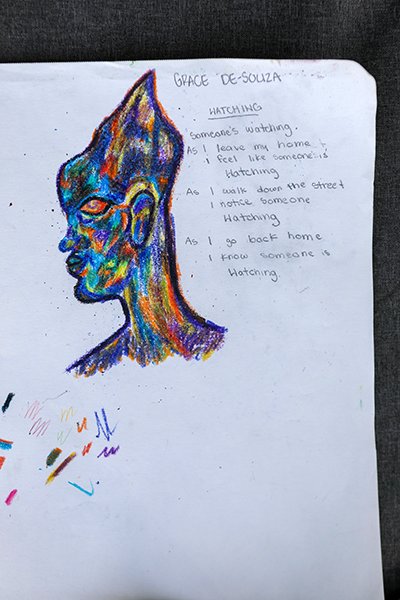
“Watching” and rendition of The Eye
Text and illustration by Grace De-Souza
Image courtesy of Teens of Color Abroad
All rights reserved*
When I first envisioned The Beauford Delaney Project, my conversations with colleagues and collaborative partners always centered on undergraduate, graduate, and postdoctoral students engaging with Beauford's life and work.
But when I was asked if I wanted to provide an opportunity for TOCA youth to experience Beauford’s magic and introduce him to the Leo Marchutz school in the process, I happily accepted the invitation.
This experience broadened my vision for the project. The thoughtfulness of the students' observations, the originality of their poems and narratives, and the confidence with which they shared their work convinced me that high school students—and other community groups of similar age—also have an important place in this creative conversation.
One discovery was especially meaningful. When TOCA's documentarian later shared photographs of the students' illustrated writings, I noticed that two students had chosen to write about paintings that had been introduced only during the orientation session before the trip to Aix-en-Provence - Can Fire in the Park and Untitled (oil on raincoat fragment).
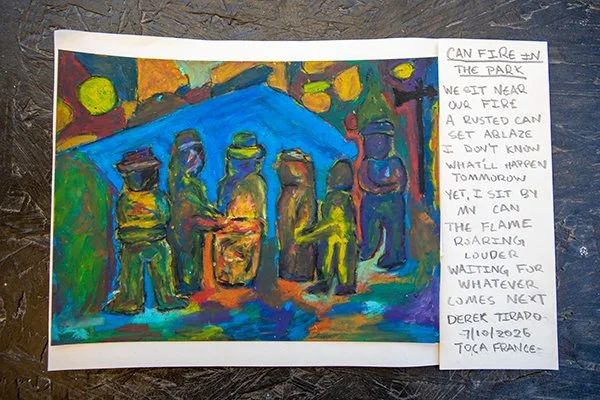
Can Fire in the Park
Text and illustration by Derek Tirado
Image courtesy of Teens of Color Abroad
All rights reserved*

“Strokes”inspired by Untitled (oil on raincoat fragment)
Text and illustration by Alyssa Quiles
Image courtesy of Teens of Color Abroad
All rights reserved*
I was equally delighted to discover that several students had created works inspired by images in the Resonance of Form and Vibration of Color exhibition catalog they received at the conclusion of the workshop.
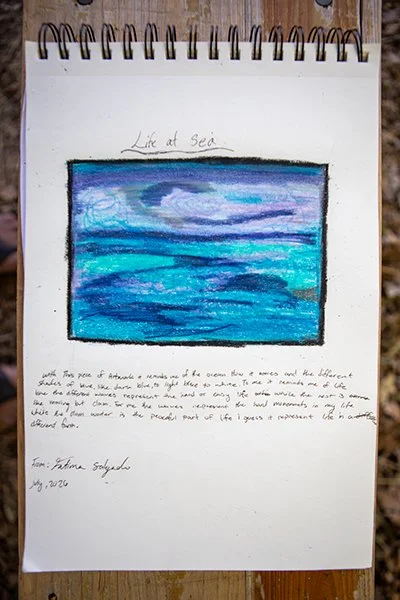
“Life at Sea” inspired by Grèce
Text and illustration by Fatima Salgado
Image courtesy of Teens of Color Abroad
All rights reserved*
These unexpected choices indicated that the students' engagement with Beauford's art extended beyond the paintings we discussed together that afternoon.
For me, they also affirmed that creative encounters with his work can continue long after a workshop ends.
Resonance has found its first voices!
Explore the photo gallery for the 2026 Writing from Art workshop HERE.
*Reproduction or alteration without prior written consent is strictly prohibited.
A Look Back at Beauford-Inspired Verse
As poets gather at the UT Downtown Gallery in Knoxville for an ekphrastic poetry reading inspired by the Degrees of Separation exhibition, I am reminded that long before the launch of The Beauford Delaney Project, the Les Amis blog has featured poems and essays by writers who found inspiration in Beauford's life and art.
In celebration of today's poetry reading in Knoxville, I’m sharing links to earlier posts that feature poems and images of the works that inspired them.
Click on the links to enjoy the poetry and associated narratives.
Cid Corman’s Poetic Tribute to Beauford
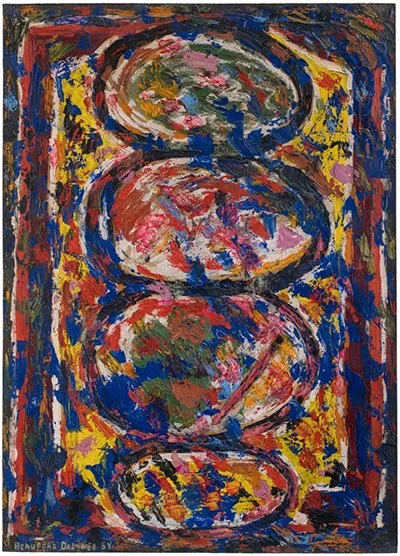
Chartres
(1954) Oil on paperboard
© Estate of Beauford Delaney,
by permission of Derek L. Spratley, Esquire,
Court Appointed Administrator
Courtesy of Michael Rosenfeld Gallery, LLC, New York, NY
Life
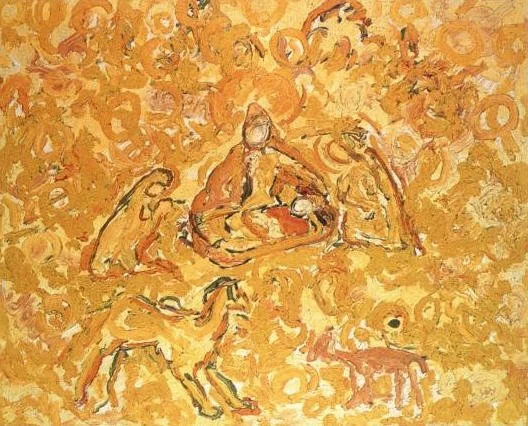
Nativity Scene
(1961) Oil on canvas
© Estate of Beauford Delaney
by permission of Derek L. Spratley, Esquire,
Court Appointed Administrator
Courtesy of Michael Rosenfeld Gallery, LLC, New York, NY
Grievances from a Soul of Sorrow
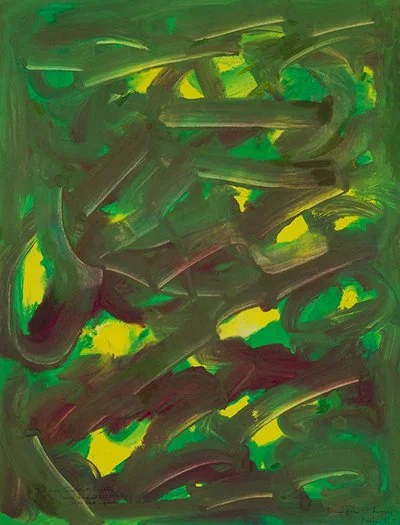
Untitled
(1962-1964) Gouache on paper
Signed and dated "Paris, 1964"
Inscribed: "for Amy(?) Erica + Tully, Paris August 20, 1962, with fond regards"
© Estate of Beauford Delaney,
by permission of Derek L. Spratley, Esquire,
Court Appointed Administrator
Courtesy of Michael Rosenfeld Gallery, LLC, New York, NY
Sunlight Drifters
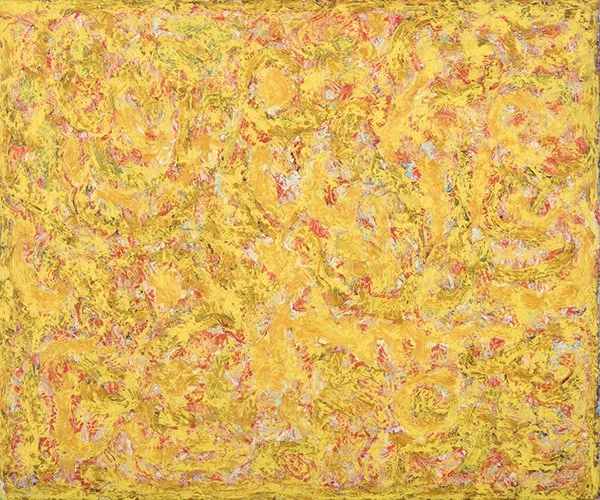
Untitled
(1966) Oil on canvas
© Estate of Beauford Delaney
by permission of Derek L. Spratley, Esquire,
Court Appointed Administrator
Courtesy of Michael Rosenfeld Gallery, LLC, New York, NY
Woman in an Abstract Field - After Beauford Delaney
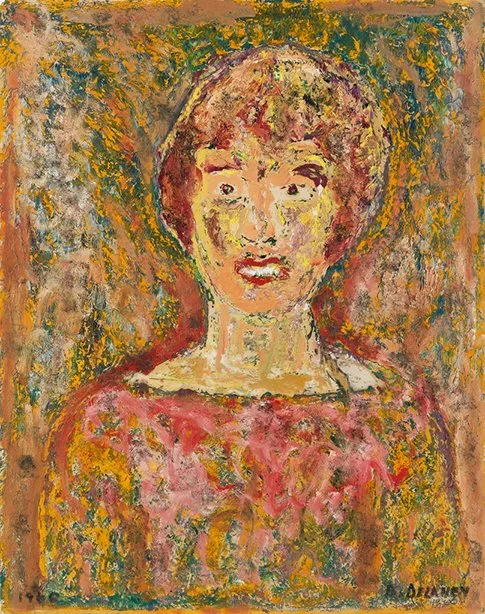
Untitled (Woman in an Abstract Field)
(1966) Oil monotype, with hand-painted additions in oil,
on cream wove paper
Image courtesy of Swann Auction Galleries
© Estate of Beauford Delaney
by permission of Derek L. Spratley, Esquire,
Court Appointed Administrator
Courtesy of Michael Rosenfeld Gallery, LLC, New York, NY
Teens of Color Abroad Discover Beauford
Teens of Color Abroad (TOCA) is a U.S. nonprofit organization dedicated to offering students of color immersive global language learning and cultural exchange opportunities. Through four distinct programs, they are changing the world one travel experience at a time.
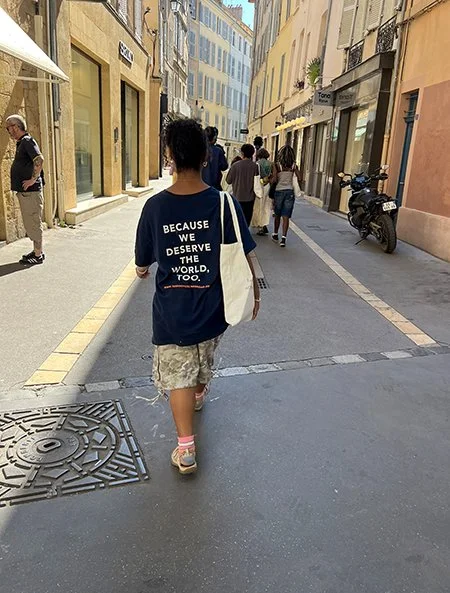
Student wearing a TOCA t-shirt in Aix-en-Provence
© Entrée to Black Paris
The Wells International Foundation (WIF) and TOCA collaborated for the first time this summer through WIF’s Entrée to Black Paris Cultural Awareness Program. Entrée to Black Paris (ETBP) presented a creative writing workshop for ten students from TOCA’s two-week high school study abroad program, using Beauford Delaney’s life and artwork as their creative anchor.
And WIF is providing a dedicated space for the students’ writing and artwork on The Beauford Delaney Project’s digital hub.
TOCA students participated in a program entitled “Painting in Provence: A Seminar in Vision” that is offered by the Leo Marchutz School of Painting & Drawing in Aix-en-Provence, France.
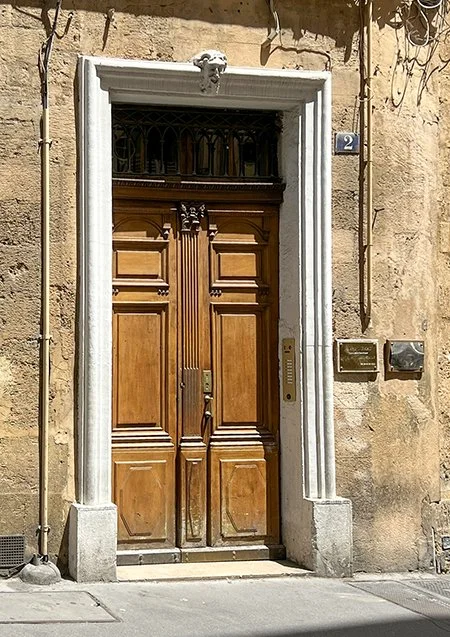
Entrance to the Leo Marchutz School of Painting and Drawing
© Entrée to Black Paris
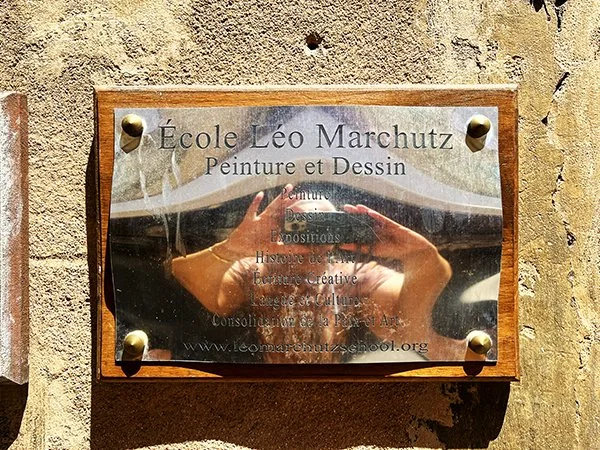
Plaque for Leo Marchutz School of Painting and Drawing
© Entrée to Black Paris
Prior to their arrival in Aix, ETBP provided students with an orientation exercise that gave an overview of Beauford’s life story and introduced them to his work. The students responded to questions about three selected paintings and works on paper to prepare them for the creative writing they were to undertake during their time abroad.
The day before the workshop, Leo Marchutz Board President and Director of Artistic Studies Alan Roberts taught the students a lesson on color theory during which he talked about Beauford.

Color Theory session with Director of Artistic Studies Alan Roberts
Image courtesy of Teens of Color Abroad (TOCA)
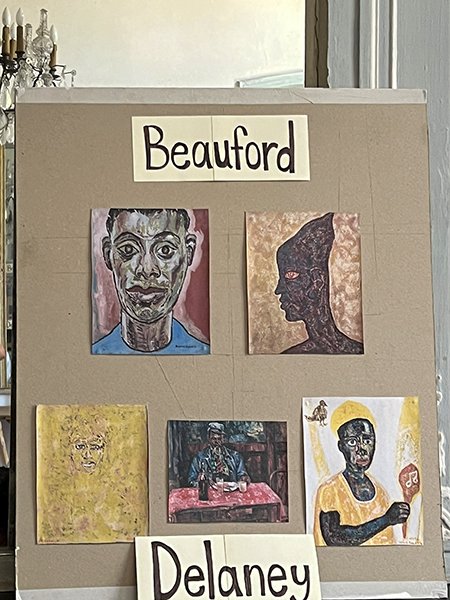
Display of several Beauford Delaney works
© Entrée to Black Paris
Dr. Monique Y. Wells delivered the “Writing from Art” workshop the following day. She discussed the orientation exercise with the students and gave a brief presentation that
described why she is so passionate about Beauford,
demonstrated the evolution of Beauford’s artistic practice, and
introduced the four works of art that were to serve as the inspiration for their creative writing.
Each student selected one of the four artworks to spark their creativity. Once their pieces were written, everyone took turns presenting their work to the entire group.
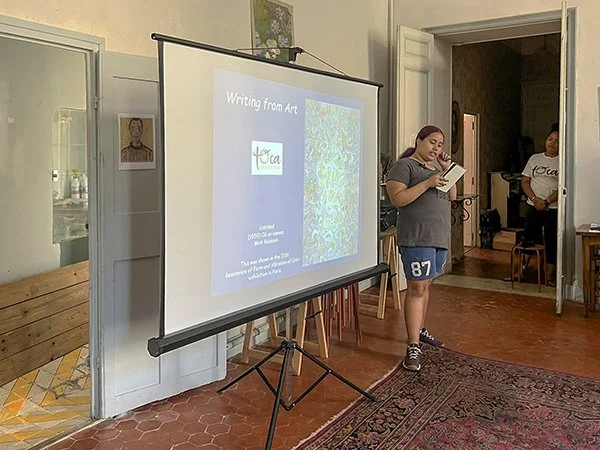
Alyssa Quiles on Untitled (1959)
© Entrée to Black Paris
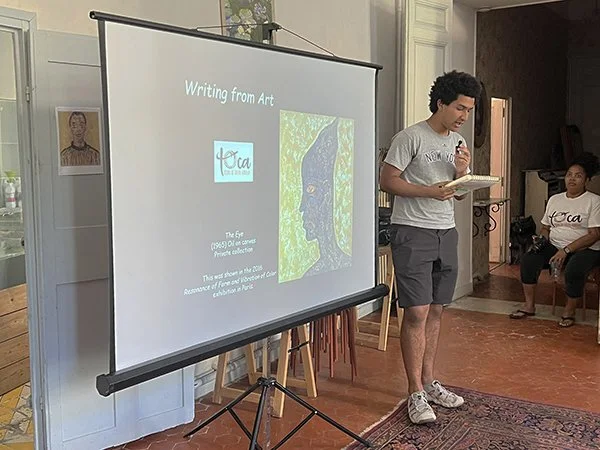
Derek Tirado on The Eye (1965)
© Entrée to Black Paris
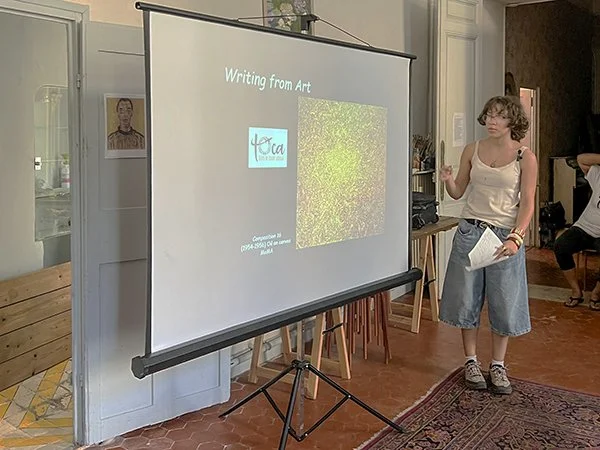
Annabella Hernandez Lopez on Composition 16 (1954-1956)
© Entrée to Black Paris
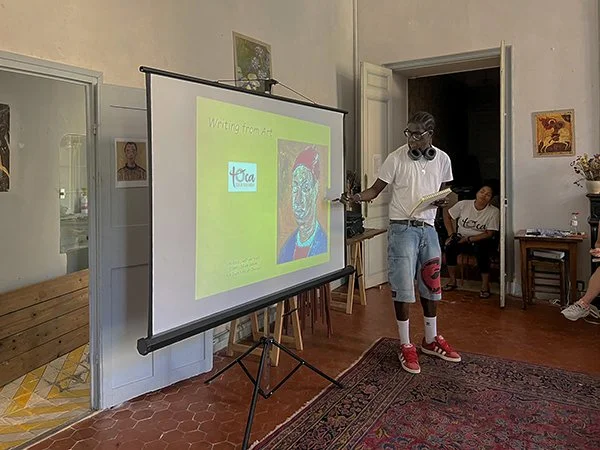
Saliou Diop on Untitled (Self-portrait) (1944)
© Entrée to Black Paris
Participants in the Marchutz School’s five-week “Painting in Provence: Seminar in Vision” program for adults and adults from TOCA and the Marchutz school—including Director Alan Roberts—also participated in the workshop. They were just as inspired as TOCA students and presented their writing to the group as well.
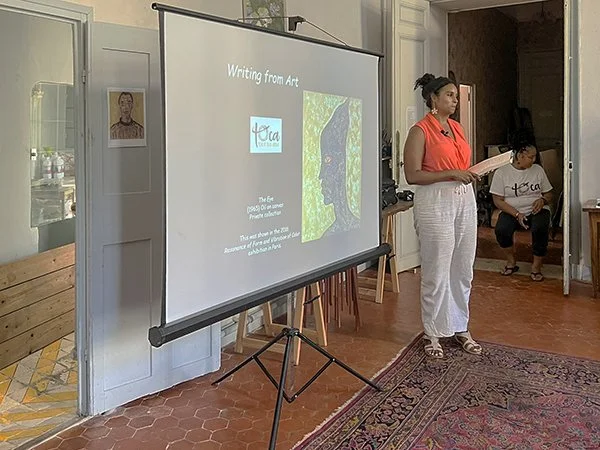
TOCA Director of Global Programs Miriam Piña on The Eye (1965)
© Entrée to Black Paris
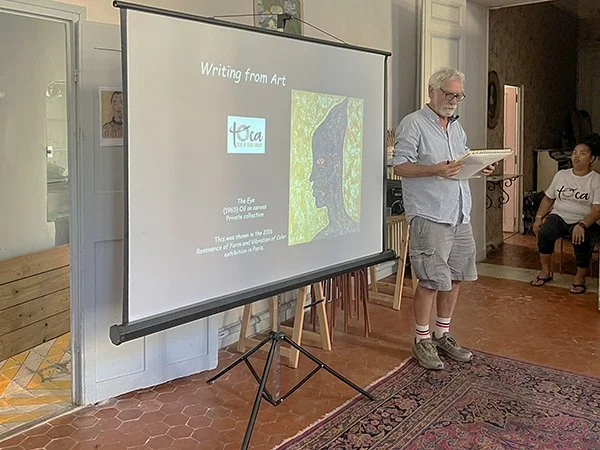
Leo Marchutz Director Alan Roberts on The Eye (1965)
© Entrée to Black Paris
After the workshop, Dr. Wells distributed copies of the catalog from the Beauford Delaney: Resonance of Form and Vibration of Color exhibition that WIF mounted in Paris in 2016. Some students were inspired to write new creative pieces about other works of art from that show.
The students are now immortalizing their words on drawing paper, paired with their own illustrations. These pieces, along with videos of the students reciting their poetry and prose, will soon be available for viewing on The Beauford Delaney Project’s digital hub.
WIF views this inspiring collection as the true kickoff to the Project’s mission: to establish a vibrant, multimedia platform for research and creative projects inspired by Beauford’s legacy.
Beauford and James Weldon Johnson
Growing up in Knoxville, Beauford learned about James Weldon Johnson and grew to greatly admire him.

James Weldon Johnson by Carl Van Vechten
Library of Congress, Prints & Photographs Division,
Carl Van Vechten Collection
Public domain
He heard many stories about Johnson, who used to visit the home of Beauford's high school principal, Charles Cansler.
Cansler was well connected in Boston and provided Beauford with letters of introduction to influential people in the city when he learned that Beauford planned to move there in 1923.
Three years later, Beauford had the chance to meet Johnson in that city.
The encounter took place at Boston's Old City Hall, where a performance of Johnson's poem "Creation" was staged on the evening of November 27, 1926.
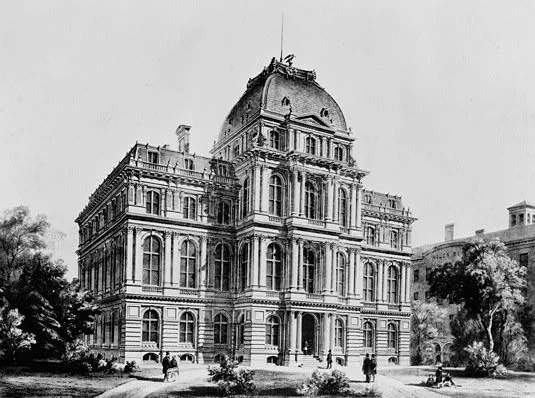
Old Boston City Hall
Library of Congress, Prints & Photographs Division, MA-860
Public domain
Biographer David Leeming describes the event as follows:
"... Johnson's African-American dramatic musical version of the Creation was presented by Serge Koussevitsky and the Boston Symphony Orchestra to enthusiastic audiences in New York and Boston. Beauford was at a Boston performance and he introduced himself to Johnson afterward."
The New York Times published an extensive account of the performance. It reported that
"An old-time negro "folk-sermon," as embodied in James Weldon Johnson's poem "The Creation," with music by Louis Gruenberg, will be performed by the League of Composers on the evening of Nov. 27 in Town Hall, with Serge Koussevitzky of the Boston Symphony Orchestra as conductor.
Read the full-length NYT article HERE.
Of the numerous contemporary renditions of "The Creation" available for viewing/listening online, I have selected three that I particularly enjoyed.
Find them below.
The Calypso
Run by Trinidad-native Connie Williams, the Calypso is described by biographer David Leeming as "a small restaurant across from the Provincetown Playhouse on MacDougal Street" in Greenwich Village.
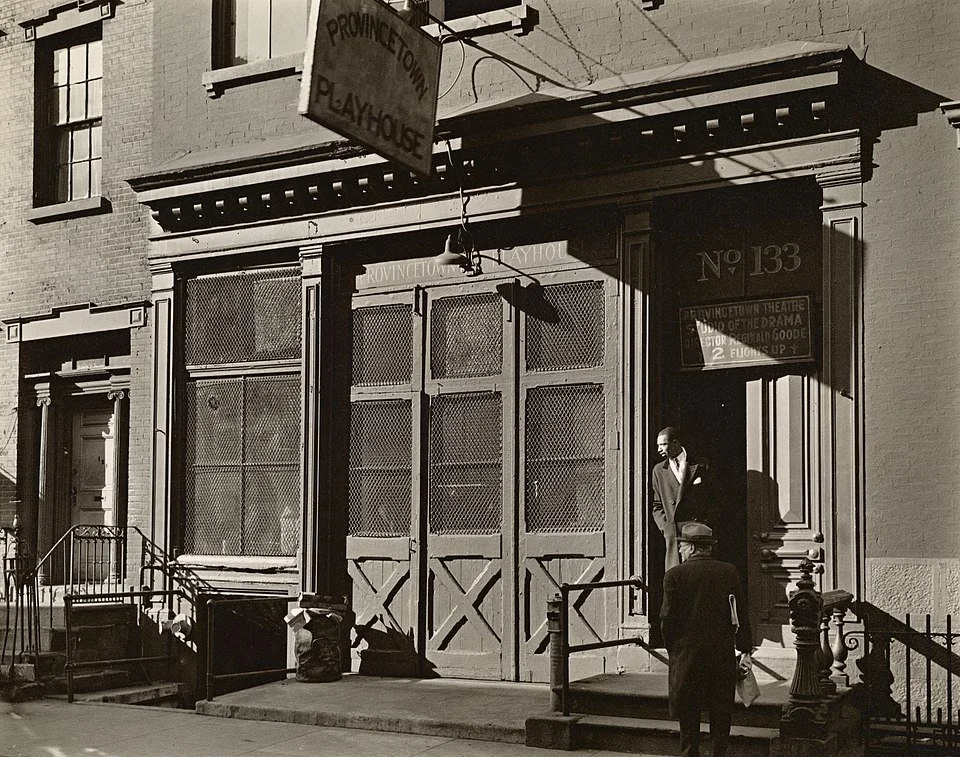
Provincetown Playhouse, 133 MacDougal Street, Manhattan
29 December 1936
Berenice Abbott for Works Progress Administration
Image in public domain
A photograph of its façade, published by Trinidad & Tobago Newsday, shows a modest, basement-level storefront with a worn street number and tropical decor on either side of the entrance (view image HERE).
Find images of Connie Williams inside the Calypso by Berenice Abbott (circa 1948) HERE ...
... and HERE (Williams is wearing a patterned dress).
Leeming devotes a single paragraph to the restaurant (which he calls a "café) in Amazing Grace, his biography of Beauford. He devotes almost two entire pages to the establishment in James Baldwin, his biography of Baldwin.
Beauford introduced Baldwin to Williams in 1943 after Baldwin's stepfather died and Baldwin moved from Harlem to Greenwich Village. Williams hired Baldwin as a waiter, and Leeming indicates that she became a surrogate mother to him. He says that Baldwin, Beauford, and a young Black writer named Smith Oliver "held court" at the Calypso after hours.
Beauford produced at least three portraits of Baldwin during this period.
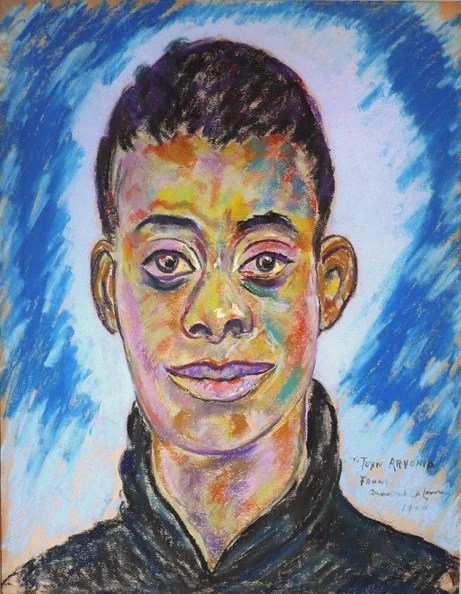
Portrait of James Baldwin
(1944) Pastel on paper
Knoxville Museum of Art
© Estate of Beauford Delaney
by permission of Derek L. Spratley, Esquire,
Court Appointed Administrator
Courtesy of Michael Rosenfeld Gallery, LLC, New York, NY

Portrait of James Baldwin
(1945) Oil on canvas
Philadelphia Museum of Art
© Estate of Beauford Delaney
by permission of Derek L. Spratley, Esquire,
Court Appointed Administrator
Courtesy of Michael Rosenfeld Gallery, LLC, New York, NY
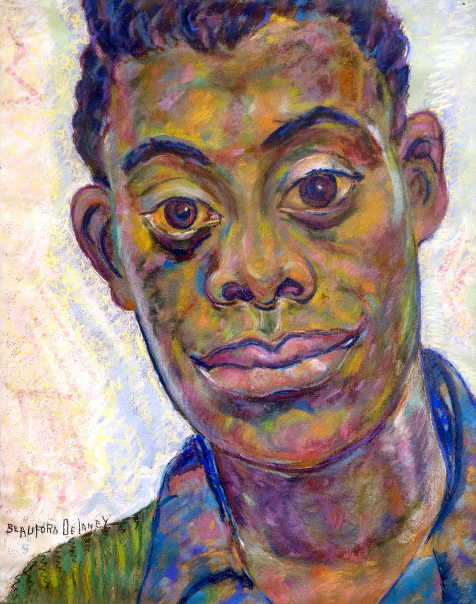
James Baldwin
(1945) Pastel on paper
Photo credit: Ben Conant
Courtesy of Macdowell
© Estate of Beauford Delaney
by permission of Derek L. Spratley, Esquire,
Court Appointed Administrator
Courtesy of Michael Rosenfeld Gallery, LLC, New York, NY
In Amazing Grace, Leeming describes Beauford's fondness for the Calypso due to the multiple races of people with various sexual proclivities who made up its clientele. He provides a "laundry list" of intellectuals and celebrities who frequented the place, including C. L. R. James, Claude McKay, Alain Locke, Malcolm X, and Henry Miller. Even Beauford's brother, Joseph, was an occasional customer, though the two did not socialize when they were both present.
Leeming also describes costume parties that Williams organized and that Beauford loved to attend. He says that Beauford often played the guitar and sang at these events.
In Baldwin: A Love Story, Nicholas Boggs states that Beauford and Williams threw Baldwin a goodbye party at the Calypso before he left for France in November 1948.
Fun Facts about Beauford: The Boston Years
Compared to other periods of Beauford Delaney’s life, his years in Boston (1923 - 1929) are the least well documented in the historical record.
Today, in the first of a series of articles that present "fun facts" about him, I am taking a look at this critical period of his adult life.
Almost immediately upon moving to Boston, Beauford entered into a circle of "high society folks"—White and Black—who would "direct his sociopolitical education." He met and socialized with people such as Mr. and Mrs. William Shakespeare Sparrow (Black), Mr. and Mrs. Bryant (relatives of poet William Cullen Bryant - White), and George and Josephine St-Pierre Ruffin (Black).
Beauford met writer Countee Cullen in Boston, long before he or Cullen would meet and deeply influence a young James Baldwin. It was Cullen who first introduced to Beauford the idea of going to Paris.

Countee Cullen
1927 R. W. Bullock
Image in the public domain
Source: Wikimedia Commons
Roland Hayes and James Weldon Johnson were two singers that Beauford greatly admired. He had the temerity to introduce himself to both of them after concerts in Boston - Hayes in 1923 and Johnson in 1926.

Roland Hayes
1929 J. Willis Sayre Collection of Theatrical Photographs
Image in the public domain
Source: Wikimedia Commons

James Weldon Johnson
1932 Carl Van Vechten
Image in the public domain
Source: Wikimedia Commons
Biographer David Leeming reports that Beauford saw Josephine Baker perform in Boston "early in his Boston stay," admired her, and followed her career from that point forward.

Josephine Baker
1927 Photographer unknown
Image in the public domain
Source: Wikimedia Commons
Baker performed in Sissle and Blake's In Bamville (eventually renamed The Chocolate Dandies) in 1924, and the show was staged at Boston's Tremont Theater in June of that year.
Because of his profound modesty, Beauford turned down several opportunities to serve as a live model for artists in exchange for an opportunity to paint.
Read about Beauford's Boston haunts here:
Two Buildings for Beauford
As 2025 comes to a close, Knoxville continues to honor Beauford and his family in one of the most auspicious ways possible—by working on buildings named after them.
That's right - buildings (in plural)!
In August 2021, ground was broken on the Delaney Museum at Beck.
The Beck Cultural Exchange Center acquired the Delaney family's last homestead in 2015 with the intent to restore the home and grounds. Since that time, Beck President Reneé Kesler has led the effort to turn the property into an international museum that will honor Beauford, his brother, Joseph (who was also a painter), and the entire Delaney family.
Watch Reverend Kesler tell the story of how she acquired the home HERE.
The museum was originally projected to open in Autumn 2022. But due to the Covid-19 pandemic and escalating construction costs, work on the project has been postponed several times.
Construction finally began in earnest on November 18, 2025.
Beck released the following photos when it announced the commencement of work.
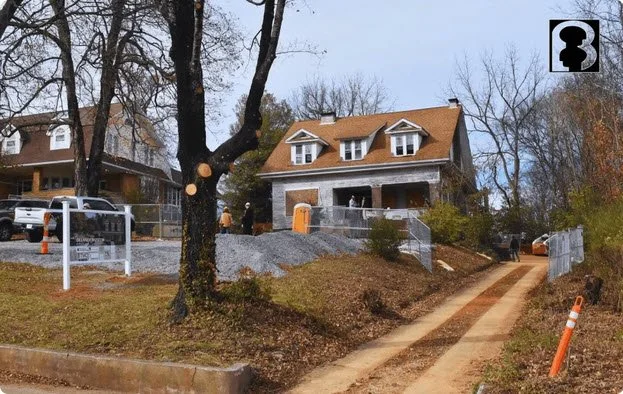
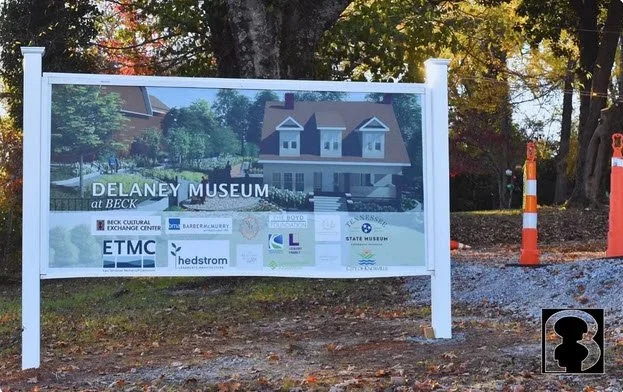
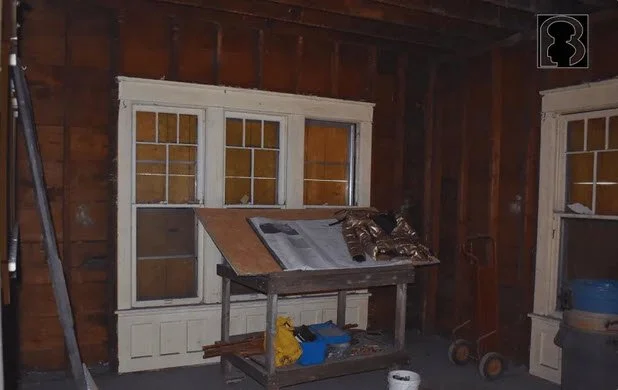
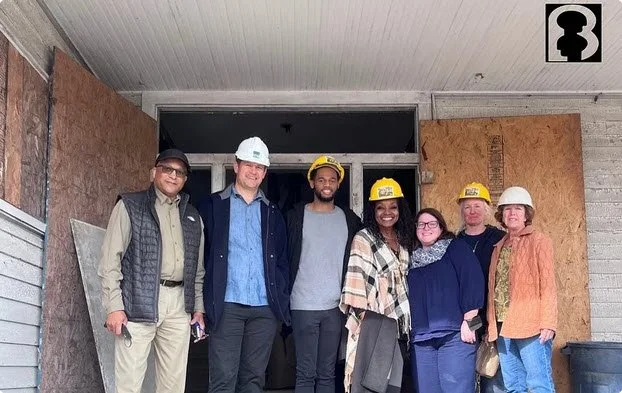
All images courtesy of the Beck Cultural Exchange Center
See images of the work being done at the Delaney Museum at Beck by clicking HERE.
In another area of Knoxville, a much larger project is now nearing completion.
The Beauford Delaney Building is part of the Knoxville Multi-Use Stadium project in Knoxville's Old City. We first wrote about it in February 2022.
Construction had not begun at that time.
Today, the nine-story, mixed-use building, which has been dubbed "The DELANEY," has 47 one- or two-bedroom condominiums and over 20,000 square feet of retail and restaurant space. Advertisements boast of indoor and outdoor entertainment areas, stadium and city views in every direction, large terraces and spacious balconies, and a state-of-the-art fitness center.
The condos range in price from $750,000 to $2.5 million.
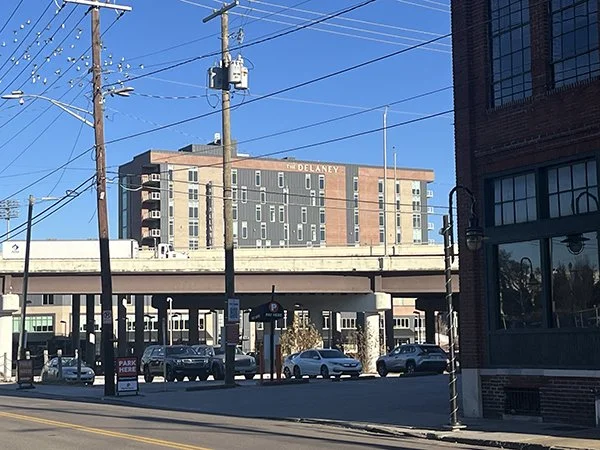
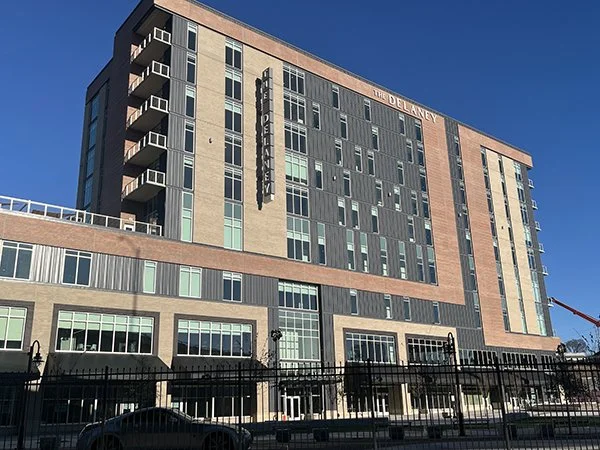
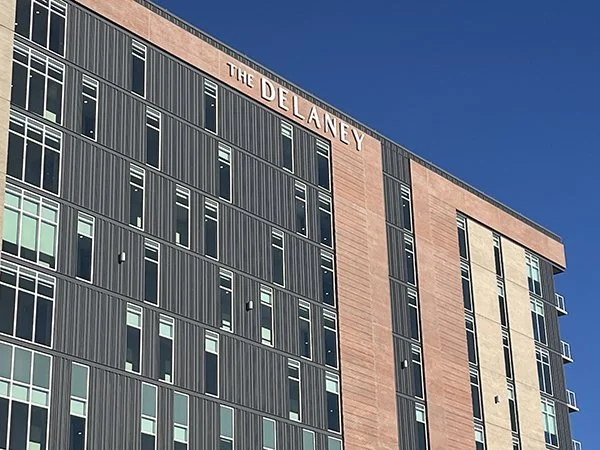
All images courtesy of David Butler
Though construction is not quite complete, some residents are already moving into the building.
See images of the condos HERE and watch a local news report about the building HERE.
This is Les Amis' last posting for 2025. We wish you the happiest of holiday seasons and look forward to seeing you in the New Year!
Celebrating Music
On June 21 of each year, the City of Paris celebrates Summer Solstice with the Fête de la Musique (Music Festival).
In recognition of this year's festival, which is the 44th edition of the celebration, I am posting links to several Les Amis blog posts that highlight Beauford's love for all kinds of music.

(1968) Oil on canvas
Memorial Art Gallery, University of Rochester
Photograph by Joshua Nefsky; Courtesy of
Michael Rosenfeld Gallery LLC, New York, NY
© Estate of Beauford Delaney
by permission of Derek L. Spratley, Esquire,
Court Appointed Administrator
Notre Dame and Fauré's Requiem
Enjoy!
Beauford and Langston Hughes
I recently received notification that the Nevada Museum of Art would include work by Beauford in its exhibition entitled When Langston Hughes Came to Town.
I immediately went to the museum's Website to see what information I could find about the premise of the show and why Beauford is being included in it.
The copy on the Web page indicates that the exhibition will be divided into three parts that explore:
1) Hughes' relationship with the State of Nevada
2) Work created by leading artists of the Harlem Renaissance who had close ties to Hughes
3) Contemporary artists who were inspired by Hughes and made work about his life
A slider near the bottom of the page shows Beauford's portrait of Ella Fitzgerald as one of the works to be displayed in the show.

(1968) Oil on canvas
Permanent collection of the SCAD Museum of Art, Savannah
Gift of Dr. Walter O. and Mrs. Linda J. Evans
© Estate of Beauford Delaney
by permission of Derek L. Spratley, Esquire,
Court Appointed Administrator
Beauford's name is mentioned in reference to the artists of the Harlem Renaissance with whom Hughes had close ties.
Not being familiar with any close relationship between the two men, I set out to investigate what this might have entailed.
I did not find any mention of Beauford in either of the two volumes of The Life of Langston Hughes, a biography by Arnold Rampersad.
I only found a few mentions of Hughes in Amazing Grace: A Life of Beauford Delaney by David Leeming, the only Beauford Delaney biography that currently exists.
Leeming says that Beauford encountered Hughes at "the old stable at 306 West 141st Street" in Harlem, which was known simply as "306" by the Black intellectuals who gathered there.
He says that Beauford read "whatever was published in journals by Langston Hughes."
And he mentions that Hughes attended the party celebrating the production of James Baldwin's The Amen Corner in Paris in 1965, which Beauford attended as well.
In 1948, Hughes authored the radio transcripts for an NBC summer replacement series called Swing Time at the Savoy, which was recorded at the Savoy Ballroom in Harlem. Ella Fitzgerald and her then husband, Ray Brown performed there on July 28, 1948.
I reached out to the museum to request information to supplement my findings.
Director of Communications Valerie Primeau responded, informing me that Beauford's portrait of Fitzgerald will be the only work of his in the exhibition.
She also said:
"Although Langston Hughes and Beauford Delaney were prominent figures during the Harlem Renaissance and had shared mutual respect for their art practices, documented interactions are limited.
"This portrait of Ella Fitzgerald was selected because she is one of the greatest jazz vocalists who often performed in the Savoy Room during the period before receiving her major break in the 1930s at the Apollo Theater. Her iconic voice, visually presented with the bold application of color, shows how she illuminated concert halls and jazz venues.
"Merging the histories of these three artists envelops Hughes’s appreciation of jazz and blues and core expressions of Black Life."
When Langston Hughes Came to Town opens today - May 3, 2025.
It will be on display through February 15, 2026.
Beauford and Loïs Mailou Jones
While performing an Internet search last week, I came across an image of a painting by Loïs Mailou Jones that had been erroneously attributed to Beauford.

by Loïs Mailou Jones
The image of The Pink Table Cloth clearly shows Jones' signature at the bottom right corner of the painting, so I presume the error was clerical.
The vivid hues in this work first made me think of Beauford's mastery of the juxtaposition of colors on his canvases.
It then caused me to remember that the two artists knew each other and had several things in common (in addition to being fabulous colorists).

Loïs Mailou Jones
(1940) Casein on board
Smithsonian American Art Museum
Fair use claim
They both
- took classes at the Massachusetts Normal Art School in Boston in the 1920s,
- spent considerable time in France,
- created multiple self-portraits,
- represented African art and artifacts in their artwork,
- traveled extensively (Beauford in Western Europe; Jones in Haïti and Subsaharan Africa), and
- produced hundreds of works in their lifetimes.
Both also had their work featured in the Studio Museum in Harlem's Explorations in the City of Light: African-American Artists in Paris 1945-1965 exhibition that was also shown in Chicago, New Orleans, Fort Worth, and Milwaukee in 1996-1997.

Beauford Delaney
(1944) Oil on canvas
Art Institute of Chicago
© Estate of Beauford Delaney
By permission of Derek L. Spratley, Esquire,
Court Appointed Administrator
In the biography Amazing Grace: A Life of Beauford Delaney, author David Leeming mentions Jones twice in the chapter called "Boston and Harlem" but does not state outright that the two artists were friends or even communicated directly with each other.
A note found in the Beauford Delaney Papers at the University of Tennessee Knoxville provides evidence that they did have a social connection. It is written on a card that Jones used when she was a professor at Howard University.

Beauford Delaney Papers, MS.3967.
University of Tennessee Libraries, Knoxville,
Betsey B. Creekmore Special Collections and University Archives.*
Image by Wells International Foundation
Jones wrote the month in French (15 août is August 15) and used the salutation Cher (Dear) in addressing Beauford. She says she is "so sorry" to have missed seeing him.
The closing salutation is also in French (A bientôt - See you soon).
Because she joined the faculty at Howard in 1930 and worked there until 1977, and because no envelope (and therefore no postmark) was associated with the card, we don't know when this encounter was to have taken place.
*Conditions Governing Use
Estate of Beauford Delaney,
by permission of Derek L. Spratley, Esquire,
Court Appointed Administrator.
Held in the Beauford Delaney Papers, MS.3967,
Betsey B. Creekmore Special Collections and University Archives,
University of Tennessee, Knoxville.
The Philosophy of Art Seminars
In Amazing Grace: A Life of Beauford Delaney, biographer David Leeming tells us that Beauford held "Philosophy of Art" seminars for several months at his Greene Street studio in Greenwich Village.

Beauford in his Greene Street studio, New York City, 1944
© Estate of Beauford Delaney
by permission of Derek L. Spratley, Esquire,
Court Appointed Administrator
He describes the first seminar in great detail, painting the scene of a candle-lit room filled with portraits of famous African Americans where guests listened to Beauford lecture on "The Enigma of Art," learn how to sketch with charcoal (a live model was present), and enjoy entertainment.
He then informs us that several "hostesses" served tea and caviar to attendees.
I was intrigued by the idea that Beauford would have the means to offer caviar at an event and curious about the hostesses who served it.
Leeming mentioned seven women who served in this role. I was able to find information about three of them.
Nell Occomy Becker was the youngest of three sisters born to Walter Calvert Occomy and Nellie White Occomy in Providence, RI. She graduated with a teaching degree from the State Normal School (now Rhode Island College), and moved to NYC because of the discriminatory practices of Providence public schools. There, she taught junior high school and enrolled in a post-graduate program at the Teachers’ College.

Nell Occomy Becker
Source of original image:
Opportunity: Journal of Negro Life, November 1936, p. 347.
Fair use claim
In the 1930s, Occomy developed skills as an arts and culture writer. She wrote profiles of Black playwrights and served as editor-in-chief of The Krinon, the publication for the Black women educator sorority, Phi Delta Kappa.
Another hostess, Mrs. Gertrude Robinson, was a charter member of Phi Delta Kappa and served as First Supreme Anti-Basileus, then Supreme Basileus at various times from the 1920s - 1940s.
Hostess Dorothy Gates is mentioned several times in Amazing Grace. She and Beauford met through their mutual connection with Alfred Stieglitz, Dorothy Norman, and Georgia O'Keeffe, and they became quite close. Her death in 1956 disturbed him greatly.
While Leeming does not provide precise dates for the months that Beauford hosted the seminars, I infer from his text that they took place during 1949, and perhaps, early 1950.
Happy Holidays from Les Amis de Beauford Delaney
Christmas is fast approaching!
This year, Les Amis is marking the season with jazz saxophonist Charlie Parker's rendition of "White Christmas."
Parker recorded this iconic tune at the Royal Roost in 1948 in New York City. His backup band consisted of Kenny Dorham on trumpet, Al Haig on piano, Tommy Potter on bass, and Max Roach on drums.
Beauford depicted Parker in two paintings created 10 years apart.
(1968) Oil on canvas
Memorial Art Gallery, University of Rochester
Photograph by Joshua Nefsky; Courtesy of
Michael Rosenfeld Gallery LLC, New York, NY
© Estate of Beauford Delaney
by permission of Derek L. Spratley, Esquire,
Court Appointed Administrator

(1958) Oil on canvas
Smithsonian American Art Museum
Gift of the James F. Dicke Family
© Estate of Beauford Delaney
by permission of Derek L. Spratley, Esquire,
Court Appointed Administrator
Les Amis will return in January 2025.
We wish you and yours the best during the end-of-year holidays!
Beauford and the Petrucci Family Foundation
When I learned that the Petrucci Family Foundation (PFF) owns the two Beauford Delaney works being shown in the Bellagio Gallery of Fine Art's American Duet: Jazz and Abstract Art exhibition, I immediately reached out to the foundation to learn more about its interest in Beauford.

(1956) Gouache on illustration board
PFF Collection
Signed and dated in ink, lower right
© Estate of Beauford Delaney,
by permission of Derek L. Spratley, Esquire,
Court Appointed Administrator
Director Claudia Volpe graciously granted Les Amis a live interview to respond to my questions. She told me that PFF was founded by Jim Patrucci in 2006 and that it centers its philanthropic activity on the development of inner city youth.
In 2012, PFF decided to begin collecting art. Petrucci's first advisor was Berrisford Boothe, an artist, art historian, and professor of Art & Design at Lehigh University. Because of their recognition of the enormous disparities in representation of Black artists, they decided to pursue collecting art in support of these artists while fulfilling the foundation's overarching mission of providing education for the communities it serves.
Over 200 artists are currently represented in the PFF Collection. The pieces are quite diverse - they date from the 1880s through the present and represent all types of media. Petrucci has a pension for collecting works by contemporary artists who are in their "twilight years" and have not had a major exhibition or attracted major patrons or collectors.
PFF is also committed to art preservation.
Regarding Beauford's work, both of the pieces in the collection were acquired at auction. PFF is interested in acquiring additional works, both figurative and abstract.

(c. 1962-1964) Watercolor on paper
PFF Collection
© Estate of Beauford Delaney
by permission of Derek L. Spratley, Esquire,
Court Appointed Administrator
The Petrucci Family Foundation has a rigorous loan program -- it has loaned works to over 36 exhibitions since the collection's inception. Some of these loans support the implementation of the PFF African American Art History curriculum, which is the product of three collaborations that emerged during the Covid-19 pandemic and the resurgence of racial justice movements in the wake of George Floyd's murder.
The curriculum aims to bridge educational gaps and enhance cultural literacy by integrating the PFF Collection into university art history, museum studies, and Africana studies courses. It is designed to relieve the burden that professors might feel re: creating a course in African-American art, particularly if they are not experts in the field.
Beauford was an important focus for the 2022 University of Mary Washington exhibition called Healing through the Preservation of Our Histories and Ourselves. This show was co-curated by university students, faculty, and community members with the intent to encourage decompression and healing after the collective trauma experienced during the pandemic. Though the collection's Beauford Delaney works were not available for display during this show, students examined Beauford's struggle with maintaining mental health as part of the exhibition theme.
Beauford's work was included in the 2024 Mobility: African-American Artists Abroad exhibition at Truman State University. The show focused on African-American artists who broadened their artistic practice through influences experienced when they moved to Mexico, Africa, and Europe.
Director Volpe has a deep interest in Beauford's work. She continues to encourage universities to include his story and his art in their customized course work, even if his physical works are not available for viewing.
David Leeming Presents the Bond of the Unusual Door
On May 12, 2024, David A. Leeming delivered a livestreamed presentation called "Jimmy and Beauford: The Bond of the Unusual Door" at a gathering organized by Stonington Free Library in Stonington, Connecticut.
The event was promoted as a talk during which Leeming would speak about the "life-changing and life-long friendship between James Baldwin and the artist Beauford Delaney."

Because Leeming is a biographer of Baldwin and Beauford, I looked forward to hearing his focused take on the relationship between the two men. He beautifully wove the theme of "the unusual door" through his presentation and punctuated his talk with images of paintings of Beauford or by Beauford.
Leeming attributed the phrase "the bond of the unusual door" to Baldwin. The first passage through this door occurred when Baldwin met Beauford for the first time as a depressed, 16-year-old high school student. Leeming described how Beauford's relationship with Baldwin grew and deepened and spoke poignantly about how Beauford helped Baldwin develop as a creative artist.
The second passage took place when Beauford joined Baldwin in Paris and the roles the two men previously played in each other's lives were reversed. Beauford now depended on Baldwin for introductions to people and advice on navigating life in the city.
Leeming then described his own experience with "the unusual door" when met Beauford for the first time. Charged by Baldwin to bring Beauford to Istanbul by car in 1966, he experienced firsthand the beauty and torment of Beauford's existence. After a harrowing road trip, they joined Baldwin and spent several days together in Turkey. Beauford painted a portrait of Leeming during that visit.

Screenshot from Stonington Free Library livestream

(1966) Oil on canvas
© Estate of Beauford Delaney
by permission of Derek L. Spratley, Esquire,
Court Appointed Administrator
Leeming talked about Baldwin's acquisition of property in Saint-Paul-de-Vence in southern France and Beauford's frequent visits there, particularly when he was physically or mentally fragile. He mentioned Beauford's Rosa Parks series, his love affair with the color "yellow," and his eventual commitment to Sainte-Anne's psychiatric hospital. And he spoke about Baldwin's reaction to Beauford's death.
In closing, Leeming told how he and Baldwin's brother, David, sat up with Baldwin during the final days of his battle with stomach cancer. Leeming said that much of their conversation was about Beauford and revealed that Baldwin was working on a novel about Beauford at that time. Unfortunately, he had made precious little progress on this work by the time he died.
The audience posed many questions after Leeming concluded his talk, but they were not audible on the live stream. My biggest takeaway from the Q&A period was that Leeming's biography of Beauford, entitled Amazing Grace: A Life of Beauford Delaney, will be republished in 2024 by Karma Books with a forward by Hilton Als.
Rest assured that Les Amis will report on this new edition of Beauford's biography as soon as I obtain and read it!
Beauford at the Paris College of Art Commencement Ceremony
A few weeks ago, Alana Manga, Registrar and Director of Student Success of the Paris College of Art (PCA), invited me to deliver this year's undergraduate commencement address.
Her message included the following statements:
Paris College of Art is an international college of art and design located in the 10eme arrondissement in Paris. We offer American undergraduate and graduate degrees (Bachelor of Fine Arts, Master of Arts and Master of Fine Arts) in Communication Design, Photography, Fine Arts, Interior Design and Fashion. The student body represents 51 different countries, and a similar number of cultures.
Your support of Beauford Delaney, in addition to the entrepreneurial spirit that led to Entrée to Black Paris and the Wells International Foundation are incredible accomplishments. Having met you at an American University of Paris event, I think your wealth of knowledge and insights would be valued by the graduating artist and designers encountering a world grappling with war.
I was honored to accept this invitation and delighted to base my speech on various aspects of Beauford's life and art.
The ceremony took place on May 10, 2024 at the Club d'Etoile, near Paris' Arc de Triomphe in the 8th arrondissement.

© Wells International Foundation
The weather was perfect and the house was full.
PCA Provost Dr. Michael Meere opened the ceremony with the first congratulatory discourse of the day.

© Wells International Foundation
Two members of the Class of 2024 - Ofir Avita, BFA Photography and Kirstin Ceralde, BFA Fine Art - then addressed the audience. Both students delivered thoughtful and amusing speeches that were vigorously applauded.
Dr. Meere announced the winners of student service awards and the Provost Award for Excellence in Teaching and then introduced me. He provided the perfect segway to the information I shared with the audience about Beauford.
I first congratulated the graduates and encouraged them to view themselves and their work as sources of POWER – POWER to bring about positive change in the world.
Through the evocation of events and relationships that Beauford experienced, I then invited them to create and use their art as a source of healing, a means of bridging cultural gaps, a catalyst for social change, and a unifying force in the face of negative preconceived notions and emotions.

© Wells International Foundation
Watch the first segment of the ~20-minute address below.
(Huge thanks to Alana Manga for supplying this video.)
Following my address, Dr. Meere conferred the degrees for BFA students in Communication Design, Fashion Design, Fine Arts, Interior Design, and Photography as well as Certificates in Communications Design, Interior Design, Fashion Design, and Fine Arts.
Dr. Anthony Pinder, Vice Provost, Internationalization and Equity at Emerson College, conferred the degrees for BFA students in the joint Emerson/PCA global Film Art program.
Dr. Meere then invited the students to move the tassles on their graduation caps from right to left, and the ceremony was concluded. The students celebrated with a traditional cap toss and shouts of joy.
Several members of the audience, including PCA faculty, graduates, and family members of graduates, approached me during the reception after the ceremony to tell me how much they enjoyed the stories I shared about Beauford and the effect his art has had in the four areas described above.
I am thankful for such an extraordinary opportunity to extend Beauford's legacy!

© Wells International Foundation
Jimmy and Beauford: The Bond of the Unusual Door
In last week's post, I mentioned that I recently learned of an upcoming livestreamed interview with Beauford's (and James Baldwin's) biographer, David A. Leeming, during which Leeming will discuss the relationship between Beauford and James Baldwin.
Today, I'm sharing details about this interview.

Leeming met Beauford when Baldwin asked him to collect Beauford in Paris and bring him to Istanbul in July 1966. He got to know Beauford quite well during the voyage and the time they spent together once they arrived in Turkey. I wrote briefly about this in the blog post entitled "Beauford in Istanbul".

(1966) Oil on canvas
Image from Amazing Grace: A Life of Beauford Delaney book jacket
Courtesy of Ernie Bynum and Denis Costin (Ernden)
© Estate of Beauford Delaney
by permission of Derek L. Spratley, Esquire,
Court Appointed Administrator
Leeming is a resident of Stonington, Connecticut. The interview will be hosted by the Stonington Free Library on May 12, 2024 from 5 PM to 6 PM Eastern Time. Online event pages are touting it as Leeming "marking" the 100th anniversary of Baldwin's birth (August 2, 1924).
This 1-hour hybrid event is free and open to the public. No registration is required. Those wanting to join the live stream can do so HERE.
For additional information, send email to Karla Umland at karla[at]stoningtonfreelibrary[dot]org.
Happy Thanksgiving from Les Amis!
Look for us next week when we'll have news of yet another sale of Beauford's work.
In the meantime, enjoy this abstract that is bursting with autumn colors!

(c. 1958-1959) Oil on paper, laid down on canvas
Image courtesy of Aaron Galleries
© Estate of Beauford Delaney,
by permission of Derek L. Spratley, Esquire,
Court Appointed Administrator
Beauford Moves to New York City
Because of a scandalous incident at a rooming house, he lost his belongings - including his portfolio of paintings - within a matter of hours.
Next, he went to Union Square.

Irma and Paul Milstein Division of United States History,
Local History and Genealogy,
The New York Public Library
The New York Public Library Digital Collections
(Free use)
The stock market had crashed only days earlier and Beauford witnessed the effect of the crash in the faces and movements of the people milling about the square. He spent his first night on a park bench there and his shoes were stolen while he slept. This was the inauspicious beginning to his twenty-three years in the city.
The next day, Beauford's fortunes reversed considerably. He visited a painter to whom he had been referred by a friend in Boston. This man organized a job interview for Beauford and referred him to someone who could help him find lodging. This resulted in a bellhop position at the Grand Hotel and a room at 241 W 111th Street, just north of Central Park.

The Miriam and Ira D. Wallach Division of Art, Prints and Photographs:
Photography Collection, The New York Public Library.
The New York Public Library Digital Collections.
(Free use)
He soon found additional work at Billy Pierce's Dancing School at 225 W 46th Street, near Radio City Music Hall, where he created pastel and charcoal portraits of the school's clients. The Baltimore Afro-American called Pierce's school "the largest studio for stage dancing in the world."

The same painter who helped Beauford find the bellhop position at the Grand Hotel suggested that he pay a visit to the Whitney Studio Galleries and meet Miss Mungo Park. This led to the offer of a slot in a four person show of "Sunday painters" at the galleries, which in turn led to a new job and a studio and living quarters on the premises.
The Whitney show was Beauford's first "big break" in New York with regard to exhibiting his work publicly.
*****
News flash: A Georgia O'Keeffe portrait of Beauford is going to be auctioned by Christie's on November 13. Beauford met O'Keeffe during his New York years. Read the article about the Christie's sale here:
https://www.culturetype.com/2018/11/09/georgia-okeeffe-made-5-portraits-of-beauford-delaney-1-is-for-sale-at-christies/
Read about O'Keeffe's portraits of Beauford here:
https://lesamisdebeauforddelaney.blogspot.com/2010/08/beauford-georgia-okeeffe-portraits.html
Beauford Potpourri
The Ubuntu Biography Project - Beauford Delaney

(ca. 1950)
Possibly by Gjon Mili
The Ubuntu Biography Project was created by Stephen A. Maglott (1953-2016) to publish biographical tributes to distinguished LGBTQ/SGL people of color/African descent.
Les Amis De Beauford Delaney: Beauford's Paris: Saint Anne's Throughout Paris Benches
This Web page displays a large image of two women sitting on a bench at Saint Anne's Hospital, the place where Beauford spent the last four years of his life.
Beauford Delaney Timeline
David Wright, an undergraduate student at the University of Tennessee Knoxville who won a Paul Pinckney Award from UTK's Department of History this April, has created a timeline of Beauford's life. It includes multiple images of Beauford's work and even mentions the Les Amis blog!
Beauford Delaney and Ted Joans
Art historian and curator Karima Boudou has written a fascinating article about poet / artist Ted Joans and Beauford. It includes a beautiful photo of Joans and a fragile-appearing Beauford in Beauford's rue Vercingétorix studio, taken in 1975.
AZ Quotes
AZ Quotes has created an infographic using a Beauford Delaney quote and one of Beauford's self-portraits*.

The pastel, watercolor, and charcoal on paper self-portrait was painted at Yaddo in 1950.
*Self-portrait, Yaddo
© Estate of Beauford Delaney
by permission of Derek L. Spratley, Esquire,
Court Appointed Administrator
Teaching Social Studies Using Beauford's Art
Students participating in this lesson had been previously introduced to the Harlem Renaissance and Beauford's artwork. In this lesson, they were instructed to use pencils and colored pencils "to create simple self-portraits that show symmetry and personality through exaggerated features....This self-portrait can reflect personality, in the style of Beauford Delaney, by drawing facial features of different sizes and with exaggerated emphasis." The students used colored pencils to "map out" areas in their portraits where they would apply paint in a subsequent lesson.
Here are some examples of Beauford's self-portraiture, which illustrate the exaggerated features that the lesson plan asks the students to emulate.

(1944) Oil on canvas
Art Institute of Chicago
© Estate of Beauford Delaney,
by permission of Derek L. Spratley, Esquire,
Court Appointed Administrator

(1972) Gouache on paper
Collection of David Leeming
© Estate of Beauford Delaney,
by permission of Derek L. Spratley, Esquire,
Court Appointed Administrator

(1965) Oil on canvas
Whitney Museum of American Art
© Estate of Beauford Delaney,
by permission of Derek L. Spratley, Esquire,
Court Appointed Administrator
This lesson is described as "a cross-curricular art project featuring 5th grade Social Studies standards..." It is a wonderful example of arts integration!
*Knox County Schools is the school district that operates all public schools in Knox County, Tennessee. It is headquartered in Beauford's hometown of Knoxville.