

Beauford and Roland Hayes
Beauford was a huge admirer of Roland Hayes, a singer and composer born in Georgia and raised by sharecropper parents on the plantation where his mother had been a slave. He became an internationally known performer who sang in French, German, and Italian as well as English.

Portrait of Roland Hayes
Robert S. Pious (Robert Savon)
According to the Beauford Delaney biography, Amazing Grace: A Life of Beauford Delaney , Hayes was a friend of Charles Cansler, who was principal of Knoxville Colored High School and a mentor of Beauford. Beauford learned of Hayes' musical prowess in Knoxville and always admired him. He particularly loved Hayes's renditions of spirituals and black folk music. He would meet Hayes during his Boston years, when he introduced himself to the singer after a concert where Hayes performed with the Boston Symphony.
Click on the video below to hear Hayes sing "Swing Low, Sweet Chariot."

Robert S. Pious (Robert Savon)
According to the Beauford Delaney biography, Amazing Grace: A Life of Beauford Delaney
, Hayes was a friend of Charles Cansler, who was principal of Knoxville Colored High School and a mentor of Beauford. Beauford learned of Hayes' musical prowess in Knoxville and always admired him. He particularly loved Hayes's renditions of spirituals and black folk music. He would meet Hayes during his Boston years, when he introduced himself to the singer after a concert where Hayes performed with the Boston Symphony.Click on the video below to hear Hayes sing "Swing Low, Sweet Chariot."
Beauford's Favorite Writers
According to the Beauford Delaney biography, Amazing Grace: A Life of Beauford Delaney, Beauford read avidly and wished he could be a writer. Here are images of some of his favorite writers.

Richard Wright
1939 Carl Van Vechten

Henry Miller
1940 Carl Van Vechten

Zora Neale Hurston
Source: Wikimedia Commons

André Gide
Source: Wikimedia Commons

Langston Hughes
1936 Carl Van Vechten

Marcel Proust
Source: Wikimedia Commons

James Baldwin
1955 Carl Van Vechten
Henry Miller's work was perhaps the most meaningful to Beauford because of the troubled relationship that Beauford had with his own sexuality. Biographer David A. Leeming states that Miller "opened up the possibility that sexuality could be liberating and 'good'..." He quotes a letter that Beauford sent to Miller regarding the effect that Miller's writing had on him:
Miller did much to support Beauford, personally and professionally, and the two men became friends for life.
, Beauford read avidly and wished he could be a writer. Here are images of some of his favorite writers.
1939 Carl Van Vechten

1940 Carl Van Vechten

Source: Wikimedia Commons

Source: Wikimedia Commons

1936 Carl Van Vechten

Source: Wikimedia Commons

1955 Carl Van Vechten
Henry Miller's work was perhaps the most meaningful to Beauford because of the troubled relationship that Beauford had with his own sexuality. Biographer David A. Leeming states that Miller "opened up the possibility that sexuality could be liberating and 'good'..." He quotes a letter that Beauford sent to Miller regarding the effect that Miller's writing had on him:
I am sure you understand me when I say that my way is clearer [now] - vision more serene.
Miller did much to support Beauford, personally and professionally, and the two men became friends for life.
Beauford in Istanbul
Beauford visited James Baldwin in Istanbul in July-August 1966 and June 1969. He painted the work shown below in 1966

Untitled (Istanbul, Turkey)
(1966) Oil on thick, cream wove paper
© Estate of Beauford Delaney
by permission of Derek L. Spratley, Esquire,
Court Appointed Administrator
and gave it to his friend, Mary Painter (her Paris address is inscribed on the back).
Beauford's biographer, David Leeming, describes this first visit to Istanbul in Amazing Grace: A Life of Beauford Delaney. He quotes from a letter that Beauford wrote to Henry Miller in July 1966:
Leeming served as Baldwin's secretary and lived with Beauford and Baldwin in Istanbul at that time. He writes that Beauford
Sedat Pakay, Turkish photographer and filmmaker, was one of those friends. Read about Pakay's memories of Beauford here:
Sedat Pakay's Tribute to Beauford

(1966) Oil on thick, cream wove paper
© Estate of Beauford Delaney
by permission of Derek L. Spratley, Esquire,
Court Appointed Administrator
and gave it to his friend, Mary Painter (her Paris address is inscribed on the back).
Beauford's biographer, David Leeming, describes this first visit to Istanbul in Amazing Grace: A Life of Beauford Delaney
. He quotes from a letter that Beauford wrote to Henry Miller in July 1966:Being in Turkey is more exciting to me than being in Venice . . . there are ancient essences . . . the weather and the light are beyond my power to resist.
Leeming served as Baldwin's secretary and lived with Beauford and Baldwin in Istanbul at that time. He writes that Beauford
painted portraits of us all, did watercolors of the hills of Asia across the straits, bestowed a much needed aura of peace on the usually tumultuous Baldwin scene, and became an object of veneration among our Turkish friends, who would come to him each afternoon as to a wise guru.
Sedat Pakay, Turkish photographer and filmmaker, was one of those friends. Read about Pakay's memories of Beauford here:
Sedat Pakay's Tribute to Beauford
Happy Holidays from Les Amis de Beauford Delaney!
In celebration of the holiday season, I'm pleased to bring you a Christmas carol by one of Beauford's favorite singers - Ella Fitzgerald:
Have Yourself a Merry Little Christmas

Ella Fitzgerald
(1968) Oil on canvas
© Estate of Beauford Delaney
by permission of Derek L. Spratley, Esquire,
Court Appointed Administrator
Click on the link above the image and enjoy.
Merry Christmas!

(1968) Oil on canvas
© Estate of Beauford Delaney
by permission of Derek L. Spratley, Esquire,
Court Appointed Administrator
Merry Christmas!
The Baldwin-Delaney Legacy
The following is a reprint of the article entitled "Our Inheritance and Our Hope," written by Justin Torres and published in The Advocate. I reproduce it here with the permission of The Advocate in honor of Beauford's deep and enduring friendship with Baldwin and in acknowledgment of Beauford's struggle with his sexuality and the violence that he suffered because of it.

Dark Rapture
(1941) Oil on board
© Estate of Beauford Delaney
by permission of Derek L. Spratley, Esquire,
Court Appointed Administrator
When James Baldwin was 16 years old, he sat nude for the queer Harlem Renaissance painter Beauford Delaney, who was then in his 40s. The two were never lovers, but formed a lifelong, familial mentorship; Baldwin spoke of Delaney as his spiritual father. Delaney painted many images of Baldwin over the years. The painting I’m referring to, Dark Rapture, shows Baldwin in bruised colors, but in harmony with his environment, welcome in the world Delaney has painted. I came across this image only recently, a reproduction in the fantastic new survey book Art & Queer Culture (Phaidon). I held the book open to Baldwin’s image, arrested by the ecstatic beauty but also disturbed. I stared and stared. Looking at Baldwin like this, young and vulnerable, some vague dread tugged at me but I couldn’t place its source. Like most lovers of American literature, I’ve spent a lot of time thinking about Baldwin: about his rage, his eloquence, his activism; about Baldwin in Harlem and Baldwin in Paris. I’ve read his novels and essays and watched him dazzle in television interviews. Yet when I’ve thought about Baldwin as a child and as a very young man, I’ve thought mostly about his domineering father, about his preaching in and then fleeing the church, about just how unwelcoming, how hostile, the world was to this beautiful brown gay boy. Now, looking at this image, I remembered that Baldwin as a young man was also cherished. In certain pockets of New York, by certain right-minded folks, and most certainly in Delaney’s studio, Baldwin was seen for all his brilliant potential.
I should have felt comforted that Baldwin had this, at least, but instead I was troubled. Why? I went to the bookshelf and flipped open The Price of the Ticket, hoping to find out what the man himself had to say about this time in his life, and right there on page 1 was Baldwin talking about Delaney. He wrote about how Delaney introduced him to a world of black intellectuals, artists, musicians, and socialists. Many of them were celebrities, like the singer Marian Anderson, but Baldwin was encouraged not to see them as celebrities but as his cultural ancestors. And Baldwin was made to understand, as well, that like all family, they had expectations for him, and to that end they would do their best to protect him. “If Beauford and Miss Anderson were part of my inheritance,” he writes, “I was part of their hope.”

Marian Anderson
(1965) Oil on canvas
© Estate of Beauford Delaney
by permission of Derek L. Spratley, Esquire,
Court Appointed Administrator
I looked again at the portrait of young Baldwin. I thought, My god, to be 16, black, and queer in 1941, and to be loved, and to feel welcome, and to understand oneself as the hope of a movement.
And then I realized the source of my dread and my trouble. Earlier that day, I had read in the paper that Islan Nettles, age 21, had died of her injuries a week after a transphobic street beating left her in a coma. I had stared and stared at the accompanying photo. The news had me heart- broken, horrified, and pissed, and worse, cynical about what would come next. Why was the world so unloving, so violently, lethally unwelcoming to our transgender youth? I knew that there would be a vigil, and I knew that eloquent, enraged, passion- ate words would be spoken, that trans women and others would stand up and say what needed to be said, but how would they be heard? And by whom?
Nettles was a black trans woman beaten to death in Harlem, and what terrified and enraged me was the thought that her race, her class, her gender identity —hell, the very neighborhood of her murder — meant that her death would not shock enough to draw the world’s attention; not only the attention of mainstream media, but perhaps not even from the gay main- stream community.
We need to be shocked. I did not know Nettles. I know only what I’ve read — that she was creative, a fashion designer — and what I’ve seen — that she was very beautiful and very young. I do not know what kind of personal mentorship she had in her life. I want to believe that at 21, black and trans in 2013, there were places she felt loved and welcome, and I want to believe that she understood herself as the hope of our movement. But I do not know, I do not know. I only know what I felt looking at her photo, and what I feel now: That despite all the strides the queer movement has made, on the whole, we still do not love and cherish transgender people enough, especially young trans women and trans men of color. We do not see them as we should, as the flowering of our movement, as our hope.

(1941) Oil on board
© Estate of Beauford Delaney
by permission of Derek L. Spratley, Esquire,
Court Appointed Administrator
When James Baldwin was 16 years old, he sat nude for the queer Harlem Renaissance painter Beauford Delaney, who was then in his 40s. The two were never lovers, but formed a lifelong, familial mentorship; Baldwin spoke of Delaney as his spiritual father. Delaney painted many images of Baldwin over the years. The painting I’m referring to, Dark Rapture, shows Baldwin in bruised colors, but in harmony with his environment, welcome in the world Delaney has painted. I came across this image only recently, a reproduction in the fantastic new survey book Art & Queer Culture (Phaidon). I held the book open to Baldwin’s image, arrested by the ecstatic beauty but also disturbed. I stared and stared. Looking at Baldwin like this, young and vulnerable, some vague dread tugged at me but I couldn’t place its source. Like most lovers of American literature, I’ve spent a lot of time thinking about Baldwin: about his rage, his eloquence, his activism; about Baldwin in Harlem and Baldwin in Paris. I’ve read his novels and essays and watched him dazzle in television interviews. Yet when I’ve thought about Baldwin as a child and as a very young man, I’ve thought mostly about his domineering father, about his preaching in and then fleeing the church, about just how unwelcoming, how hostile, the world was to this beautiful brown gay boy. Now, looking at this image, I remembered that Baldwin as a young man was also cherished. In certain pockets of New York, by certain right-minded folks, and most certainly in Delaney’s studio, Baldwin was seen for all his brilliant potential.
I should have felt comforted that Baldwin had this, at least, but instead I was troubled. Why? I went to the bookshelf and flipped open The Price of the Ticket, hoping to find out what the man himself had to say about this time in his life, and right there on page 1 was Baldwin talking about Delaney. He wrote about how Delaney introduced him to a world of black intellectuals, artists, musicians, and socialists. Many of them were celebrities, like the singer Marian Anderson, but Baldwin was encouraged not to see them as celebrities but as his cultural ancestors. And Baldwin was made to understand, as well, that like all family, they had expectations for him, and to that end they would do their best to protect him. “If Beauford and Miss Anderson were part of my inheritance,” he writes, “I was part of their hope.”

(1965) Oil on canvas
© Estate of Beauford Delaney
by permission of Derek L. Spratley, Esquire,
Court Appointed Administrator
I looked again at the portrait of young Baldwin. I thought, My god, to be 16, black, and queer in 1941, and to be loved, and to feel welcome, and to understand oneself as the hope of a movement.
And then I realized the source of my dread and my trouble. Earlier that day, I had read in the paper that Islan Nettles, age 21, had died of her injuries a week after a transphobic street beating left her in a coma. I had stared and stared at the accompanying photo. The news had me heart- broken, horrified, and pissed, and worse, cynical about what would come next. Why was the world so unloving, so violently, lethally unwelcoming to our transgender youth? I knew that there would be a vigil, and I knew that eloquent, enraged, passion- ate words would be spoken, that trans women and others would stand up and say what needed to be said, but how would they be heard? And by whom?
Nettles was a black trans woman beaten to death in Harlem, and what terrified and enraged me was the thought that her race, her class, her gender identity —hell, the very neighborhood of her murder — meant that her death would not shock enough to draw the world’s attention; not only the attention of mainstream media, but perhaps not even from the gay main- stream community.
We need to be shocked. I did not know Nettles. I know only what I’ve read — that she was creative, a fashion designer — and what I’ve seen — that she was very beautiful and very young. I do not know what kind of personal mentorship she had in her life. I want to believe that at 21, black and trans in 2013, there were places she felt loved and welcome, and I want to believe that she understood herself as the hope of our movement. But I do not know, I do not know. I only know what I felt looking at her photo, and what I feel now: That despite all the strides the queer movement has made, on the whole, we still do not love and cherish transgender people enough, especially young trans women and trans men of color. We do not see them as we should, as the flowering of our movement, as our hope.
Happy Thanksgiving Day Weekend!
The Les Amis blog is taking Thanksgiving Day weekend off.

Still Life with Pears
(1946) Oil on canvas
© Estate of Beauford Delaney
by permission of Derek L. Spratley, Esquire,
Court Appointed Administrator
I hope that you are enjoying this special time with your family and that you are looking forward to a happy holiday season!

(1946) Oil on canvas
© Estate of Beauford Delaney
by permission of Derek L. Spratley, Esquire,
Court Appointed Administrator
I hope that you are enjoying this special time with your family and that you are looking forward to a happy holiday season!
The Baldwin~Delaney Institute Moves into High Gear
I am pleased to bring you an update on the activities of the Baldwin~Delaney Institute in Chicago:

Entrance to The Baldwin~Delaney Institute
Photo courtesy of E. L. Kornegay, Jr., founder
The Baldwin~Delaney Institute (BDI) has moved into high gear with its vision!
BDI is experiencing success in developing key partnerships related to its programming and current research focus on the study of rage as an essential component for eradicating violence. Dr. E. L. Kornegay, Jr.says:
BDI is embarking on the development of a seven-phase plan of action that encompasses research & development based on the study of rage; pilot projects for high school students, families (intergenerational), and graduate students; partnering with organizations in need of programming resources and innovation related to the eradication of violence through the KAPacity! Network; publications; and public policy analyses. All this is being done with a goal of empowering the next generation of scholars, ministers, leaders and everyday folk (young and mature) to live out the brightest vision they have of their lives without the fear of violence hindering them.

Dr. E. L. Kornegay, Jr.
Photo courtesy of E. L. Kornegay, Jr.
Dr. Kornegay is the CEO/Founder of the Baldwin~Delaney Institute for Academic Enrichment and Faith Flourishing and Adjunct Professor of Theology and Ethics at Chicago Theological Seminary. He is also the author of A Queering of Black Theology: James Baldwin’s Blues Project and Gospel Prose.
*Amazing Grace: A Life of Beauford Delaney by David Leeming

Photo courtesy of E. L. Kornegay, Jr., founder
The Baldwin~Delaney Institute (BDI) has moved into high gear with its vision!
BDI is experiencing success in developing key partnerships related to its programming and current research focus on the study of rage as an essential component for eradicating violence. Dr. E. L. Kornegay, Jr.says:
The study of Beauford Delaney is important in the study of rage from the perspective of grappling with it. Beauford was a victim of violence during his New York years, when he was “beaten up several times by white Village toughs simply because he was ‘an artistic Negro’ – that is, gay and black…”* This was maddening for him, figuratively and literally, and also a source of great art. I intend to use the legacy of Beauford to find a way to eradicate violence.
BDI is embarking on the development of a seven-phase plan of action that encompasses research & development based on the study of rage; pilot projects for high school students, families (intergenerational), and graduate students; partnering with organizations in need of programming resources and innovation related to the eradication of violence through the KAPacity! Network; publications; and public policy analyses. All this is being done with a goal of empowering the next generation of scholars, ministers, leaders and everyday folk (young and mature) to live out the brightest vision they have of their lives without the fear of violence hindering them.

Photo courtesy of E. L. Kornegay, Jr.
Dr. Kornegay is the CEO/Founder of the Baldwin~Delaney Institute for Academic Enrichment and Faith Flourishing and Adjunct Professor of Theology and Ethics at Chicago Theological Seminary. He is also the author of A Queering of Black Theology: James Baldwin’s Blues Project and Gospel Prose.
*Amazing Grace: A Life of Beauford Delaney by David Leeming
Beauford Delaney and Scholarly Inquiry
This post is contributed by E. L. Kornegay, Jr., Ph. D., author of the many "re-Searching Beauford" articles and other posts that you'll find on the Les Amis blog. I am pleased to note that he is using the Les Amis blog as reference material for the course he is teaching!

Photo courtesy of Dr. Kornegay
During the week of May 20-24, I had the distinct pleasure of teaching a graduate seminar at Chicago Theological Seminary: TEC 474 “Baldwin and Christianity”. The course was my first formal opportunity to present my scholarship as a classroom subject for study. The students were eager to engage me, bringing their particular concerns to the “welcome table” of James Baldwin and the “unusual door” of Beauford Delaney.

Photo courtesy of Dr. Kornegay
Preparation for the class meant that I had to manage class limitations on time and material in order to paint, if you will, the contributions of both men to the world. The lives of the writer and the artist came together in a way that allowed for each student to see, within himself or herself, the possibility of creating a theological aesthetic that reflects an ethical choice – vocation – to create something that somehow speaks to the glory of God.

at the American Cultural Center, Paris
Photo: U.S. Information Service
We devoted a day (Thursday) to Beauford Delaney. The morning was spent reading articles from the Les Amis de Beauford Delaney blog and looking at the various paintings of Beauford found on the blog site. For most, if not all, of the students, it was a first introduction to Beauford Delaney. I gladly told the story of how I found Beauford (or how he found me) and how that led to my connection with Monique and the community that is Les Amis de Beauford Delaney. Upon viewing Beauford’s Dark Rapture, reading Baldwin's “The Creative Process” and being enlightened about his own vocation, an educator writes:
In “The Creative Process," Baldwin captures for me the context in which I, ever incomplete, contemplate vocation: “The precise role of the artist, then, is to illuminate that darkness, blaze roads through that vast forest, so that we will not, in all our doing, lose sight of its purpose, which is, after all, to make the world a more human dwelling place.” Like Beauford's paintings, the work of an educator leads “to a confrontation with reality.” That reality is beauty, goodness, and truth constantly unfolding in changing contexts.
- Ernest Miller

Photo courtesy of Dr. Kornegay
Vocation became the center piece of our discussion. One of the students, reflected on the “isolation” that is experienced by the artist and the “grace” that is the “moral envelope” or “body canvas” whereby the spiritual-artistic and creative-creational come to protect the gift, often at the expense of the gifted One. A viewing of Beauford’s self-portrait at the Art Institute of Chicago was meant to capture the face of vocation – to see first-hand the body as a moral canvas.

Oil on canvas (1944)
Art Institute of Chicago
© Estate of Beauford Delaney, by permission of Derek L. Spratley, Esquire, Court Appointed Administrator
After the viewing, a student wrote:
I was an artist for many years. Once an artist always an artist, but now I do not practice creativity in the same way. It is no longer my vocation. It is still, however, my deepest connection to God. In fact, during my Good Friday sermon I performed a stand-up routine. People need to laugh. It brings them closer to God. As do poetry, painting, sculpture, music, fiction, architecture, theatre, dance, and film. Whatever form my vocational ministry takes next, making art will certainly be part of it as it has for the past few dozen forms my ministries have taken. Art is the expression of God through love. There is no higher form of worship.
- Johnny Kline
This “deep connection to God” is a backdrop that is readily apparent in the work of Beauford and Baldwin and it was quickly picked up on by the class. The Les Amis website, with its paintings, reflections, and its spirit, along with first-person viewing of Beauford’s painting, the reading of Baldwin’s literature, and the viewing of and listening to his interviews, created a spiritual framework whereby both of these great men taught us something about them and in the process taught us something about ourselves and our vocations. As one student put it, through it all neither Baldwin nor Delaney, in the midst of their searching and disillusionment with religion, “lost their intense love for God.” I imagine that the students, much like the young James Baldwin who stepped through the unusual door presented to him by Beauford, are grateful for the sacred, creative and affirming space, which gave Baldwin “the freedom to just be.”
I think my student, Debra Hawkins, said it best:
I greatly appreciated Dr. Kornegay’s authenticity and willingness to be a part of the learning experience along with his students, or more appropriately, co-learners…I come away from this experience enriched and a grateful recipient of the spiritual seeds that have been deposited deep within my spirit, which can never be taken away from me. I am forever grateful for what I am blessed to do and if this is the beginning, then I can joyfully imagine what lies ahead.
Baldwin Delaney Institute for Academic Enrichment and Faith Flourishing
Dr. E. L. Kornegay, Jr., Beauford Delaney scholar and frequent contributor to the Les Amis blog, shared some phenomenal news with me a few weeks ago - he has founded a not-for-profit institution called the
Image courtesy of Dr. Kornegay
The mission of BDI is to teach critical thinking and decision making to youth and young adults. Kornegay's curriculum uses literature and the arts in addition to theo-philosophical approaches to critical theory to assist students in re-imagining themselves and the world in which they live. One of the critical aims is to use what Beauford and Baldwin taught the world to guide youth into their vocation and away from violence.
I asked Kornegay why he chose to name the institute after Beauford and Baldwin. He replied:
I chose to name my Institute after James Baldwin and Beauford Delaney to celebrate the importance of the love and respect these two black men had for one another and to honor the genius of their vocations captured in art and literature. Their concern for the safety of youth exemplified in Beauford’s mentoring of Baldwin and Baldwin’s own writing offers a unique molding of humanity that we can all learn from. The “unusual door” is not merely about the acceptance of a sexualized, gendered or racialized self, but the strength to love and live the greatest and truest vision of your being in spite of the unexamined fear and rage which tries to kill it. I want to use the inextricably connected legacies of words, images, and deeds given to us by Baldwin and Delaney to empower the next generation to make the decision to walk through the unusual door where, on the other side, vocation inspires them to live out the brightest vision they have of their lives.
BDI classes are scheduled to begin on Monday, May 20, 2013 with a summer intensive at Chicago Theological Seminary entitled "Baldwin and Christianity." Among the activities planned is a visit to the Art Institute of Chicago to view Beauford's self-portrait and talk about his influence on Baldwin. In preparation, students will be required to read posts from the Les Amis blog.
Oil on canvas (1944)
Art Institute of Chicago
© Estate of Beauford Delaney, by permission of Derek L. Spratley, Esquire, Court Appointed Administrator
Projections for future activities include a visit to Paris so that students can walk the streets and visit the haunts that were so important to Baldwin and Beauford.
To learn more about BDI on the Web, visit its pages on Facebook and Google+.
Baldwin Delaney Institute for Academic Enrichment and Faith Flourishing
224 1st Avenue
Maywood, IL 60153
E-mail: .
Beauford Pastiche - March 2013
I occasionally surf the Web and browse the Leeming biography Amazing Grace: A Life of Beauford Delaney
to look for tidbits of information about Beauford that will bring his life into sharper focus for me and the readers of this blog. I have grouped three interesting items as an information "pastiche" to share with you today.
- After having lived in New York City for ten years, Beauford undertook his first journey back to his hometown of Knoxville in March 1950. He took the train and recorded his thoughts about the trip in his journal. Ever a lover of gospel music and spirituals, he mentioned that a Mahalia Jackson song - "I'm glad salvation is free" - came to mind as he went farther south. He also noted that he stayed awake the entire night of the journey.
Listen to Mahalia Jackson sing "I'm glad salvation is free" by clicking on the image below.
- On a Web page that features the genealogy of the Sicilian and American Manfredi, Percoco, Marino, and Giangrasso families, Catherine Yronwode reports that her father, Giuseppe Manfredi (a.k.a. Joey Manfredi or Fred Manfredi), took painting lessons from Beauford and his brother Joseph when they lived in Greenwich Village. Beauford taught him to paint portraits and he eventually became a WPA artist. He paid for his lessons by acting as a model for Beauford and Joseph. Ms. Yronwode states that her father told her that Beauford was briefly in love with him and says her mother told her that Beauford and her father lived together for a while.

- During the late 1960s and early 70s, Beauford merited the attention of three journalists who wrote "Paris Scratchpad" for Jet Magazine - Gerri Major, Art Simmons, and Ray Frost. In a column written by Ray Frost in June 1971, he is described as painter-writer-philosopher Beauford Delaney, "a familiar and engaging personage frequently seen holding court in various Paris cafés." Frost notes that the reference to "philosopher" stems from Beauford's talent for dispensing sage advice.
Merry Christmas from Les Amis de Beauford Delaney!
In 1971 and 1972, Beauford spent Christmas at the home of his dear friend James Baldwin in the fortified medieval village of Saint Paul de Vence.

Image from the Saint Paul de Vence Tourism Office
Because two of the last three blog posts have featured the story of the Beauford Delaney paintings bequeathed to Clark Atlanta University Art Galleries by Baldwin and recuperated from his Saint Paul de Vence home, I thought it appropriate to extend Christmas greetings to all of you with this image of the idyllic hilltop town.
Merry Christmas from
Les Amis de Beauford Delaney!

Because two of the last three blog posts have featured the story of the Beauford Delaney paintings bequeathed to Clark Atlanta University Art Galleries by Baldwin and recuperated from his Saint Paul de Vence home, I thought it appropriate to extend Christmas greetings to all of you with this image of the idyllic hilltop town.
Les Amis de Beauford Delaney!
"The Doom Music"
Beauford became very close to painter Charley Boggs, his wife Gita, and their son Gordon, soon after he moved to Paris in 1953. He was a frequent visitor to their Montparnasse apartment and often dined with them there. After dinner, they would listen to a wide variety of music ranging from gospel to classical.

One of their favorite pieces was "Adagio in G-Minor for Strings and Organ," which they called "The Doom Music." Often attributed (incorrectly) to Venetian composer Tomaso Giovanni Albinoni, it is a beautiful composition. To listen to it, click on the image above.
Charley Boggs
Detail from a photo of Beauford, Charley, and Larry Calcagno in Venise in 1966
One of their favorite pieces was "Adagio in G-Minor for Strings and Organ," which they called "The Doom Music." Often attributed (incorrectly) to Venetian composer Tomaso Giovanni Albinoni, it is a beautiful composition. To listen to it, click on the image above.
Beauford in Boston: Public Garden and Boston Common
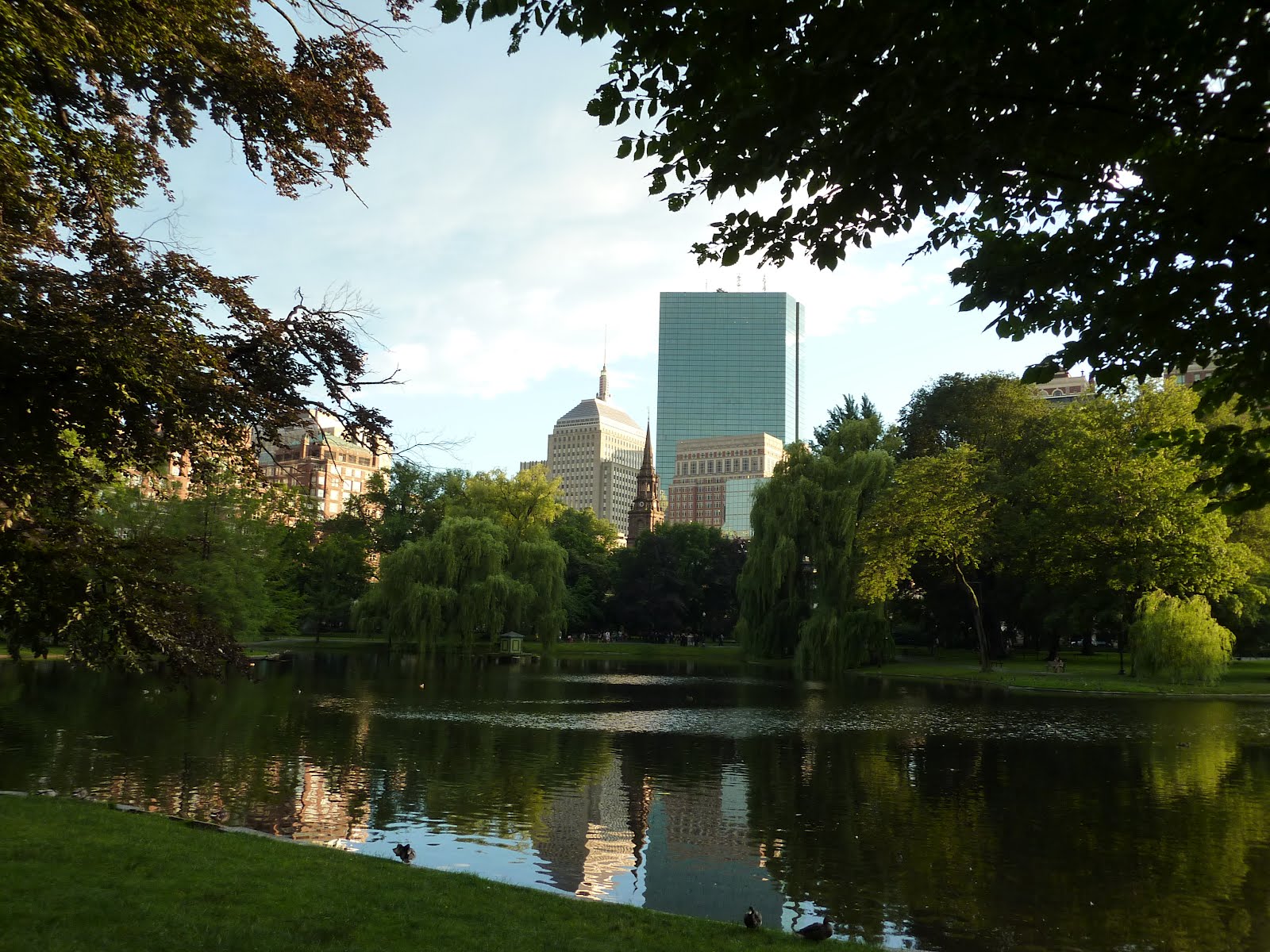
Last week, I shared several photos of Copley Place and the north slope of Beacon Hill - areas that Beauford frequented when he lived in Boston (1923-1929). In the same spirit, today I bring you photos of the Public Garden and Boston Common.

Public Garden
© Discover Paris!
In Amazing Grace: A Life of Beauford Delaney, David A. Leeming describes how Beauford wandered around the old city during his first months in Boston. He talks of the Wendell Phillips Memorial Statue in the Public Garden as a place where Beauford listened to speeches and lectures.

Wendell Phillips Memorial
© Discover Paris!
He indicates that Beauford met Nobel Prize winner Sinclair Lewis at the Garden and indicates that Beauford heard John Haynes Holmes preach at the Community Church of Boston located just south of the Garden on Carver Street (renamed Charles Street South). He also mentions Beauford's first "intimate experience," a sexual encounter that took place in one of the swan boats on the pond in the garden.

Swan boats at Public Garden
© Discover Paris!
Leeming devotes an entire paragraph to Beauford's admiration of the Robert Gould Shaw and Massachusetts 54th Regiment Memorial in the Boston Common.

Robert Gould Shaw and Massachusetts 54th Regiment Memorial
© Discover Paris!
The bronze sculpture is the first stop on Boston's Black Heritage Trail.

Black Heritage Trail Sign
© Discover Paris!
Created in 1897 by Augustus Saint-Gaudens in honor of the first black military regiment recruited by the North during the Civil War, it faces the Massachusetts State House - a building that Beauford admired.

Massachusetts State House (Beacon Street entrance)
© Discover Paris!
I learned a great deal about this sculpture from Ranger Todd MacGowen of the National Park Service*. MacGowan pointed out how the soldiers are portrayed with solemn dignity, each with distinct facial features. This contrasts with the generic, stereotypical way that blacks were portrayed in art during the era.

Robert Gould Shaw and Massachusetts 54th Regiment Memorial (detail-1)
© Discover Paris!

Robert Gould Shaw and Massachusetts 54th Regiment Memorial (detail-2)
© Discover Paris!
He also indicated that while the horse in the sculpture appears skittish and frightened (eyes bulging, nostrils flared, mouth open), the soldiers appear calm and determined.

Robert Gould Shaw and Massachusetts 54th Regiment Memorial (detail-3)
© Discover Paris!
The 54th Regiment, led by Colonel Robert Gould Shaw of Boston, left Boston to go to war by marching down Beacon Street in front of the State House. Several surviving members of the regiment attended the dedication ceremony for the memorial 34 years later.
*The National Park Service has organized a guided walking tour of the Black Heritage Trail, which I highly recommend. For information, visit www.nps.gov/boaf.
© Discover Paris!
In Amazing Grace: A Life of Beauford Delaney
, David A. Leeming describes how Beauford wandered around the old city during his first months in Boston. He talks of the Wendell Phillips Memorial Statue in the Public Garden as a place where Beauford listened to speeches and lectures.
© Discover Paris!
He indicates that Beauford met Nobel Prize winner Sinclair Lewis at the Garden and indicates that Beauford heard John Haynes Holmes preach at the Community Church of Boston located just south of the Garden on Carver Street (renamed Charles Street South). He also mentions Beauford's first "intimate experience," a sexual encounter that took place in one of the swan boats on the pond in the garden.

© Discover Paris!
Leeming devotes an entire paragraph to Beauford's admiration of the Robert Gould Shaw and Massachusetts 54th Regiment Memorial in the Boston Common.

© Discover Paris!
The bronze sculpture is the first stop on Boston's Black Heritage Trail.

© Discover Paris!
Created in 1897 by Augustus Saint-Gaudens in honor of the first black military regiment recruited by the North during the Civil War, it faces the Massachusetts State House - a building that Beauford admired.

© Discover Paris!
I learned a great deal about this sculpture from Ranger Todd MacGowen of the National Park Service*. MacGowan pointed out how the soldiers are portrayed with solemn dignity, each with distinct facial features. This contrasts with the generic, stereotypical way that blacks were portrayed in art during the era.

© Discover Paris!

© Discover Paris!
He also indicated that while the horse in the sculpture appears skittish and frightened (eyes bulging, nostrils flared, mouth open), the soldiers appear calm and determined.

© Discover Paris!
The 54th Regiment, led by Colonel Robert Gould Shaw of Boston, left Boston to go to war by marching down Beacon Street in front of the State House. Several surviving members of the regiment attended the dedication ceremony for the memorial 34 years later.
*The National Park Service has organized a guided walking tour of the Black Heritage Trail, which I highly recommend. For information, visit www.nps.gov/boaf.
Beauford in Boston: Copley Square and Black Beacon Hill
I visited Boston this week and was anxious to see some of the places that Beauford frequented during the six years that he lived here in the mid- to late 1920s. What I know of this period comes from Beauford's biography - Amazing Grace. I took photos of several locations mentioned in the biography and am pleased to share them with you in this posting, which is the first of two that explore "Beauford in Boston."
Beauford frequented the Boston Public Library at Copley Square. An avid reader, he spent a good deal of time there.

Boston Public Library
© Discover Paris!
Trinity Church dominates Copley Square. George Ruffin, a close friend of Beauford and a member of a prominent black Boston family, was a soloist at this church. Beauford attended many concerts there.

Trinity Church viewed from Dartmouth Street
© Discover Paris!
The Ruffins lived on Charles Street, which traverses Beacon Hill. Beauford attended the Charles Street Meeting House, located at the corner of Mt. Vernon Street and Charles Street on the north slope of the hill. This side of the hill was more densely populated and integrated than the southern slope that faces Boston Common.

Charles Street Meeting House
© Discover Paris!
The meeting house was constructed by the Third Baptist Church of Boston in 1807. The congregation maintained segregated seating. Timothy Gilbert, a white member of the congregation, was expelled during the 1830s for inviting black friends to sit with him in his pew. Gilbert and others went on to found the First Baptist Free Church - one of the first integrated churches in America.
In 1876, the AME Church purchased the Charles Street building. It served as the congregation's home until 1939 and occupied the church at the time that Beauford lived in Boston (1923-1929).
Beauford's biography indicates that Beauford admired the old homes on Beacon Hill and especially liked those on Louisburg Square.

Louisburg Square, 1930
Photographer: Leon H. Abdalian
Source: Wikipedia Commons

Louisburg Square today
© Discover Paris!
The Charles Street Meeting House is a featured stop and Louisburg Square is on the route followed by Boston's Black Heritage Trail.

Black Heritage Trail Sign
© Discover Paris!
I highly recommend this walk, which is organized by the National Park Service. For information, visit www.nps.gov/boaf.
Next week: The Public Gardens and Boston Common
. I took photos of several locations mentioned in the biography and am pleased to share them with you in this posting, which is the first of two that explore "Beauford in Boston."Beauford frequented the Boston Public Library at Copley Square. An avid reader, he spent a good deal of time there.

© Discover Paris!
Trinity Church dominates Copley Square. George Ruffin, a close friend of Beauford and a member of a prominent black Boston family, was a soloist at this church. Beauford attended many concerts there.

© Discover Paris!
The Ruffins lived on Charles Street, which traverses Beacon Hill. Beauford attended the Charles Street Meeting House, located at the corner of Mt. Vernon Street and Charles Street on the north slope of the hill. This side of the hill was more densely populated and integrated than the southern slope that faces Boston Common.

© Discover Paris!
The meeting house was constructed by the Third Baptist Church of Boston in 1807. The congregation maintained segregated seating. Timothy Gilbert, a white member of the congregation, was expelled during the 1830s for inviting black friends to sit with him in his pew. Gilbert and others went on to found the First Baptist Free Church - one of the first integrated churches in America.
In 1876, the AME Church purchased the Charles Street building. It served as the congregation's home until 1939 and occupied the church at the time that Beauford lived in Boston (1923-1929).
Beauford's biography indicates that Beauford admired the old homes on Beacon Hill and especially liked those on Louisburg Square.

Photographer: Leon H. Abdalian
Source: Wikipedia Commons

© Discover Paris!
The Charles Street Meeting House is a featured stop and Louisburg Square is on the route followed by Boston's Black Heritage Trail.

© Discover Paris!
I highly recommend this walk, which is organized by the National Park Service. For information, visit www.nps.gov/boaf.
Next week: The Public Gardens and Boston Common
Beauford in Spain
A trip to Valencia, Spain last weekend inspired me to reflect on Beauford's travels to this beautiful country.

Beach and Mediterranean Sea at Valencia, Spain
© Discover Paris!
Beauford traveled to Spain several times after moving to Paris. In 1955, he went to Madrid with his dear friend Larry Calcagno. Calcagno's work was being exhibited at the Gallery Clan and the two men went to see the show. Calcagno was able to persuade the gallery to hold a show for Beauford that June - one that was quite successful because it was Beauford's first solo show in Europe and because several paintings were sold.
In August 1956, Calcagno took Beauford to Ibiza and Majorca (3-4 hours from Valencia via rapid ferry). Ibiza was where Beauford first experienced Fauré's Requiem, the music in which he would later find solace after his mother died. According to biographer David Leeming, Beauford loved the colors of the Mediterranean and painted many watercolors while there.
Charley and Rita Boggs took Beauford to San Telmo, Majorca after his breakdown in Greece in 1961. This trip was therapeutic for him and though it was not as carefree as his previous visits to the area, he did manage to paint some watercolors there.

Beach and Mediterranean Sea at Valencia, Spain
© Discover Paris!
Beauford traveled to Spain several times after moving to Paris. In 1955, he went to Madrid with his dear friend Larry Calcagno. Calcagno's work was being exhibited at the Gallery Clan and the two men went to see the show. Calcagno was able to persuade the gallery to hold a show for Beauford that June - one that was quite successful because it was Beauford's first solo show in Europe and because several paintings were sold.
In August 1956, Calcagno took Beauford to Ibiza and Majorca (3-4 hours from Valencia via rapid ferry). Ibiza was where Beauford first experienced Fauré's Requiem, the music in which he would later find solace after his mother died. According to biographer David Leeming
, Beauford loved the colors of the Mediterranean and painted many watercolors while there.Charley and Rita Boggs took Beauford to San Telmo, Majorca after his breakdown in Greece in 1961. This trip was therapeutic for him and though it was not as carefree as his previous visits to the area, he did manage to paint some watercolors there.