

Errol Sawyer’s Photographic Portrait of Beauford
“Quantum.” This is one of the words that photographer Errol Sawyer used to describe Beauford during our recent interview.
Errol Sawyer (http://www.errolsawyer.com) is a documentary and fine arts photographer who currently lives in Amsterdam. His photographic portrait of Beauford is the most compelling one that I have ever seen.

Beauford Delaney
Rue Guilleminot
France 1973
© Errol Sawyer
Sawyer and Beauford were introduced in 1973 by a Danish woman who lived in the 14th arrondissement. Sawyer believes she may have been Beauford’s neighbor. She was very excited about making the introduction and hoped that the two men would build a relationship, perhaps because they were both African-American and both artists. Sawyer regrets that this did not happen – he says that he was 29 years old at the time and “didn’t know anything.” At that time he did not realize the value of maintaining contact with Beauford.
Sawyer only met Beauford twice, yet he was inspired to photograph him. He describes Beauford as being “like a boy – youthful, exuberant…” He never saw Beauford in a state of incoherence and said that Beauford was able to articulate his thoughts clearly whenever they spoke. But he also said that he thought Beauford operated on another plane of existence; that he was “in another zone.” He felt that Beauford was a “beautiful” human being.
The photo shoot took place in front of Sawyer’s atelier on rue Guilleminot in the 14th arrondissement, just one street away from Beauford’s studio on rue Vercingétorix. But he never visited Beauford’s studio and did not know Beauford’s work at the time he took the photo. He said that he wanted to photograph Beauford because he looked interesting and was very comfortable in his skin:
Sawyer traveled to Paris with his son Victor a few weeks ago and we returned to rue Guilleminot. The entire neighborhood was being razed and rebuilt at around the time that Beauford was committed to Sainte-Anne’s in the late 70s, and Sawyer recognized almost nothing from the time that he lived in the neighborhood. Though the building where his studio was located no longer exists, he showed me approximately where he took the photograph of Beauford. I photographed him and Victor at that spot.

Victor and Errol Sawyer on rue Guilleminot
© Discover Paris!
We then walked over to the place where Beauford’s building once stood. Sawyer recognized the church Notre Dame du Travail but said that everything else had changed from the time that he lived in Paris (1971-78). He again lamented that he had no idea he and Beauford were living so close together and that he did not get to know Beauford during those years.
I asked Sawyer what effect Beauford has had on his life. He responded:
Those in Paris can view three of Sawyer’s works, including his portrait of Beauford, from his book entitled City Mosaic (2010) at the Obama’s America exposition at Dorothy’s Gallery:
Dorothy’s Gallery – American Center for the Arts
27, rue Keller
75011 Paris
Telephone: 01 43 57 08 51
Internet: http://dorothysgallery.com/art/
Metro: Bastille (Lines 1, 5, and 8), Voltaire (Line 9)
Hours: Wednesday through Saturday from 1 PM to 7 PM, Tuesday and Sunday from 4 PM to 7 PM
A limited number of copies of City Mosaic are available for purchase at the gallery as well.
The exposition runs from September 14 through November 10, 2012.
Errol Sawyer (http://www.errolsawyer.com) is a documentary and fine arts photographer who currently lives in Amsterdam. His photographic portrait of Beauford is the most compelling one that I have ever seen.

Rue Guilleminot
France 1973
© Errol Sawyer
Sawyer and Beauford were introduced in 1973 by a Danish woman who lived in the 14th arrondissement. Sawyer believes she may have been Beauford’s neighbor. She was very excited about making the introduction and hoped that the two men would build a relationship, perhaps because they were both African-American and both artists. Sawyer regrets that this did not happen – he says that he was 29 years old at the time and “didn’t know anything.” At that time he did not realize the value of maintaining contact with Beauford.
Sawyer only met Beauford twice, yet he was inspired to photograph him. He describes Beauford as being “like a boy – youthful, exuberant…” He never saw Beauford in a state of incoherence and said that Beauford was able to articulate his thoughts clearly whenever they spoke. But he also said that he thought Beauford operated on another plane of existence; that he was “in another zone.” He felt that Beauford was a “beautiful” human being.
The photo shoot took place in front of Sawyer’s atelier on rue Guilleminot in the 14th arrondissement, just one street away from Beauford’s studio on rue Vercingétorix. But he never visited Beauford’s studio and did not know Beauford’s work at the time he took the photo. He said that he wanted to photograph Beauford because he looked interesting and was very comfortable in his skin:
I was drawn to him. I used a 50 mm lens camera to take the portrait. He was not bothered by the camera, not put off by it, not intimidated by it.
Sawyer traveled to Paris with his son Victor a few weeks ago and we returned to rue Guilleminot. The entire neighborhood was being razed and rebuilt at around the time that Beauford was committed to Sainte-Anne’s in the late 70s, and Sawyer recognized almost nothing from the time that he lived in the neighborhood. Though the building where his studio was located no longer exists, he showed me approximately where he took the photograph of Beauford. I photographed him and Victor at that spot.

© Discover Paris!
We then walked over to the place where Beauford’s building once stood. Sawyer recognized the church Notre Dame du Travail but said that everything else had changed from the time that he lived in Paris (1971-78). He again lamented that he had no idea he and Beauford were living so close together and that he did not get to know Beauford during those years.
I asked Sawyer what effect Beauford has had on his life. He responded:
He is speaking to me as I look at his portrait. He’s saying to me “Keep the faith.” He was a romantic and an idealist. Some of the things that he had to live through drove him mad. The same happened to van Gogh. Beauford is as present now as he was then. He’s not dead.
Those in Paris can view three of Sawyer’s works, including his portrait of Beauford, from his book entitled City Mosaic (2010) at the Obama’s America exposition at Dorothy’s Gallery:
Dorothy’s Gallery – American Center for the Arts
27, rue Keller
75011 Paris
Telephone: 01 43 57 08 51
Internet: http://dorothysgallery.com/art/
Metro: Bastille (Lines 1, 5, and 8), Voltaire (Line 9)
Hours: Wednesday through Saturday from 1 PM to 7 PM, Tuesday and Sunday from 4 PM to 7 PM
A limited number of copies of City Mosaic are available for purchase at the gallery as well.
The exposition runs from September 14 through November 10, 2012.
I Saw Beauford Delaney Today - Part 2
Last week, I brought you Part 1 of an article about artist Maureen Kelleher and her passion for James Baldwin and Beauford Delaney. Part 2 is below.
***********
Kelleher admits that she knows little about Beauford other than his relationship with Baldwin. She knows very little about the extent of his oeuvre, but she likes the boldness, colors, and big strokes that Beauford was so fond of using. She is familiar with only one of the portraits that Beauford painted of Baldwin – the one that is owned by the Philadelphia Museum of Art:

Portrait of James Baldwin
(1945) Oil on canvas
Philadelphia Museum of Art
Kelleher used this painting as the inspiration for Note Board, the companion piece for I Saw Beauford Delaney Today.

Artist’s note board for: I Saw Beauford Delaney Today
Maureen Kelleher
(2008) Mixed Media
Photo courtesy of Maureen Kelleher
Maureen relates the story of the creation of Note Board as follows:
To view Maureen Kelleher’s works, visit her Web sites at
www.mkelleherart(dot)com and www.beanartbean(dot)com. To watch her video, click here: Maureen Kelleher Studio Visit.
Kelleher admits that she knows little about Beauford other than his relationship with Baldwin. She knows very little about the extent of his oeuvre, but she likes the boldness, colors, and big strokes that Beauford was so fond of using. She is familiar with only one of the portraits that Beauford painted of Baldwin – the one that is owned by the Philadelphia Museum of Art:
It’s the only one I know about, and I love it. It is beautiful. Delaney captured Baldwin’s grace and vulnerability. And beautiful colors, style. I feel/see strength in Delaney’s technique.

(1945) Oil on canvas
Philadelphia Museum of Art
Kelleher used this painting as the inspiration for Note Board, the companion piece for I Saw Beauford Delaney Today.

Maureen Kelleher
(2008) Mixed Media
Photo courtesy of Maureen Kelleher
Maureen relates the story of the creation of Note Board as follows:
A woman I met on the train, [we had time to talk; the train died on the tracks, and we were stuck outside The Bronx for a couple hours, then we had to get on another train they sent to ‘rescue us”] -- unexpectedly sent me a large poster. The poster advertised a show of Beauford’s work at a museum in Philadelphia, (I think).
She remembered our talking about Baldwin, so (how wonderful for me!) she sent me the poster. When I saw the poster, and, of course, Delaney’s painting of Baldwin, I thought of using the painting for something in my work. I think I had the piece about Delaney and Baldwin done when I received the poster. Then I decided to make the accompanying note board. I knew I wanted to include Delaney’s painting of Baldwin, somehow, in my work on Baldwin. It makes total sense (to me!) that the piece, Delaney’s painting, would be included in my piece about Baldwin & Delaney’s friendship. Delaney’s painting of Baldwin is the most perfect representation of their friendship and friendship is the theme of my piece, I SAW BEAUFORD DELANEY TODAY.
Of course, Baldwin probably wrote about Delaney, but I’ve yet to get to that project and research that (so much to do! so little time!).
Clearly, each artist memorialized the friendship in his own medium. Wonderful.
To view Maureen Kelleher’s works, visit her Web sites at
www.mkelleherart(dot)com and www.beanartbean(dot)com. To watch her video, click here: Maureen Kelleher Studio Visit.
I Saw Beauford Delaney Today - Part 1
In a recent Google search on Beauford, I came across a video that features the work of an artist named Maureen Kelleher. Driven by her passion for James Baldwin, she created two works that illustrate the special relationship that Baldwin and Beauford had. I bring you these works and the story behind them in a two-part article. Part 1 is below.
************
Maureen Kelleher discovered James Baldwin while riding out a hurricane in New Orleans in 2000 (she thinks the hurricane was named “Georges.”) She passed the time waiting for the storm by reading David Leeming’s James Baldwin, A Biography, which represented her first exposure to Baldwin. Upon reading the passage about Baldwin advising his brother “Lover” on how to handle a racist, white, superior officer in the army, she remembered an event from her adolescence that made her realize that her father was the “exact description of the racist described in the Baldwin brothers’ exchange.” At that moment, she knew that Baldwin’s advice to “Lover” was “right on the money, honest, and accurate.” She also knew that she needed to resolve the juxtaposition of the two positions – that of Baldwin and that of her father – in her mind.
When the threat of the storm passed, she turned to art as a means of working out this conflict. She created her first works from wood and paint, and used words as a core part of the pieces that released the “creativity floodgate” within her that makes her the artist she is today. From a person who hated art and avoided it with a passion, she turned into a person whose life revolves around art.

I Saw Beauford Delaney Today
Maureen Kelleher
(2008) Mixed Media
Photo courtesy of Maureen Kelleher
Kelleher's work entitled I Saw Beauford Delaney Today is composed of mixed media: wood, painting, engraving, images, and wire on wood. Two photographs in the Leeming biography of Baldwin inspired her to create it – one of Baldwin, Beauford, and Lucien Happersberger walking down the street in Paris, and the other of Baldwin and Beauford at Sainte-Anne’s Hospital. In the first photo, all three subjects are nattily dressed and looking happy. In the second, Beauford is a patient at Sainte-Anne’s and is dressed in a bathrobe. Baldwin is dressed in street clothes and is visiting Beauford.
Kelleher says that the second photo was the true inspiration for her work:
A trip to The Village (Greenwich Village) was the inspiration for the name of the piece. Kelleher was excited to move to the NYC area in 2005 when she evacuated New Orleans because of Hurricane Katrina. She was thrilled that she could finally go to the places that Baldwin and Beauford frequented and wanted to find where Beauford lived in the Village because she wanted to see where Baldwin first met his dear friend and mentor. She went to 181 Greene Street (the address she had found in Leeming’s biography of Baldwin) and was disappointed to find NYU dormitories at the site.
During that trek, she saw a middle-aged African-American man on the street and said to herself “That could be Beauford Delaney, if this were 1936.” She said that the phrase “I just saw Beauford Delaney” went through her head. She felt that she was “in history’s footsteps” and that she “[just] saw Beauford Delaney” on the street corner in New York City. That’s how she got the title for her piece.
To view Maureen Kelleher’s works, visit her Web sites at
www.mkelleherart(dot)com and www.beanartbean(dot)com. To watch her video, click here: Maureen Kelleher Studio Visit.
Maureen Kelleher discovered James Baldwin while riding out a hurricane in New Orleans in 2000 (she thinks the hurricane was named “Georges.”) She passed the time waiting for the storm by reading David Leeming’s James Baldwin, A Biography, which represented her first exposure to Baldwin. Upon reading the passage about Baldwin advising his brother “Lover” on how to handle a racist, white, superior officer in the army, she remembered an event from her adolescence that made her realize that her father was the “exact description of the racist described in the Baldwin brothers’ exchange.” At that moment, she knew that Baldwin’s advice to “Lover” was “right on the money, honest, and accurate.” She also knew that she needed to resolve the juxtaposition of the two positions – that of Baldwin and that of her father – in her mind.
When the threat of the storm passed, she turned to art as a means of working out this conflict. She created her first works from wood and paint, and used words as a core part of the pieces that released the “creativity floodgate” within her that makes her the artist she is today. From a person who hated art and avoided it with a passion, she turned into a person whose life revolves around art.

Maureen Kelleher
(2008) Mixed Media
Photo courtesy of Maureen Kelleher
Kelleher's work entitled I Saw Beauford Delaney Today is composed of mixed media: wood, painting, engraving, images, and wire on wood. Two photographs in the Leeming biography of Baldwin inspired her to create it – one of Baldwin, Beauford, and Lucien Happersberger walking down the street in Paris, and the other of Baldwin and Beauford at Sainte-Anne’s Hospital. In the first photo, all three subjects are nattily dressed and looking happy. In the second, Beauford is a patient at Sainte-Anne’s and is dressed in a bathrobe. Baldwin is dressed in street clothes and is visiting Beauford.
Kelleher says that the second photo was the true inspiration for her work:
My mother was extremely mentally ill; she had a nervous breakdown, every year of my life, until the time of her death in 1994, so I’ve been in many state hospitals, locked wards, and lots of time spent there, visiting with my mom, meetings lots and lots of doctors and nurses, and all the other patients in the day room, endless smoking, visiting, playing cards, for my entire life. So I really, really “connect” with this photo of Baldwin “coming to the aid” of his mentally ill friend, in the hospital…So sweet and so personal. The big famous American writer, and he’s taking the time to help his dear friend in need, another artist, the American painter, Beauford Delaney.
A trip to The Village (Greenwich Village) was the inspiration for the name of the piece. Kelleher was excited to move to the NYC area in 2005 when she evacuated New Orleans because of Hurricane Katrina. She was thrilled that she could finally go to the places that Baldwin and Beauford frequented and wanted to find where Beauford lived in the Village because she wanted to see where Baldwin first met his dear friend and mentor. She went to 181 Greene Street (the address she had found in Leeming’s biography of Baldwin) and was disappointed to find NYU dormitories at the site.
During that trek, she saw a middle-aged African-American man on the street and said to herself “That could be Beauford Delaney, if this were 1936.” She said that the phrase “I just saw Beauford Delaney” went through her head. She felt that she was “in history’s footsteps” and that she “[just] saw Beauford Delaney” on the street corner in New York City. That’s how she got the title for her piece.
To view Maureen Kelleher’s works, visit her Web sites at
www.mkelleherart(dot)com and www.beanartbean(dot)com. To watch her video, click here: Maureen Kelleher Studio Visit.
Beauford's Paris: Gare Saint-Lazare
The last leg of Beauford's first journey to Paris, which took place roughly 59 years ago, was by train. That train's destination was the Gare Saint-Lazare in the 9th arrondissement. Herb Gentry and Bob Blackburn met him at the station and took him to Montparnasse, where he began his life as an expatriate.
One of Beauford's favorite artists, Claude Monet, captured multiple images of Saint-Lazare station on canvas. A few of them are presented below.

Saint-Lazare Station: Arrival of a train
Claude Monet
(1877) Oil on canvas
Fogg Art Museum, Cambridge, USA

The Gare Saint-Lazare
Claude Monet
(1877) Oil on canvas
National Gallery, London

Saint-Lazare Station, The Signals
Claude Monet
(1877) Oil on canvas
Niedersachsische Landesmuseum, Hannover
The painting at the Hannover museum calls to mind Beauford's fondness of representing street lamps in paintings from his New York days:

Greenwich Village
Beauford Delaney
(1945) Oil on canvas
Photo by Manu Sasoonian, from Amazing Grace

Washington Square
Beauford Delaney
(1948) Oil on canvas
Image from Pomegranate Note Card
One of Beauford's favorite artists, Claude Monet, captured multiple images of Saint-Lazare station on canvas. A few of them are presented below.

Claude Monet
(1877) Oil on canvas
Fogg Art Museum, Cambridge, USA

Claude Monet
(1877) Oil on canvas
National Gallery, London

Claude Monet
(1877) Oil on canvas
Niedersachsische Landesmuseum, Hannover
The painting at the Hannover museum calls to mind Beauford's fondness of representing street lamps in paintings from his New York days:

Beauford Delaney
(1945) Oil on canvas
Photo by Manu Sasoonian, from Amazing Grace

Beauford Delaney
(1948) Oil on canvas
Image from Pomegranate Note Card
Race, Society, and Canvas: The Amazing Grace of Beauford Delaney
By now, E.L. Kornegay, Jr. needs no introduction to regular readers of this blog. His articles provide us with fresh insight into Beauford's life and art. Today he brings us Part Three of "re-Searching Beauford Delaney."
************
Race, Society, and Canvas: The Amazing Grace of Beauford Delaney
re-Searching Beauford Delaney: part three
E. L. Kornegay Jr., Ph.D.

One of the things most underappreciated about the artistry of Beauford Delaney is the effort expended by Beauford and the cost exacted from him to beat back the social dross of a society bent and broken apart by racism. Beauford did not necessarily paint what he lived – he painted his resistant hope for a world that was yet to exist. Whether he ever realized that it was moving in the direction of his paintings is somewhat of a mystery. One thing that I do know is that living in the tension of racism and a society that failed to embrace his blackness, his masculinity, thwarted his ability to love openly and challenged the hope of his soul. This drove him out of America and, dare I say, out of his mind.
What Beauford left behind for us is amazing. In spite of depression and oppression he was able to leave a message on canvas of a world above the one in which he existed. It is by grace that he shaped a way for the images of a world envisioned in his mind to find their way onto the serene landscape of his canvas.
Race and racism have broken many people and communities of color. This was Beauford’s experience. The benevolence shown by white sponsors and A-list associations with entertainers and artists afforded him little relief from the racist conundrum faced by the exceptional Negro. Beauford was exceptional, but still Negro.

Against this backdrop, biographer David Leeming draws us a picture of the life and work of Beauford Delaney. To Leeming’s credit, Amazing Grace is a rich accounting of a black artist striving to live in the spirit of his gift in a world that sought to diminish his worth. The text is as much a chronicle of the growing pains of a nation and humanity as it is a singular tale of Beauford’s dogged determination to be an artist. This is what made Beauford the human being that he was – he was graced with the power to capture not what he saw with his natural eye, but what he saw with his spirit. However, Amazing Grace is limited by the disconnection between its author and a social context that was viewed, but not necessarily lived.
Those of us who have experienced the racism and bigotry of American society firsthand share in the knowledge of how it divides the mind and seeks separation of body and soul, leaving the latter to fend for itself. Living is a battle on multiple fronts, with the lack of relief or safety often ending in wonderful gifts and unrivaled beauty being lost in various forms of addiction – or, in the case of Beauford, a formal withdrawal from deliberating the troubles of this world.
The toil, the never ending of toil of life, can cause the best of us to lose balance. Beauford slipped in and out this world and sanity as he toiled. Eventually he became too tired to fight, finally giving in, but not before leaving his gift intact on canvas.
Leeming reminds his readers over and over again of the power of Beauford’s spirit and the sacredness of his gift. The creation of art was Beauford’s passion: it was a full cup and a heavy, yet wondrous cross he bore at all costs. He fulfilled his purpose. His spirit did not return vanquished to the eternal – it accomplished what it was sent here to do.
Beauford left it to the world to ponder the “what if” of his mental state. The world was not meant to be this hard – he knew it even if those around him failed to recognize that fact. In a chilling way, it seems that he left long before his physical body breathed its last breath. What remained, still physically warm but drained of spiritual vitality, reminds us of how strong the will of a body remains long after the fight has ended.
When I read about Beauford, I am reminded of the lives of the multitude of persons who have passed into history without a whisper. Anytime I look on the dark face of a man or woman, hardened and scarred by the raging world around them, left mumbling, begging with their backs against a dirty wall sitting on a bustling, uncaring city sidewalk, I see Beauford. It was from a similar position that he painted the wonderful works we now laud. Who he was and what he saw are one and the same – they create a complete picture. It is amazing that he graced us with the world we hope for on canvas and in doing so created a way to escape, however momentarily, the madness knocking at our door.
re-Searching Beauford Delaney: part three
E. L. Kornegay Jr., Ph.D.

One of the things most underappreciated about the artistry of Beauford Delaney is the effort expended by Beauford and the cost exacted from him to beat back the social dross of a society bent and broken apart by racism. Beauford did not necessarily paint what he lived – he painted his resistant hope for a world that was yet to exist. Whether he ever realized that it was moving in the direction of his paintings is somewhat of a mystery. One thing that I do know is that living in the tension of racism and a society that failed to embrace his blackness, his masculinity, thwarted his ability to love openly and challenged the hope of his soul. This drove him out of America and, dare I say, out of his mind.
What Beauford left behind for us is amazing. In spite of depression and oppression he was able to leave a message on canvas of a world above the one in which he existed. It is by grace that he shaped a way for the images of a world envisioned in his mind to find their way onto the serene landscape of his canvas.
Race and racism have broken many people and communities of color. This was Beauford’s experience. The benevolence shown by white sponsors and A-list associations with entertainers and artists afforded him little relief from the racist conundrum faced by the exceptional Negro. Beauford was exceptional, but still Negro.

Against this backdrop, biographer David Leeming draws us a picture of the life and work of Beauford Delaney. To Leeming’s credit, Amazing Grace
is a rich accounting of a black artist striving to live in the spirit of his gift in a world that sought to diminish his worth. The text is as much a chronicle of the growing pains of a nation and humanity as it is a singular tale of Beauford’s dogged determination to be an artist. This is what made Beauford the human being that he was – he was graced with the power to capture not what he saw with his natural eye, but what he saw with his spirit. However, Amazing Grace is limited by the disconnection between its author and a social context that was viewed, but not necessarily lived.Those of us who have experienced the racism and bigotry of American society firsthand share in the knowledge of how it divides the mind and seeks separation of body and soul, leaving the latter to fend for itself. Living is a battle on multiple fronts, with the lack of relief or safety often ending in wonderful gifts and unrivaled beauty being lost in various forms of addiction – or, in the case of Beauford, a formal withdrawal from deliberating the troubles of this world.
The toil, the never ending of toil of life, can cause the best of us to lose balance. Beauford slipped in and out this world and sanity as he toiled. Eventually he became too tired to fight, finally giving in, but not before leaving his gift intact on canvas.
Leeming reminds his readers over and over again of the power of Beauford’s spirit and the sacredness of his gift. The creation of art was Beauford’s passion: it was a full cup and a heavy, yet wondrous cross he bore at all costs. He fulfilled his purpose. His spirit did not return vanquished to the eternal – it accomplished what it was sent here to do.
Beauford left it to the world to ponder the “what if” of his mental state. The world was not meant to be this hard – he knew it even if those around him failed to recognize that fact. In a chilling way, it seems that he left long before his physical body breathed its last breath. What remained, still physically warm but drained of spiritual vitality, reminds us of how strong the will of a body remains long after the fight has ended.
When I read about Beauford, I am reminded of the lives of the multitude of persons who have passed into history without a whisper. Anytime I look on the dark face of a man or woman, hardened and scarred by the raging world around them, left mumbling, begging with their backs against a dirty wall sitting on a bustling, uncaring city sidewalk, I see Beauford. It was from a similar position that he painted the wonderful works we now laud. Who he was and what he saw are one and the same – they create a complete picture. It is amazing that he graced us with the world we hope for on canvas and in doing so created a way to escape, however momentarily, the madness knocking at our door.
Beauford and Emery: The Delaney Brothers at Notre Dame Cathedral
In Amazing Grace: A Life of Beauford Delaney, David A. Leeming writes that "Beauford always had a religious streak. He loved visiting the great cathedrals - Chartres and Notre Dame especially - not only for aesthetic purposes but because he envied the order and constancy he saw them as representing."
Beauford received a visit from his brother Emery, sister-in-law Gertrude, and niece Imogene in August 1955. On the first Sunday of their visit, Beauford and Emery attended mass at Notre Dame Cathedral. Emery also found the church appealing and described his experience as "heart-thrilling" in a letter to Joe Delaney (Beauford and Emery's brother).
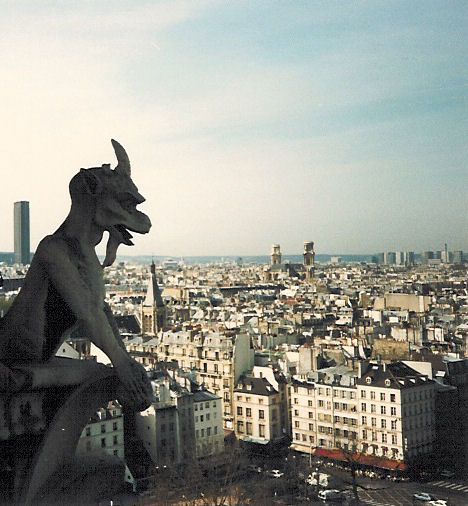
Anyone seeing the cathedral cannot fail to be impressed by it. Here I share several photos that will give you an idea of why this church has inspired so many.

Notre Dame Viewed from the Left Bank
© Discover Paris!

Rear of Notre Dame Cathedral
Creative Commons Attribution: Kiwiboy121

Organ at Notre Dame Cathedral
Creative Commons Attribution: Eric Chan

Pietà
Nicolas Coustou
1712-28 Marble
© Discover Paris!

Rose from Garden behind Notre Dame Cathedral
Creative Commons Attribution: Charlesblack

View of the city from Notre Dame Cathedral
© Discover Paris!
For more stunning and unusual photos of the cathedral, click here.
, David A. Leeming writes that "Beauford always had a religious streak. He loved visiting the great cathedrals - Chartres and Notre Dame especially - not only for aesthetic purposes but because he envied the order and constancy he saw them as representing."Beauford received a visit from his brother Emery, sister-in-law Gertrude, and niece Imogene in August 1955. On the first Sunday of their visit, Beauford and Emery attended mass at Notre Dame Cathedral. Emery also found the church appealing and described his experience as "heart-thrilling" in a letter to Joe Delaney (Beauford and Emery's brother).
Anyone seeing the cathedral cannot fail to be impressed by it. Here I share several photos that will give you an idea of why this church has inspired so many.

© Discover Paris!

Creative Commons Attribution: Kiwiboy121

Creative Commons Attribution: Eric Chan

Nicolas Coustou
1712-28 Marble
© Discover Paris!

Creative Commons Attribution: Charlesblack
© Discover Paris!
For more stunning and unusual photos of the cathedral, click here.
A Plaque for Beauford
For almost a year, I have been mulling over the possibility of having a plaque dedicated to Beauford affixed to the façade of a building in Paris. There are already three plaques in Paris that honor African Americans - one for Richard Wright (6th arrondissement), one for Louis Armstrong* (9th arrondissement), and one for Carole Denise Fredericks (18th arrondissement). I think it would be fitting for Beauford's plaque to be hung in the 14th arrondissement - in Montparnasse - since this is the area of Paris that he called home for most of his years in France.

Louis Armstrong plaque
© Discover Paris! *Beauford knew and sketched Armstrong during Beauford's "New York Years."
Inspired by the recent inauguration of the Fredericks plaque, I asked Carole's sister, Connie Fredericks-Malone, how she went about obtaining the various permissions required to have Carole's plaque installed. As I expected, she told me that the path was long and tortuous and that much time and patience was required. But surprisingly, the number of steps required is small.

Mairie of the 14th Arrondissement
© Discover Paris!
In late July, on behalf of Les Amis de Beauford Delaney, I took the first steps down the road to making Beauford's plaque a reality. I visited the mairie (town hall) of the 14th arrondissement and asked for the name of the person I needed to contact to submit my request. I was given a form to complete and a document showing the name and photo of the official who will address my inquiry. I completed the form and mailed it in.
Given that it is August and almost all self-respecting Parisians have vacated the city, I do not expect to hear anything from this official until the rentrée - the return from summer vacation. I will publish updates on the Les Amis blog as things progress.
Wish us luck!

© Discover Paris!
Inspired by the recent inauguration of the Fredericks plaque, I asked Carole's sister, Connie Fredericks-Malone, how she went about obtaining the various permissions required to have Carole's plaque installed. As I expected, she told me that the path was long and tortuous and that much time and patience was required. But surprisingly, the number of steps required is small.

© Discover Paris!
In late July, on behalf of Les Amis de Beauford Delaney, I took the first steps down the road to making Beauford's plaque a reality. I visited the mairie (town hall) of the 14th arrondissement and asked for the name of the person I needed to contact to submit my request. I was given a form to complete and a document showing the name and photo of the official who will address my inquiry. I completed the form and mailed it in.
Given that it is August and almost all self-respecting Parisians have vacated the city, I do not expect to hear anything from this official until the rentrée - the return from summer vacation. I will publish updates on the Les Amis blog as things progress.
Wish us luck!
Beauford and Dizzy Gillespie
Beauford counted Dizzy Gillespie among his friends. He was excited about seeing Gillespie perform at a "Jazz at the Philharmonic" concert at the Alhambra in June 1958. Artists Ray Brown, Stan Getz, Coleman Hawkins, Max Bennett, Herb Elis, Sonny Stitt, Roy Eldridge, Gus Johnson, Lou Levy, Pete Johnson, and Joe Turner were all part of the show.
Five of these artists can be seen playing together in the video below. The song is Gillespie's "Blues after Dark," recorded in 1958. Click on the image to watch!

Gillespie played in Paris frequently during Beauford's Paris years and regaled audiences at famous theaters such as the Olympia and the Salle Pleyel.
Five of these artists can be seen playing together in the video below. The song is Gillespie's "Blues after Dark," recorded in 1958. Click on the image to watch!
Gillespie played in Paris frequently during Beauford's Paris years and regaled audiences at famous theaters such as the Olympia and the Salle Pleyel.
Tending Beauford's Gravesite
Thursday was an absolutely gorgeous day in Paris, so my husband Tom and I took the opportunity to visit Beauford's gravesite. Because the finishing touches were being placed on his tombstone in July / August 2010, our visit represented an anniversary of sorts (see the sidebar for before and after photos).
I was pleased to see that the 86th Division had been recently cleared of overgrowing vegetation. The gravestone itself is in impeccable condition - all that I needed to do was clear a few stray pebbles and stones, remove soil and debris from beneath the ceramic flower arrangement, spray it, and wipe it down.


Tending the gravesite
© Discover Paris!
The money for renewal of the gravesite concession is once again due, but neither I nor Les Amis de Beauford Delaney can submit payment before Spring 2013. This date represents the expiration of the grace period during which a Delaney family member or a legal representative of Beauford's estate can come forward to renew the concession or make other arrangements for Beauford.
In the interim, I am comforted to know that the stone that Les Amis and so many contributors worked to have placed at the grave is as handsome and befitting of Beauford's dignity and spirit as the day it was laid.
I was pleased to see that the 86th Division had been recently cleared of overgrowing vegetation. The gravestone itself is in impeccable condition - all that I needed to do was clear a few stray pebbles and stones, remove soil and debris from beneath the ceramic flower arrangement, spray it, and wipe it down.


© Discover Paris!
The money for renewal of the gravesite concession is once again due, but neither I nor Les Amis de Beauford Delaney can submit payment before Spring 2013. This date represents the expiration of the grace period during which a Delaney family member or a legal representative of Beauford's estate can come forward to renew the concession or make other arrangements for Beauford.
In the interim, I am comforted to know that the stone that Les Amis and so many contributors worked to have placed at the grave is as handsome and befitting of Beauford's dignity and spirit as the day it was laid.
Beauford's Art - Monotypes
In surfing the Web the other day, I came across an interesting tidbit of information about Beauford's art: he created monotypes - prints that are produced using a technique through which a painted image is transferred through pressure to a sheet of paper, producing a unique impression.
Searching further, I found images of two of Beauford's monotypes that Swann Galleries auctioned in 2008 and 2010. The gallery describes the first print as a "possible self-portrait":

Untitled (Smiling Man)
(circa 1960-65) Color oil monotype
Photo courtesy of Swann Galleries
The second work is described as follows:

Untitled (Istanbul, Turkey)
(1966) Oil monotype on thick cream wove paper
Photo courtesy of Swann Galleries
The "self-portrait" sold for $30,000 at auction in 2008, while the painting of Istanbul was unsold in 2010.
The Istanbul painting was illustrated in the catalog of an exposition of American monotypes called Singular Impressions: The Monotype in America that was mounted by the National Museum of American Art at The Smithsonian in 1997. Beauford's painting did not actually hang at this exposition.
Searching further, I found images of two of Beauford's monotypes that Swann Galleries auctioned in 2008 and 2010. The gallery describes the first print as a "possible self-portrait":

(circa 1960-65) Color oil monotype
Photo courtesy of Swann Galleries
The second work is described as follows:
This striking and large montoype dates from the summer of 1966 when Beauford Delaney traveled to Istanbul to visit James Baldwin after attending the Venice Biennale.

(1966) Oil monotype on thick cream wove paper
Photo courtesy of Swann Galleries
The "self-portrait" sold for $30,000 at auction in 2008, while the painting of Istanbul was unsold in 2010.
The Istanbul painting was illustrated in the catalog of an exposition of American monotypes called Singular Impressions: The Monotype in America that was mounted by the National Museum of American Art at The Smithsonian in 1997. Beauford's painting did not actually hang at this exposition.
Invitation to a Gathering of Souls
Last month, E.L. Kornegay, Jr. contributed the first of a series of articles that explore his experiences and reflections in the scholarly pursuit of Beauford's life and art. Today he brings us Part Two of "re-Searching Beauford Delaney."
************
“Invitation to a Gathering of Souls”
re-Searching Beauford Delaney: Part Two
by E. L. Kornegay, Jr., Ph. D.
I cannot say, with all honesty, that I ever imagined I would get this close to Beauford Delaney. Yet, here I am feeling in some way that it was intended for me to be standing in the midst of his memory and his artistic legacy.
There are many who both love and appreciate Beauford Delaney. In fact my formal introduction into his world came by way of a chance third party connection to Monique Wells. She was in Chicago to do a presentation on Beauford Delaney and the efforts of Les Amis. While we were unfortunately unable to meet face-to-face, Monique graciously chatted with me over the phone. She is the first soul I would encounter gathered around Beauford. This leads me to say while I first heard of Beauford through my research on James Baldwin, I feel that I was formally introduced to Beauford through Monique.
This is at the heart of what I feel is so much of who Beauford Delaney was in life and what keeps him alive in the hearts and minds of many. Beauford’s art gives his soul tangibility. His art is a tangible expression of his soul and an invitation to be in his company.

Beauford among his paintings
Photo from Darthea Speyer Gallery Invitation to
1973 Beauford Delaney Solo Exposition
I am beginning to see Beauford’s art as a collection of invitations: a history of the souls he encountered. Seeing him standing amongst his paintings, whether it is the work of his early period, first in Boston and then New York or the latter period in Europe, a sense of community emerges. These images are not a collection of paintings: each is a uniquely crafted expression of a soul he met or souls he felt and could only gauge abstractly. I can only imagine the beauty behind the madness of feeling but not knowing, and the power it took to capture it on canvas. As such, it seems to me that Beauford would think it strange to see him apart from his art – to be located alongside its beauty yet somehow separated from the madness. Beauford moves amongst his art, a gleeful host cherishing the wild and peaceful presence of colorful souls in his space. Beauford did not create a collection of art: Beauford Delaney proffered a gathering of souls.
As I encounter, one by one, the paintings of Beauford, I sense that each piece is insistent. Each work invites you not merely to view it, but to encounter its presence and to feel what you see inside of its colors, shapes, and textures. This goes on from one painting to another in the way a conversation amongst friends flows naturally when gathered together. The gift of seeing his paintings as a whole is to be invited into a cloud of witnesses. You cannot know one: you must know them all.
I am grateful for the invitation and awestruck by the gathering of souls around Beauford Delaney. Henry Miller writes “Beauford was an artist before birth; he was an artist in the womb…”1 In other words Beauford painted from his soul: even before he was formed in his mother’s womb. So Beauford paints to gather us together and invites us to remember those things before we were formed, where beauty is pure and madness is a mirage.
1Henry Miller, The Amazing and Invariable Beauford Delaney. (New York: New Directions), 1941.
re-Searching Beauford Delaney: Part Two
by E. L. Kornegay, Jr., Ph. D.
I cannot say, with all honesty, that I ever imagined I would get this close to Beauford Delaney. Yet, here I am feeling in some way that it was intended for me to be standing in the midst of his memory and his artistic legacy.
There are many who both love and appreciate Beauford Delaney. In fact my formal introduction into his world came by way of a chance third party connection to Monique Wells. She was in Chicago to do a presentation on Beauford Delaney and the efforts of Les Amis. While we were unfortunately unable to meet face-to-face, Monique graciously chatted with me over the phone. She is the first soul I would encounter gathered around Beauford. This leads me to say while I first heard of Beauford through my research on James Baldwin, I feel that I was formally introduced to Beauford through Monique.
This is at the heart of what I feel is so much of who Beauford Delaney was in life and what keeps him alive in the hearts and minds of many. Beauford’s art gives his soul tangibility. His art is a tangible expression of his soul and an invitation to be in his company.

Photo from Darthea Speyer Gallery Invitation to
1973 Beauford Delaney Solo Exposition
I am beginning to see Beauford’s art as a collection of invitations: a history of the souls he encountered. Seeing him standing amongst his paintings, whether it is the work of his early period, first in Boston and then New York or the latter period in Europe, a sense of community emerges. These images are not a collection of paintings: each is a uniquely crafted expression of a soul he met or souls he felt and could only gauge abstractly. I can only imagine the beauty behind the madness of feeling but not knowing, and the power it took to capture it on canvas. As such, it seems to me that Beauford would think it strange to see him apart from his art – to be located alongside its beauty yet somehow separated from the madness. Beauford moves amongst his art, a gleeful host cherishing the wild and peaceful presence of colorful souls in his space. Beauford did not create a collection of art: Beauford Delaney proffered a gathering of souls.
As I encounter, one by one, the paintings of Beauford, I sense that each piece is insistent. Each work invites you not merely to view it, but to encounter its presence and to feel what you see inside of its colors, shapes, and textures. This goes on from one painting to another in the way a conversation amongst friends flows naturally when gathered together. The gift of seeing his paintings as a whole is to be invited into a cloud of witnesses. You cannot know one: you must know them all.
I am grateful for the invitation and awestruck by the gathering of souls around Beauford Delaney. Henry Miller writes “Beauford was an artist before birth; he was an artist in the womb…”1 In other words Beauford painted from his soul: even before he was formed in his mother’s womb. So Beauford paints to gather us together and invites us to remember those things before we were formed, where beauty is pure and madness is a mirage.
1Henry Miller, The Amazing and Invariable Beauford Delaney. (New York: New Directions), 1941.
Beauford in Boston: Public Garden and Boston Common
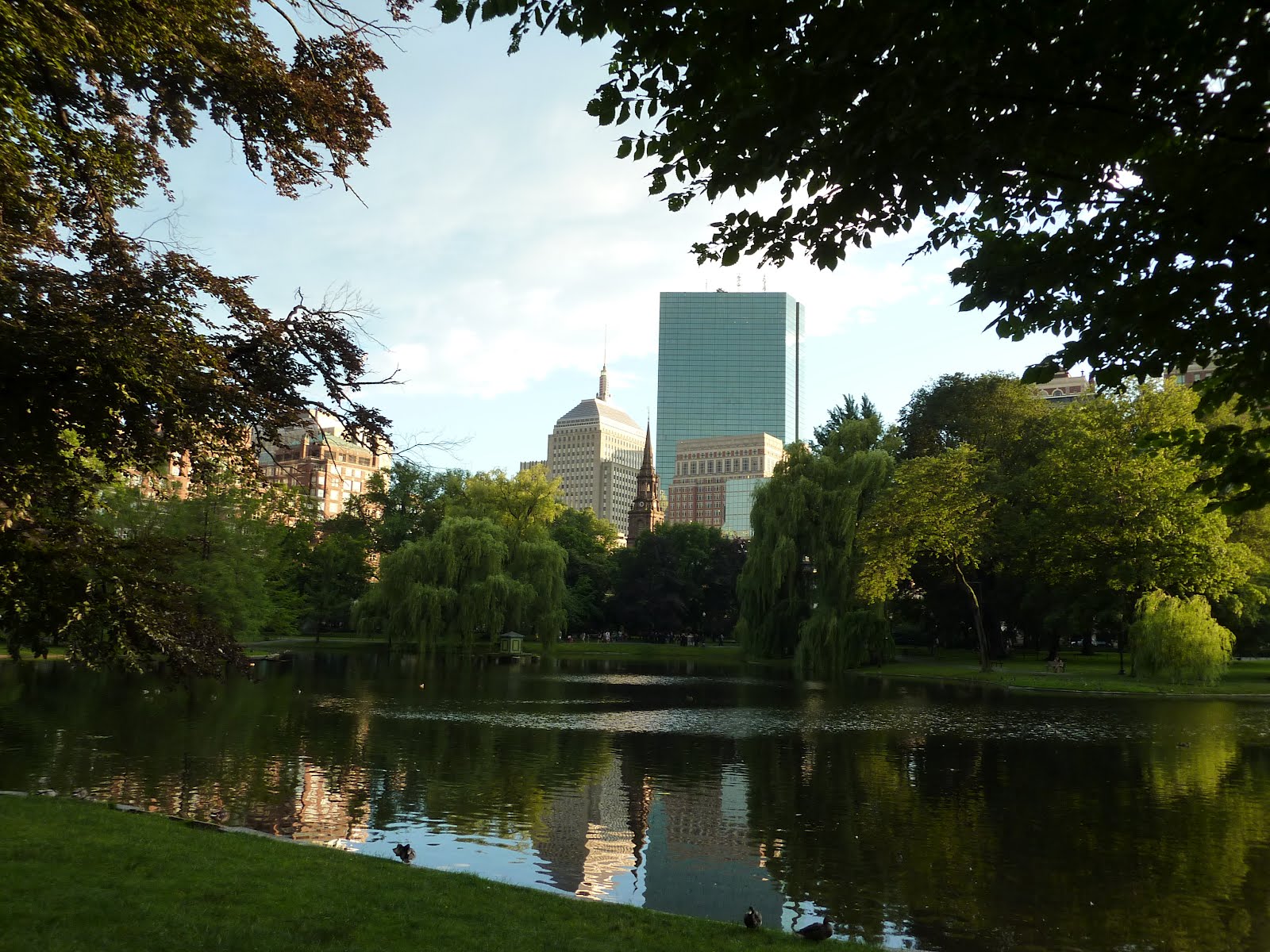
Last week, I shared several photos of Copley Place and the north slope of Beacon Hill - areas that Beauford frequented when he lived in Boston (1923-1929). In the same spirit, today I bring you photos of the Public Garden and Boston Common.

Public Garden
© Discover Paris!
In Amazing Grace: A Life of Beauford Delaney, David A. Leeming describes how Beauford wandered around the old city during his first months in Boston. He talks of the Wendell Phillips Memorial Statue in the Public Garden as a place where Beauford listened to speeches and lectures.

Wendell Phillips Memorial
© Discover Paris!
He indicates that Beauford met Nobel Prize winner Sinclair Lewis at the Garden and indicates that Beauford heard John Haynes Holmes preach at the Community Church of Boston located just south of the Garden on Carver Street (renamed Charles Street South). He also mentions Beauford's first "intimate experience," a sexual encounter that took place in one of the swan boats on the pond in the garden.

Swan boats at Public Garden
© Discover Paris!
Leeming devotes an entire paragraph to Beauford's admiration of the Robert Gould Shaw and Massachusetts 54th Regiment Memorial in the Boston Common.

Robert Gould Shaw and Massachusetts 54th Regiment Memorial
© Discover Paris!
The bronze sculpture is the first stop on Boston's Black Heritage Trail.

Black Heritage Trail Sign
© Discover Paris!
Created in 1897 by Augustus Saint-Gaudens in honor of the first black military regiment recruited by the North during the Civil War, it faces the Massachusetts State House - a building that Beauford admired.

Massachusetts State House (Beacon Street entrance)
© Discover Paris!
I learned a great deal about this sculpture from Ranger Todd MacGowen of the National Park Service*. MacGowan pointed out how the soldiers are portrayed with solemn dignity, each with distinct facial features. This contrasts with the generic, stereotypical way that blacks were portrayed in art during the era.

Robert Gould Shaw and Massachusetts 54th Regiment Memorial (detail-1)
© Discover Paris!

Robert Gould Shaw and Massachusetts 54th Regiment Memorial (detail-2)
© Discover Paris!
He also indicated that while the horse in the sculpture appears skittish and frightened (eyes bulging, nostrils flared, mouth open), the soldiers appear calm and determined.

Robert Gould Shaw and Massachusetts 54th Regiment Memorial (detail-3)
© Discover Paris!
The 54th Regiment, led by Colonel Robert Gould Shaw of Boston, left Boston to go to war by marching down Beacon Street in front of the State House. Several surviving members of the regiment attended the dedication ceremony for the memorial 34 years later.
*The National Park Service has organized a guided walking tour of the Black Heritage Trail, which I highly recommend. For information, visit www.nps.gov/boaf.
© Discover Paris!
In Amazing Grace: A Life of Beauford Delaney
, David A. Leeming describes how Beauford wandered around the old city during his first months in Boston. He talks of the Wendell Phillips Memorial Statue in the Public Garden as a place where Beauford listened to speeches and lectures.
© Discover Paris!
He indicates that Beauford met Nobel Prize winner Sinclair Lewis at the Garden and indicates that Beauford heard John Haynes Holmes preach at the Community Church of Boston located just south of the Garden on Carver Street (renamed Charles Street South). He also mentions Beauford's first "intimate experience," a sexual encounter that took place in one of the swan boats on the pond in the garden.

© Discover Paris!
Leeming devotes an entire paragraph to Beauford's admiration of the Robert Gould Shaw and Massachusetts 54th Regiment Memorial in the Boston Common.

© Discover Paris!
The bronze sculpture is the first stop on Boston's Black Heritage Trail.

© Discover Paris!
Created in 1897 by Augustus Saint-Gaudens in honor of the first black military regiment recruited by the North during the Civil War, it faces the Massachusetts State House - a building that Beauford admired.

© Discover Paris!
I learned a great deal about this sculpture from Ranger Todd MacGowen of the National Park Service*. MacGowan pointed out how the soldiers are portrayed with solemn dignity, each with distinct facial features. This contrasts with the generic, stereotypical way that blacks were portrayed in art during the era.

© Discover Paris!

© Discover Paris!
He also indicated that while the horse in the sculpture appears skittish and frightened (eyes bulging, nostrils flared, mouth open), the soldiers appear calm and determined.

© Discover Paris!
The 54th Regiment, led by Colonel Robert Gould Shaw of Boston, left Boston to go to war by marching down Beacon Street in front of the State House. Several surviving members of the regiment attended the dedication ceremony for the memorial 34 years later.
*The National Park Service has organized a guided walking tour of the Black Heritage Trail, which I highly recommend. For information, visit www.nps.gov/boaf.
Beauford in Boston: Copley Square and Black Beacon Hill
I visited Boston this week and was anxious to see some of the places that Beauford frequented during the six years that he lived here in the mid- to late 1920s. What I know of this period comes from Beauford's biography - Amazing Grace. I took photos of several locations mentioned in the biography and am pleased to share them with you in this posting, which is the first of two that explore "Beauford in Boston."
Beauford frequented the Boston Public Library at Copley Square. An avid reader, he spent a good deal of time there.

Boston Public Library
© Discover Paris!
Trinity Church dominates Copley Square. George Ruffin, a close friend of Beauford and a member of a prominent black Boston family, was a soloist at this church. Beauford attended many concerts there.

Trinity Church viewed from Dartmouth Street
© Discover Paris!
The Ruffins lived on Charles Street, which traverses Beacon Hill. Beauford attended the Charles Street Meeting House, located at the corner of Mt. Vernon Street and Charles Street on the north slope of the hill. This side of the hill was more densely populated and integrated than the southern slope that faces Boston Common.

Charles Street Meeting House
© Discover Paris!
The meeting house was constructed by the Third Baptist Church of Boston in 1807. The congregation maintained segregated seating. Timothy Gilbert, a white member of the congregation, was expelled during the 1830s for inviting black friends to sit with him in his pew. Gilbert and others went on to found the First Baptist Free Church - one of the first integrated churches in America.
In 1876, the AME Church purchased the Charles Street building. It served as the congregation's home until 1939 and occupied the church at the time that Beauford lived in Boston (1923-1929).
Beauford's biography indicates that Beauford admired the old homes on Beacon Hill and especially liked those on Louisburg Square.

Louisburg Square, 1930
Photographer: Leon H. Abdalian
Source: Wikipedia Commons

Louisburg Square today
© Discover Paris!
The Charles Street Meeting House is a featured stop and Louisburg Square is on the route followed by Boston's Black Heritage Trail.

Black Heritage Trail Sign
© Discover Paris!
I highly recommend this walk, which is organized by the National Park Service. For information, visit www.nps.gov/boaf.
Next week: The Public Gardens and Boston Common
. I took photos of several locations mentioned in the biography and am pleased to share them with you in this posting, which is the first of two that explore "Beauford in Boston."Beauford frequented the Boston Public Library at Copley Square. An avid reader, he spent a good deal of time there.

© Discover Paris!
Trinity Church dominates Copley Square. George Ruffin, a close friend of Beauford and a member of a prominent black Boston family, was a soloist at this church. Beauford attended many concerts there.

© Discover Paris!
The Ruffins lived on Charles Street, which traverses Beacon Hill. Beauford attended the Charles Street Meeting House, located at the corner of Mt. Vernon Street and Charles Street on the north slope of the hill. This side of the hill was more densely populated and integrated than the southern slope that faces Boston Common.

© Discover Paris!
The meeting house was constructed by the Third Baptist Church of Boston in 1807. The congregation maintained segregated seating. Timothy Gilbert, a white member of the congregation, was expelled during the 1830s for inviting black friends to sit with him in his pew. Gilbert and others went on to found the First Baptist Free Church - one of the first integrated churches in America.
In 1876, the AME Church purchased the Charles Street building. It served as the congregation's home until 1939 and occupied the church at the time that Beauford lived in Boston (1923-1929).
Beauford's biography indicates that Beauford admired the old homes on Beacon Hill and especially liked those on Louisburg Square.

Photographer: Leon H. Abdalian
Source: Wikipedia Commons

© Discover Paris!
The Charles Street Meeting House is a featured stop and Louisburg Square is on the route followed by Boston's Black Heritage Trail.

© Discover Paris!
I highly recommend this walk, which is organized by the National Park Service. For information, visit www.nps.gov/boaf.
Next week: The Public Gardens and Boston Common
Beauford in Spain
A trip to Valencia, Spain last weekend inspired me to reflect on Beauford's travels to this beautiful country.

Beach and Mediterranean Sea at Valencia, Spain
© Discover Paris!
Beauford traveled to Spain several times after moving to Paris. In 1955, he went to Madrid with his dear friend Larry Calcagno. Calcagno's work was being exhibited at the Gallery Clan and the two men went to see the show. Calcagno was able to persuade the gallery to hold a show for Beauford that June - one that was quite successful because it was Beauford's first solo show in Europe and because several paintings were sold.
In August 1956, Calcagno took Beauford to Ibiza and Majorca (3-4 hours from Valencia via rapid ferry). Ibiza was where Beauford first experienced Fauré's Requiem, the music in which he would later find solace after his mother died. According to biographer David Leeming, Beauford loved the colors of the Mediterranean and painted many watercolors while there.
Charley and Rita Boggs took Beauford to San Telmo, Majorca after his breakdown in Greece in 1961. This trip was therapeutic for him and though it was not as carefree as his previous visits to the area, he did manage to paint some watercolors there.

Beach and Mediterranean Sea at Valencia, Spain
© Discover Paris!
Beauford traveled to Spain several times after moving to Paris. In 1955, he went to Madrid with his dear friend Larry Calcagno. Calcagno's work was being exhibited at the Gallery Clan and the two men went to see the show. Calcagno was able to persuade the gallery to hold a show for Beauford that June - one that was quite successful because it was Beauford's first solo show in Europe and because several paintings were sold.
In August 1956, Calcagno took Beauford to Ibiza and Majorca (3-4 hours from Valencia via rapid ferry). Ibiza was where Beauford first experienced Fauré's Requiem, the music in which he would later find solace after his mother died. According to biographer David Leeming
, Beauford loved the colors of the Mediterranean and painted many watercolors while there.Charley and Rita Boggs took Beauford to San Telmo, Majorca after his breakdown in Greece in 1961. This trip was therapeutic for him and though it was not as carefree as his previous visits to the area, he did manage to paint some watercolors there.
Beauford and Marian Anderson
Beauford loved Marian Anderson and her music. He captured her likeness in many sketches and paintings, including a portrait painted in 1965.

Marian Anderson
(1965) Oil on canvas
Photo from Harvard Gazette Archives
In 1956, he heard her perform in a "thrilling concert"* in Paris.
Anderson performed Kindertotenlieder by Gustav Mahler at this event. She sang in German, accompanied by the French National Radio Orchestra, at the Théatre des Champs-Elysées on November 22nd. The conductor of the orchestra was Jascha Horenstein.

Théâtre des Champs-Elysées
© Discover Paris!
While I have not been able to access any excerpts of the recording made of this concert, I was able to find a YouTube recording of Anderson performing the same music accompanied by the San Francisco Orchestra in 1950. Click here to listen!
*Amazing Grace: A Life of Beauford Delaney, by David Leeming

Marian Anderson
(1965) Oil on canvas
Photo from Harvard Gazette Archives
In 1956, he heard her perform in a "thrilling concert"* in Paris.
Anderson performed Kindertotenlieder by Gustav Mahler at this event. She sang in German, accompanied by the French National Radio Orchestra, at the Théatre des Champs-Elysées on November 22nd. The conductor of the orchestra was Jascha Horenstein.

Théâtre des Champs-Elysées
© Discover Paris!
While I have not been able to access any excerpts of the recording made of this concert, I was able to find a YouTube recording of Anderson performing the same music accompanied by the San Francisco Orchestra in 1950. Click here to listen!
*Amazing Grace: A Life of Beauford Delaney
, by David LeemingBeauford and Mary Painter
Les Amis de Beauford Delaney recently received the wonderful gift of a copy of James Baldwin's Going to Meet the Man that contains a handwritten dedication from Beauford to his dear friend Mary Painter. Many thanks to Catherine Manini for donating the book to Les Amis as a result of her search for information about Beauford and Baldwin.
***********
One of Beauford's best friends in Paris was Mary Painter. She was an American economist who worked on the Marshall Plan after World War II and at the Organization for Economic Cooperation and Development, among other places. Beauford met her because of her friendship with James Baldwin. Beauford met Painter in 1953 on his first full day in Paris - the day that Baldwin saw Beauford walking along boulevard Saint Germain in front of the Café de Flore. Baldwin was at the Flore having a drink with Painter at the time.

Paris - Café de Flore
ca. 1950 © Roger-Viollet
Painter was present at memorable moments in Beauford's life in Paris. For example, she attended the party held at Beauford's studio at the Hôtel des Ecoles in December 1955, after which the hotel's owner accused Beauford of putting up a guest without paying. This incident led to Beauford's move to Clamart, and he called upon Painter to help him pack. She was in Paris at the time that Beauford was mourning the death of his mother in 1958, and invited Beauford to spend as much time at her apartment as he wished. Beauford visited London for the first time with Painter in December 1963.
It seems fitting, therefore, that Beauford would give a copy of the London publication of James Baldwin's book Going to Meet the Man to Mary as a Christmas gift. Baldwin dedicated the novel to Beauford, and Beauford wrote a personal dedication to Painter in the copy that he gave to her.


Book images courtesy of Les Amis de Beauford Delaney
Beauford's friends Bernard Hassell and Richard Olney lived in Solliès-Toucas, a town near Toulon, in the early 1960s. Painter accompanied Beauford on a visit there in 1963, and would move there herself ten years later. Beauford produces an abstract painting called Solliès-Toucas in 1963. It is now held by Aaron Galleries in Glenview, IL (near Chicago).

Solliès Toucas
(Beauford's gift to Roy Freeman)
(1963) Oil on canvas
Image courtesy of Roy Freeman
One of Beauford's best friends in Paris was Mary Painter. She was an American economist who worked on the Marshall Plan after World War II and at the Organization for Economic Cooperation and Development, among other places. Beauford met her because of her friendship with James Baldwin. Beauford met Painter in 1953 on his first full day in Paris - the day that Baldwin saw Beauford walking along boulevard Saint Germain in front of the Café de Flore. Baldwin was at the Flore having a drink with Painter at the time.

Paris - Café de Flore
ca. 1950 © Roger-Viollet
Painter was present at memorable moments in Beauford's life in Paris. For example, she attended the party held at Beauford's studio at the Hôtel des Ecoles in December 1955, after which the hotel's owner accused Beauford of putting up a guest without paying. This incident led to Beauford's move to Clamart, and he called upon Painter to help him pack. She was in Paris at the time that Beauford was mourning the death of his mother in 1958, and invited Beauford to spend as much time at her apartment as he wished. Beauford visited London for the first time with Painter in December 1963.
It seems fitting, therefore, that Beauford would give a copy of the London publication of James Baldwin's book Going to Meet the Man to Mary as a Christmas gift. Baldwin dedicated the novel to Beauford, and Beauford wrote a personal dedication to Painter in the copy that he gave to her.


Book images courtesy of Les Amis de Beauford Delaney
Beauford's friends Bernard Hassell and Richard Olney lived in Solliès-Toucas, a town near Toulon, in the early 1960s. Painter accompanied Beauford on a visit there in 1963, and would move there herself ten years later. Beauford produces an abstract painting called Solliès-Toucas in 1963. It is now held by Aaron Galleries in Glenview, IL (near Chicago).

Solliès Toucas
(Beauford's gift to Roy Freeman)
(1963) Oil on canvas
Image courtesy of Roy Freeman
re-Searching Beauford Delaney: An Uneven Introduction
E.L. Kornegay, Jr. contributed two postings to the Les Amis blog in 2011: Beauford Delaney: The Artisan as Witness and Why Artisan? Thinking about Beauford. He has completed his doctoral research on James Baldwin, including Beauford’s influence on Baldwin, and is now turning his attention to a full-fledged scholarly investigation of Beauford’s life and work. I am thrilled to present his latest contribution to the blog, which recounts the first steps on his journey to re-Search Beauford!
************
The “Lovely Fortress”
re-Searching Beauford Delaney: An Uneven Introduction
by E. L. Kornegay, Jr., Ph. D.
This is the first reflection in a series that chronicles my research on Beauford Delaney. It is through collaborating with Monique Wells that I am guided into the work, life, and spirit of the Lovely Fortress: Beauford Delaney.
I recently visited the Art Institute of Chicago with a singular purpose in mind: to view the work of Beauford Delaney. I had secured an opportunity that gave me access to his works held in storage and the chance to thumb through some of the research associated with the man and his art.
I was told to go to a back entrance, next to the loading dock, where I would be given a visitor’s pass and made to wait for my contact. There on the side of the building, surrounded by the sights and sounds of the unceremonious off-loading of items heading into the guts of the building, security personnel methodically earning their hourly wage, and a handful of men hanging a poster on a wall next to me, I waited to begin my search for Beauford.
On the surface this description might seem superfluous, an unrelated and unworthy accoutrement to this research project and process. However, I think it conveys a perspective: one that is reflective of how to approach Beauford in order to properly research his work, his life, and his spirit. I was not brought through the front of the Art Institute, to walk up the main steps, on the Avenue, through its impressive galleries as an invited guest. No. Visiting Beauford required an alternative route, through a back door, off the beaten path, rather unnoticed, without fanfare, and disregarded. I knew, right then, that there is something unique about what I am encountering in the way of re-Searching Beauford.
Immediately I shifted my expectations from the cerebral to the spiritual: I was not a scholar doing research, but a guest of Beauford. re-Searching means that I am re-introducing myself to Beauford in a very personal, very intimate, and very spiritual way. The word "re-Search" is a neologism intended to signify différence in my approach to Beauford. I am beginning to see Beauford for myself and in doing so re-determining, re-visiting, re-inventing, what his work, life, and spirit means to me and for me. So, it was not meant for me to come through the front door as a guest might do, but through the back door as a family member or a familiar friend might do: différence!
I met someone – a lady (I am intentionally leaving her unnamed) – who whisked me down, and I do mean down, a service corridor to a vault in the belly of the building. There inside of the vault I saw for the very first time, Beauford’s work in person. It was an untitled abstract painted in 1965.

Untitled by Beauford Delaney
(1965) Oil on canvas
© E.L. Kornegay, Jr.
The colors were vibrant! I could see the artistry and craftsmanship: it was as if he had left a message securely placed within the painting itself. The message expressed control, lucidity, with a subtle protest against any attempts to segregate hues one from another. The colors were a commanding blend of pigments, a lovely fortress holding and protecting a message of togetherness for anyone who was willing to search for it. All of the colors belonged together and from behind them and in between the colors all sorts of visual possibilities emerge. The spirituality of love gets expressed in the work of Beauford.

Untitled by Beauford Delaney (detail)
(1965) Oil on canvas
© E.L. Kornegay, Jr.
For twenty or so minutes I studied the painting. I sought angles and distances, I moved about it creating a dialogue between my eyes, mind and spirit. The distance I felt in my initial entrance into the Art Institute was abated by the warmth I felt viewing and re-Searching Beauford’s painting. It was a wonderful “hello”!
I am just beginning to do more in-depth research into Beauford Delaney. The lack of fanfare, the common view of the world, the back door of human life and culture – its pigmentation – is what Beauford masterfully manipulated. In order to see what he sees, you must enter the world from his point of view: not through the front door, but from the back or the side, maybe the underside where the pillars upon which the world is built hold the most beauty and the most love.
re-Searching Beauford Delaney: An Uneven Introduction
by E. L. Kornegay, Jr., Ph. D.
This is the first reflection in a series that chronicles my research on Beauford Delaney. It is through collaborating with Monique Wells that I am guided into the work, life, and spirit of the Lovely Fortress: Beauford Delaney.
I recently visited the Art Institute of Chicago with a singular purpose in mind: to view the work of Beauford Delaney. I had secured an opportunity that gave me access to his works held in storage and the chance to thumb through some of the research associated with the man and his art.
I was told to go to a back entrance, next to the loading dock, where I would be given a visitor’s pass and made to wait for my contact. There on the side of the building, surrounded by the sights and sounds of the unceremonious off-loading of items heading into the guts of the building, security personnel methodically earning their hourly wage, and a handful of men hanging a poster on a wall next to me, I waited to begin my search for Beauford.
On the surface this description might seem superfluous, an unrelated and unworthy accoutrement to this research project and process. However, I think it conveys a perspective: one that is reflective of how to approach Beauford in order to properly research his work, his life, and his spirit. I was not brought through the front of the Art Institute, to walk up the main steps, on the Avenue, through its impressive galleries as an invited guest. No. Visiting Beauford required an alternative route, through a back door, off the beaten path, rather unnoticed, without fanfare, and disregarded. I knew, right then, that there is something unique about what I am encountering in the way of re-Searching Beauford.
Immediately I shifted my expectations from the cerebral to the spiritual: I was not a scholar doing research, but a guest of Beauford. re-Searching means that I am re-introducing myself to Beauford in a very personal, very intimate, and very spiritual way. The word "re-Search" is a neologism intended to signify différence in my approach to Beauford. I am beginning to see Beauford for myself and in doing so re-determining, re-visiting, re-inventing, what his work, life, and spirit means to me and for me. So, it was not meant for me to come through the front door as a guest might do, but through the back door as a family member or a familiar friend might do: différence!
I met someone – a lady (I am intentionally leaving her unnamed) – who whisked me down, and I do mean down, a service corridor to a vault in the belly of the building. There inside of the vault I saw for the very first time, Beauford’s work in person. It was an untitled abstract painted in 1965.

(1965) Oil on canvas
© E.L. Kornegay, Jr.
The colors were vibrant! I could see the artistry and craftsmanship: it was as if he had left a message securely placed within the painting itself. The message expressed control, lucidity, with a subtle protest against any attempts to segregate hues one from another. The colors were a commanding blend of pigments, a lovely fortress holding and protecting a message of togetherness for anyone who was willing to search for it. All of the colors belonged together and from behind them and in between the colors all sorts of visual possibilities emerge. The spirituality of love gets expressed in the work of Beauford.

(1965) Oil on canvas
© E.L. Kornegay, Jr.
For twenty or so minutes I studied the painting. I sought angles and distances, I moved about it creating a dialogue between my eyes, mind and spirit. The distance I felt in my initial entrance into the Art Institute was abated by the warmth I felt viewing and re-Searching Beauford’s painting. It was a wonderful “hello”!
I am just beginning to do more in-depth research into Beauford Delaney. The lack of fanfare, the common view of the world, the back door of human life and culture – its pigmentation – is what Beauford masterfully manipulated. In order to see what he sees, you must enter the world from his point of view: not through the front door, but from the back or the side, maybe the underside where the pillars upon which the world is built hold the most beauty and the most love.
Beauford's Paris: Notre Dame Cathedral and Fauré's Requiem
Beauford lost his mother in February 1958 and mourned her death well into the month of May. According to his biography, Amazing Grace: A Life of Beauford Delaney, he heard Gabriel Fauré's Requiem performed at Notre Dame Cathedral and began to consider it a requiem for her.

Notre Dame Cathedral
© Discover Paris!
Click here* to listen to the Paris Orchestra and the Choir of the Paris Orchestra perform this magnificent work.
*Free of charge after watching the advertisement
, he heard Gabriel Fauré's Requiem performed at Notre Dame Cathedral and began to consider it a requiem for her.
© Discover Paris!
Click here* to listen to the Paris Orchestra and the Choir of the Paris Orchestra perform this magnificent work.
*Free of charge after watching the advertisement
Beauford's Gumbo Recipe
During his New York years, Beauford submitted a recipe for gumbo to Grenwich Village Gourmet. One of our readers, Raymina Mays, graciously sent me images of the cover of the publication and the recipe* itself, which is signed by Beauford.
Thanks, Raymina, for this invaluable contribution to the Les Amis blog!


*In Amazing Grace, David A. Leeming indicates that the recipe was published in 1949 and that according to Beauford's family tradition, his maternal grandfather had come from Dahomey.
Thanks, Raymina, for this invaluable contribution to the Les Amis blog!


*In Amazing Grace
, David A. Leeming indicates that the recipe was published in 1949 and that according to Beauford's family tradition, his maternal grandfather had come from Dahomey.Beauford's Art - The Clamart Years
Last week's posting featured Beauford's home in Clamart, a suburb located 9 km (~5.6 miles) south of Paris.
In James Baldwin's introduction to Beauford's 1964 exposition at the Gallery Lambert in Paris, Baldwin states that Beauford's paintings "underwent a most striking metamorphosis into freedom" during his years in Clamart. While I do not pretend to have vast knowledge of what Beauford produced during these years, I am taking the liberty of bringing you a few pieces from this period (1956-late 1961/early 1962) that I consider to be extraordinary. Enjoy!

Untitled (Yellow Abstraction)
(c. 1958-1959) Oil on paper, laid down on canvas
Aaron Galleries

Untitled (Abstract Composition)
(1961) Oil monotype on heavy wove paper
Photo courtesy of Swann Auction Galleries
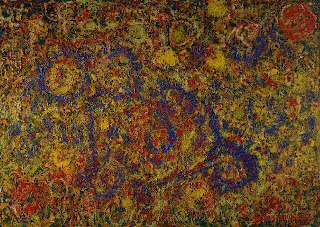
Untitled
(1957) Oil on canvas
© Collection Centre Pompidou, Dist. RMN / Philippe Migeat

Untitled
(c. 1956) Watercolor and gouache on paper
Collection of the Delaney Estate

Nativity Scene
(1961) Oil on canvas
Private collection
In James Baldwin's introduction to Beauford's 1964 exposition at the Gallery Lambert in Paris, Baldwin states that Beauford's paintings "underwent a most striking metamorphosis into freedom" during his years in Clamart. While I do not pretend to have vast knowledge of what Beauford produced during these years, I am taking the liberty of bringing you a few pieces from this period (1956-late 1961/early 1962) that I consider to be extraordinary. Enjoy!

(c. 1958-1959) Oil on paper, laid down on canvas
Aaron Galleries

(1961) Oil monotype on heavy wove paper
Photo courtesy of Swann Auction Galleries

(1957) Oil on canvas
© Collection Centre Pompidou, Dist. RMN / Philippe Migeat

(c. 1956) Watercolor and gouache on paper
Collection of the Delaney Estate

(1961) Oil on canvas
Private collection