

Beauford Returns to the Whitney Museum of American Art
Blues for Smoke is a major interdisciplinary exhibition exploring
a wide range of contemporary art, music, literature, and film through
the lens of the blues and “blues aesthetics.” Mounted by the Los Angeles Museum of Contemporary Art (MOCA), it is now being shown at the Whitney Museum of American Art in Manhattan.
The image below is a screenshot from the page on the Whitney Museum Web site that promotes the exposition. The painting on the right was done by Beauford - it is called Portrait of a Young Musician and is on loan from the Studio Museum in Harlem. It is not dated. (Click on the image for a larger view of the portrait.)

Beauford experienced his first major break as an artist at the Whitney, where he exhibited twelve works (three oils and nine pastels) at a four-person show that ran from February 26 to March 8, 1930. He won first prize for one of his pastels and honorable mention for the other works that he submitted for this show.
There is no indication on their Web site as to why the Whitney chose Portrait of a Young Musician among dozens of others to represent this exhibit. But I think you'll agree that the work is compelling. During a Google search, I found a blog post by a young woman named Kiffe Coco that echoes this sentiment. Coco says that as soon as she laid eyes on the painting, she was deeply intrigued. She goes on to describe how the image evoked thoughts of Paris:
Whitney Museum of American Art
945 Madison Avenue at 75th Street
New York, NY 10021
General Information: (212) 570-3600
info@whitney.org
Click here for information on hours and admission fees.
The image below is a screenshot from the page on the Whitney Museum Web site that promotes the exposition. The painting on the right was done by Beauford - it is called Portrait of a Young Musician and is on loan from the Studio Museum in Harlem. It is not dated. (Click on the image for a larger view of the portrait.)
Screenshot from Whitney Museum Web site
Beauford experienced his first major break as an artist at the Whitney, where he exhibited twelve works (three oils and nine pastels) at a four-person show that ran from February 26 to March 8, 1930. He won first prize for one of his pastels and honorable mention for the other works that he submitted for this show.
There is no indication on their Web site as to why the Whitney chose Portrait of a Young Musician among dozens of others to represent this exhibit. But I think you'll agree that the work is compelling. During a Google search, I found a blog post by a young woman named Kiffe Coco that echoes this sentiment. Coco says that as soon as she laid eyes on the painting, she was deeply intrigued. She goes on to describe how the image evoked thoughts of Paris:
I was introduced to this piece on Tuesday at the Studio Museum of Harlem while working a workshop, and just looking at it, I thought of Paris and then somehow, James Baldwin's image popped into my head. His scarf, his crossed legs, his expression all led me to believe that this guy had been spending some time in the City of Light...Blues for Smoke is being accompanied by a series of performances, events, screenings, and readings, all of which showcase the enduring legacy and innovative possibilities of the blues in contemporary music and live art. It will run until April 28, 2013.
Whitney Museum of American Art
945 Madison Avenue at 75th Street
New York, NY 10021
General Information: (212) 570-3600
info@whitney.org
Click here for information on hours and admission fees.
Where to Find Beauford's Art: Virginia Museum of Fine Arts
The Virginia Museum of Fine Arts has recently acquired one of Beauford's most acclaimed portraits, that of Marian Anderson:

Marian Anderson
(1965) Oil on canvas
J. Harwood and Louise B. Cochrane Fund for American Art
Image source: VMFA Blog
The painting had been on loan to the museum for five months prior to the acquisition. As of December 2012, it is part of their permanent collection. It hangs in the American gallery across the room from Beauford's Greene Street, which the museum acquired in 2010. As part of the museum's inventory, these works now belong to the Commonwealth of Virginia.
The following description comes from the VMFA blog:
(1965) Oil on canvas
J. Harwood and Louise B. Cochrane Fund for American Art
Image source: VMFA Blog
The painting had been on loan to the museum for five months prior to the acquisition. As of December 2012, it is part of their permanent collection. It hangs in the American gallery across the room from Beauford's Greene Street, which the museum acquired in 2010. As part of the museum's inventory, these works now belong to the Commonwealth of Virginia.
The following description comes from the VMFA blog:
In this “memory” portrait — painted in Paris but with an awareness of the Civil Rights struggles underway in America — Delaney expressed his ongoing admiration for Anderson’s sensitive brilliance as a performer and person. The visual harmony of the work epitomizes the artist’s exploration of painterly abstractions that featured the color yellow as a symbol of perfection and transcendence.According to the blog Black Artist News, Marian Anderson is the museum’s first painted portrait of a celebrated historical black figure. Many thanks to milo, creator of Black Artist News, for informing Les Amis of the acquisition!
Beauford, What is the Price of a Ticket?
Artist Ealy Mays has paid a wonderful tribute to Beauford with his painting entitled Beauford, What is the Price of a Ticket?

Beauford, What is the Price of a Ticket?
Ealy Mays
(2012) Acrylic on canvas
Image courtesy of the artist

Jazz Quartet
Beauford Delaney
(1946) Oil on canvas
Image courtesy of Burt and Patricia Reinfrank
Mays provides the following information about the painting:
For additional information about Mays' original painting, as well as prints and memorabilia of the work, visit his Web site at EalyMaysArtWorks.com.

Ealy Mays
(2012) Acrylic on canvas
Image courtesy of the artist

Beauford Delaney
(1946) Oil on canvas
Image courtesy of Burt and Patricia Reinfrank
Mays provides the following information about the painting:
Beauford’s original painting was “Jazz Quartet”. Jimmy Baldwin attributed “Price of a Ticket” to his friend Beauford. Ealy Mays pays tribute by combining title with image.
Setting of Beauford’s original painting was more of a church with a woman a playing a Piano. Here, it is changed from a church to a Jazz lounge in Paris, juxtaposing the individuals and instrument played.
For additional information about Mays' original painting, as well as prints and memorabilia of the work, visit his Web site at EalyMaysArtWorks.com.
Les Amis Bids Adieu to Richard A. Long
It was with sadness that Les Amis de Beauford Delaney learned of the passing of Richard A. Long. He died on January 4, 2013.

Richard was a great friend of Beauford and has contributed numerous times to the richness of this blog:
Richard A. Long and Beauford Delaney
Special Video: Richard A. Long Talks about Beauford - Part 1
Special Video: Richard A. Long Talks about Beauford - Part 2
He was a donor for the Beauford Delaney Gravesite Project and recently supported our application for funding for a second Beauford Delaney biography and the creation of a catalogue raisonné of Beauford's art. He was always generous with his time and knowledge. It was a pleasure to have gotten to know him.
For a beautiful and eloquent summation of Richard's life and work, read the article published by Arts Atlanta at the following link:
http://www.artsatl.com/2013/01/memorium-richard-a-long/
Portrait of Richard A. Long
Oil on canvas (1965)
High Museum of Art
Richard was a great friend of Beauford and has contributed numerous times to the richness of this blog:
Richard A. Long and Beauford Delaney
Special Video: Richard A. Long Talks about Beauford - Part 1
Special Video: Richard A. Long Talks about Beauford - Part 2
He was a donor for the Beauford Delaney Gravesite Project and recently supported our application for funding for a second Beauford Delaney biography and the creation of a catalogue raisonné of Beauford's art. He was always generous with his time and knowledge. It was a pleasure to have gotten to know him.
For a beautiful and eloquent summation of Richard's life and work, read the article published by Arts Atlanta at the following link:
http://www.artsatl.com/2013/01/memorium-richard-a-long/
A Portrait for Sale
Beauford captured the likeness of his friend Richard Gibson in a portrait painted in Paris in 1955:

Click HERE to read the story of how Richard sat for the portrait.
The painting was hung as part of the exposition of Beauford's works that the Philadelphia Museum of Art held in 2005. As Richard is a native of Philadelphia, he was proud to have his portrait shown during this exhibit. Click HERE to read more about this exposition.

Richard owns the painting and is offering it for sale. Interested parties should address an e-mail message to Craig Allen at craig.persmail[at]yahoo[dot]com.
To read Richard's tribute to Beauford, click on the following link:
A Tribute to Beauford...in Gratitude

Portrait of Richard Gibson
Beauford Delaney
Oil on canvas (1955)
Beauford Delaney
Oil on canvas (1955)
The painting was hung as part of the exposition of Beauford's works that the Philadelphia Museum of Art held in 2005. As Richard is a native of Philadelphia, he was proud to have his portrait shown during this exhibit. Click HERE to read more about this exposition.

Richard Gibson standing next to his portrait at the 2005 exposition
Beauford Delaney: From New York to Paris
Philadelphia Museum of Art
Photo courtesy of Richard Gibson
Beauford Delaney: From New York to Paris
Philadelphia Museum of Art
Photo courtesy of Richard Gibson
To read Richard's tribute to Beauford, click on the following link:
A Tribute to Beauford...in Gratitude
2013 Happy New Year Greetings from Les Amis
Happy New Year everyone!
May 2013 bring you all the love, joy, and prosperity that you desire!

(1953) Carl Van Vechten
This year is an important one for Les Amis de Beauford Delaney. I will renew the concession on Beauford's gravesite this spring and will continue to pursue getting permission to place a plaque in Beauford's honor on a building façade in Montparnasse. I will also continue to search out the locations in the U.S. and around the world where Beauford's art is located.

(1962) Watercolor and gouache on paper
Photo courtesy of Swann Galleries
I want to thank you for your support of Les Amis and hope that you will continue to follow and support our efforts!
Sincerely,
Monique
President, Les Amis de Beauford Delaney
A Birthday Card for Beauford
Artist and singer Joseph Langley was one of the many people who attended the reception celebrating the laying of Beauford's tombstone in October 2010. Joe created a wonderful video to capture the highlights of that event.
I asked Joe if he would be willing to create an artistic work in celebration of Beauford's birthday (December 30, 1901) and he immediately rose to the challenge. Here is the painting that he created:

Portrait of Beauford Delaney
Joseph Langley
(2012) Acrylic and pencil on canvas
Click on the image to see the video that Joe created to present this work of art.
HAPPY BIRTHDAY BEAUFORD!
To learn more about Joe and his art and music, visit www.josephlangleymusic.com.
I asked Joe if he would be willing to create an artistic work in celebration of Beauford's birthday (December 30, 1901) and he immediately rose to the challenge. Here is the painting that he created:
Joseph Langley
(2012) Acrylic and pencil on canvas
Click on the image to see the video that Joe created to present this work of art.
To learn more about Joe and his art and music, visit www.josephlangleymusic.com.
Merry Christmas from Les Amis de Beauford Delaney!
In 1971 and 1972, Beauford spent Christmas at the home of his dear friend James Baldwin in the fortified medieval village of Saint Paul de Vence.

Image from the Saint Paul de Vence Tourism Office
Because two of the last three blog posts have featured the story of the Beauford Delaney paintings bequeathed to Clark Atlanta University Art Galleries by Baldwin and recuperated from his Saint Paul de Vence home, I thought it appropriate to extend Christmas greetings to all of you with this image of the idyllic hilltop town.
Merry Christmas from
Les Amis de Beauford Delaney!

Because two of the last three blog posts have featured the story of the Beauford Delaney paintings bequeathed to Clark Atlanta University Art Galleries by Baldwin and recuperated from his Saint Paul de Vence home, I thought it appropriate to extend Christmas greetings to all of you with this image of the idyllic hilltop town.
Les Amis de Beauford Delaney!
Where to Find Beauford's Art: Clark Atlanta University Art Galleries - Part 3
I am pleased to present this multi-part article about Beauford's works at Clark Atlanta University Art Galleries in Atlanta, GA. Many thanks to Tina Dunkley and her assistant Cynthia Ham for providing the interview and images upon which this article is based.
************
The James Baldwin bequest to Clark Atlanta University contained the following paintings by Beauford:

Village (Saint Paul de Vence)
(1972) Oil on canvas
Bequest of James Baldwin
Image courtesy of Clark Atlanta University Art Galleries
Beauford first went to Saint Paul de Vence in 1971, the year that his nephew Sam died. Baldwin invited him there to help him deal with the emotional trauma resulting from Sam's death. He invited Beauford to the property for Christmas that same year.
Beauford would go to Saint Paul de Vence again in 1972, this time as a result of Richard A. Long finding him in fragile mental condition during Long's visit to France. Beauford drew sketches of the town during this trip and created Village and other paintings upon his return to Paris.
In Part 4 of this article, read a personal view of several paintings from the Baldwin bequest.
*Some question whether the person depicted in this portrait is indeed Baldwin.
The James Baldwin bequest to Clark Atlanta University contained the following paintings by Beauford:
- Yellow Cypress, 1972, oil on canvas
- Unknown Portrait (inscription: Saint Paul), 1971, oil on canvas
- Portrait of James Baldwin*, 1971, oil on canvas
- Man in Blue, 1972, oil on canvas
- Abstraction: Yellow and Orange, 1972, watercolor
- Village (Saint Paul de Vence), 1972, oil on canvas
- Abstract: Yellow and Red, 1967, oil on canvas

(1972) Oil on canvas
Bequest of James Baldwin
Image courtesy of Clark Atlanta University Art Galleries
Beauford first went to Saint Paul de Vence in 1971, the year that his nephew Sam died. Baldwin invited him there to help him deal with the emotional trauma resulting from Sam's death. He invited Beauford to the property for Christmas that same year.
Beauford would go to Saint Paul de Vence again in 1972, this time as a result of Richard A. Long finding him in fragile mental condition during Long's visit to France. Beauford drew sketches of the town during this trip and created Village and other paintings upon his return to Paris.
In Part 4 of this article, read a personal view of several paintings from the Baldwin bequest.
*Some question whether the person depicted in this portrait is indeed Baldwin.
Where to Find Beauford's Art: Ink Miami Art Fair - Aaron Galleries
Thanks (in part) to Aaron Galleries near Chicago, Beauford's work is represented at this prestigious show this year. Aaron Galleries is participating in Ink Miami Art Fair, a contemporary art fair which is unique among Miami’s fairs for its focus on contemporary works on paper by internationally renowned artists.
The gallery has selected two exceptional paintings by Beauford for display:
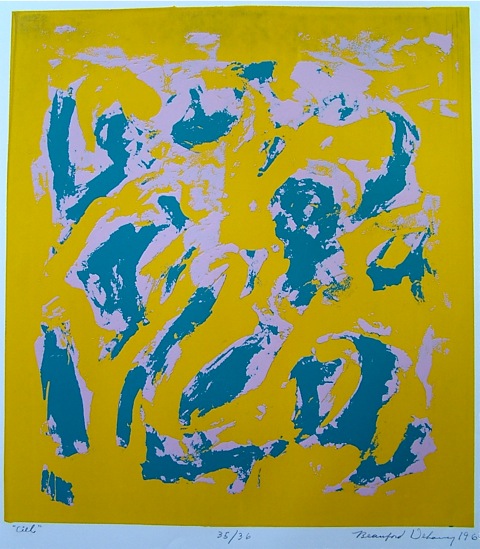
Ciel
(1960) Color silk-screen; Edition: 29/36
19 1/4 x 17 inches
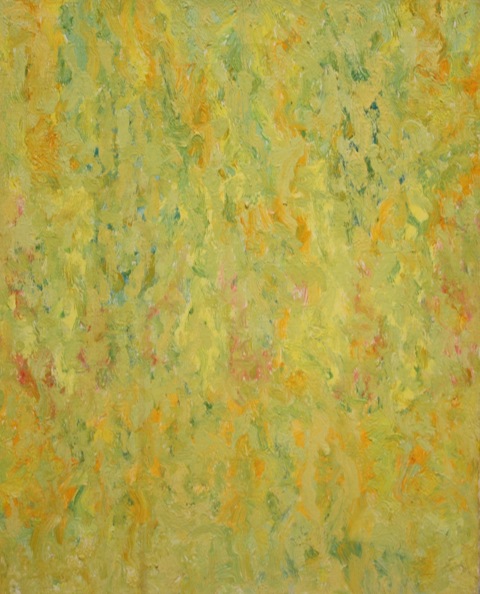
Sollis Toucan
(1963) Oil on canvas
Signed, dated and titled, on the stretcher
16 3/8 x 13 inches
They describe Sollis Toucan as "a little gem." It was previously owned by New York City artist Don Freeman*, who active was active during the 1930s and 1940s.
Aaron Galleries is showing works by the following artists at Ink:
- Eldzier Cortor
- Rashid Johnson
- Charles White
- Joseph Delaney
- Beauford Delaney
- Sam Gilliam
- Wadsworth Jarell
- Margaret Burroughs
- Elizabeth Catlett
Suites of Dorchester 1850 Collins Avenue Miami Beach, FL 33139
The remaining show dates are as follows:
Saturday 10:00AM- 7:00 PM
Sunday 10:00AM- 3:00 PM
Patrick L. Albano
Aaron Galleries
2011 Tower Drive
Glenview, IL 60026
(847) 724-0660 Gallery
(312) 320-0660 Cell
info[at]aarongalleries[dot]com
www.aarongalleries.com
* Freeman's son Roy also owned a painting called Sollis Toucan. To read his story, click here.
Where to Find Beauford's Art: Clark Atlanta University Art Galleries - Part 2
I am pleased to present Part 2 of this multi-part article about Beauford's works at Clark Atlanta University Art Galleries in Atlanta, GA. Many thanks to Tina Dunkley and her assistant Cynthia Ham for providing the interview and images upon which this article is based.
************

Clark Atlanta University Art Galleries
Image from CAUAG Web site
When the shipment arrived in Atlanta, Dunkley began the inventory process anew and was disappointed to find that only twenty-six (26) of the thirty-three (33) works had been sent. Only seven of the eleven Delaney paintings arrived, and some of these were different than the ones indicated on the inventory list.
The shipment contained the following paintings by Beauford:
During our interview, Dunkley emphatically stated that Beauford's works, as well as those of his brother, Joseph, are very important. Both Delaneys exhibited their paintings at the historic Atlanta University Art Annual Exhibition, which was founded by Hale Woodruff in 1942. Joseph Delaney won a cash award of $250 during the fifth annual exhibition in 1946 for a painting called East River. He participated in five shows in all (1942, 1943, 1946, 1947, and 1960).

Excerpt from the "School and College News" column
of The Crisis Magazine
June 1946
Beauford Delaney participated once in the Atlanta University Art Annuals in 1951, submitting an oil painting entitled Blue Harlem. Unfortunately, no measurements or images are available for this work.
Dunkley said it is important that CAUAG have works by both Delaneys in their collection for this reason. She does not recall if the galleries have ever hung their works in the same exhibit, but says that she plans to do so in the future. She likes the fact that the color "yellow" became a predominant theme in Beauford's work, and notes that yellow is the primary color used in most of his paintings in CAUAG's collection.
To learn more about CAUAG's historic art collections, click here.
In Part 3 of this article, learn more about the paintings.
*Some question whether the person depicted in this portrait is indeed Baldwin.

Image from CAUAG Web site
When the shipment arrived in Atlanta, Dunkley began the inventory process anew and was disappointed to find that only twenty-six (26) of the thirty-three (33) works had been sent. Only seven of the eleven Delaney paintings arrived, and some of these were different than the ones indicated on the inventory list.
The shipment contained the following paintings by Beauford:
- Yellow Cypress, 1972, oil on canvas
- Unknown Portrait (inscription: Saint Paul), 1971, oil on canvas
- Portrait of James Baldwin*, 1971, oil on canvas
- Man in Blue, 1972, oil on canvas
- Abstraction: Yellow and Orange, 1972, watercolor
- Village (Saint Paul de Vence), 1972, oil on canvas
- Abstract: Yellow and Red, 1967, oil on canvas
During our interview, Dunkley emphatically stated that Beauford's works, as well as those of his brother, Joseph, are very important. Both Delaneys exhibited their paintings at the historic Atlanta University Art Annual Exhibition, which was founded by Hale Woodruff in 1942. Joseph Delaney won a cash award of $250 during the fifth annual exhibition in 1946 for a painting called East River. He participated in five shows in all (1942, 1943, 1946, 1947, and 1960).

of The Crisis Magazine
June 1946
Beauford Delaney participated once in the Atlanta University Art Annuals in 1951, submitting an oil painting entitled Blue Harlem. Unfortunately, no measurements or images are available for this work.
Dunkley said it is important that CAUAG have works by both Delaneys in their collection for this reason. She does not recall if the galleries have ever hung their works in the same exhibit, but says that she plans to do so in the future. She likes the fact that the color "yellow" became a predominant theme in Beauford's work, and notes that yellow is the primary color used in most of his paintings in CAUAG's collection.
To learn more about CAUAG's historic art collections, click here.
In Part 3 of this article, learn more about the paintings.
*Some question whether the person depicted in this portrait is indeed Baldwin.
Where to Find Beauford's Art: Clark Atlanta University Art Galleries - Part 1
I am pleased to present this multi-part article about Beauford's works at Clark Atlanta University Art Galleries in Atlanta, GA. Many thanks to Tina Dunkley and her assistant Cynthia Ham for providing the interview and images upon which this article is based.
************
I recently had a long chat with Tina Dunkley about the seven Beauford Delaney works held by the Clark Atlanta University Art Galleries (CAUAG).
Dunkley, who has directed the galleries since 1994 and is an artist in her own right, had quite an interesting tale to tell about the acquisition of these paintings. They were part of a bequest to the university made by one of Beauford's dearest friends, James Baldwin.
Dr. Richard A. Long informed CAUAG of the bequest at the time that Dunkley was in the midst of renovating the space in which the collections are now shown - the former reading room of the library in Trevor Arnett Hall. Long provided a list of the works to be given to the university, all of which were located at Baldwin's home in Saint-Paul-de-Vence in southern France. Beauford spent a great deal of time with Baldwin and other friends at this property, and painted here as well.


Baldwin's Property at Saint Paul de Vence
Photos courtesy of Professor Francine Allen, Morehouse College
Dunkley began communicating with the attorney of the Baldwin estate about collecting the works in December 1994.
Because Baldwin's will was in probate and was being contested, Dunkley feared that the university might not be able to acquire the works that Baldwin intended it to have. She asked Avery Glize-Kane, the attorney for the estate, whether the art work was part of the contestation. Relieved to learn that the answer was no, she went to Saint-Paul-de-Vence to claim the items that were to be sent to the university. There were thirty-three (33) works on the list that Long provided. Among them were eleven paintings by Beauford. Other artists represented in the bequest included César, Arman, Paul Jenkins, and Henri Baviera.
As Dunkley went through the process of checking the inventory, she discovered that several paintings on the list were not at Baldwin's home. Glize-Kane could not account for what happened to them. Dunkley arranged for the shipment of the works that she could find and returned to the U.S.
In Part 2 of this article, learn what Dunkley found when the shipment arrived in Atlanta.
I recently had a long chat with Tina Dunkley about the seven Beauford Delaney works held by the Clark Atlanta University Art Galleries (CAUAG).
Dunkley, who has directed the galleries since 1994 and is an artist in her own right, had quite an interesting tale to tell about the acquisition of these paintings. They were part of a bequest to the university made by one of Beauford's dearest friends, James Baldwin.
Dr. Richard A. Long informed CAUAG of the bequest at the time that Dunkley was in the midst of renovating the space in which the collections are now shown - the former reading room of the library in Trevor Arnett Hall. Long provided a list of the works to be given to the university, all of which were located at Baldwin's home in Saint-Paul-de-Vence in southern France. Beauford spent a great deal of time with Baldwin and other friends at this property, and painted here as well.


Photos courtesy of Professor Francine Allen, Morehouse College
Dunkley began communicating with the attorney of the Baldwin estate about collecting the works in December 1994.
Because Baldwin's will was in probate and was being contested, Dunkley feared that the university might not be able to acquire the works that Baldwin intended it to have. She asked Avery Glize-Kane, the attorney for the estate, whether the art work was part of the contestation. Relieved to learn that the answer was no, she went to Saint-Paul-de-Vence to claim the items that were to be sent to the university. There were thirty-three (33) works on the list that Long provided. Among them were eleven paintings by Beauford. Other artists represented in the bequest included César, Arman, Paul Jenkins, and Henri Baviera.
As Dunkley went through the process of checking the inventory, she discovered that several paintings on the list were not at Baldwin's home. Glize-Kane could not account for what happened to them. Dunkley arranged for the shipment of the works that she could find and returned to the U.S.
In Part 2 of this article, learn what Dunkley found when the shipment arrived in Atlanta.
Beauford's Paris: Rue des Carmes
In looking for references to Thanksgiving in Amazing Grace: A Life of Beauford Delaney , I found a passage that talks about Beauford spending a great deal of time at the apartment of his friend Mary Painter in the 5th arrondissement. Biographer David Leeming states that on most weekends between January and November 1956, Beauford and whomever else was staying at Beauford's Clamart residence would go to visit Painter at her "new and very grand apartment" on rue des Carmes (exact address not mentioned). These people included James Baldwin and his lover Arnold, Bernard Hassell, and Richard Olney. They enjoyed extravagant meals prepared by Painter and Olney, listened to jazz and blues, and drank lots of whisky. They called these parties the "Saturday Night Functions" after the song of the same name.

, I found a passage that talks about Beauford spending a great deal of time at the apartment of his friend Mary Painter in the 5th arrondissement. Biographer David Leeming states that on most weekends between January and November 1956, Beauford and whomever else was staying at Beauford's Clamart residence would go to visit Painter at her "new and very grand apartment" on rue des Carmes (exact address not mentioned). These people included James Baldwin and his lover Arnold, Bernard Hassell, and Richard Olney. They enjoyed extravagant meals prepared by Painter and Olney, listened to jazz and blues, and drank lots of whisky. They called these parties the "Saturday Night Functions" after the song of the same name.
The Pantheon viewed from rue des Carmes
© Discover Paris!
The final gathering at the Painter apartment took place on Thanksgiving Day 1956, after which Painter left Paris to return to the U.S.
Happy Thanksgiving!
"The Doom Music"
Beauford became very close to painter Charley Boggs, his wife Gita, and their son Gordon, soon after he moved to Paris in 1953. He was a frequent visitor to their Montparnasse apartment and often dined with them there. After dinner, they would listen to a wide variety of music ranging from gospel to classical.

One of their favorite pieces was "Adagio in G-Minor for Strings and Organ," which they called "The Doom Music." Often attributed (incorrectly) to Venetian composer Tomaso Giovanni Albinoni, it is a beautiful composition. To listen to it, click on the image above.
Charley Boggs
Detail from a photo of Beauford, Charley, and Larry Calcagno in Venise in 1966
One of their favorite pieces was "Adagio in G-Minor for Strings and Organ," which they called "The Doom Music." Often attributed (incorrectly) to Venetian composer Tomaso Giovanni Albinoni, it is a beautiful composition. To listen to it, click on the image above.
A Plaque for Beauford: Update
Several weeks ago, I wrote about my intention to have a plaque to honor Beauford installed in Montparnasse. This is a brief update on my progress.
A few weeks ago, I had an appointment with Danièle Pourtaud, the person in charge of patrimoine (heritage) in the 14th arrondissement. Because she had never heard of Beauford, I spent a few minutes telling her about him and his life in Montparnasse. I explained that with the exception of the few years that he lived in Clamart, Montparnasse had been his home. I also told her that my first choice for the location of the plaque is on the façade of the Hôtel Lenox on rue Delambre. Formerly called Hôtel des Ecoles, it is where Beauford lived for the majority of his first three years in Paris and is only a couple of minutes walk from his favorite cafés - Le Dôme and Le Select.

Mme Pourtaud's response was quite encouraging. She told me the exact procedure to follow and said that as long as I was able to complete all the steps required, she would support my effort!
What do I, as president of Les Amis de Beauford Delaney, need to do? First, I must contact the owner of the building and obtain permission to place the plaque there. To do so, I will need to create an initial communication that is sufficiently intriguing to gain an audience, at which point I will need to present my case.
Provided that I am successful, I then need to petition the City of Paris and fill out the appropriate form, which will include providing the text that will be on the plaque. I simultaneously need to contact Mme Pourtaud to inform her of my progress.

Hôtel de Ville (Paris City Hall)
© Discover Paris!
After gaining approval from the City of Paris, Mme Pourtaud will put me in contact with companies that manufacture plaques so that I can request cost estimates. I am free to contact other companies not on her list as well.
The next step will be to pay for the plaque. At this point, I have no idea how much this might cost. Another fundraiser may be required!
Finally, Les Amis de Beauford Delaney will arrange for the date and time for the plaque's placement on the building's façade.
If, by chance, I am not successful in convincing the owners of the Hôtel Lenox to agree to have the plaque placed on the hotel's façade, then I'll need to find another suitable place and begin the process again.
Though the course of action is straightforward, it risks being very lengthy. I will keep you posted!
A few weeks ago, I had an appointment with Danièle Pourtaud, the person in charge of patrimoine (heritage) in the 14th arrondissement. Because she had never heard of Beauford, I spent a few minutes telling her about him and his life in Montparnasse. I explained that with the exception of the few years that he lived in Clamart, Montparnasse had been his home. I also told her that my first choice for the location of the plaque is on the façade of the Hôtel Lenox on rue Delambre. Formerly called Hôtel des Ecoles, it is where Beauford lived for the majority of his first three years in Paris and is only a couple of minutes walk from his favorite cafés - Le Dôme and Le Select.

Hôtel Lenox (formerly Hôtel des Ecoles)
© Discover Paris!
Mme Pourtaud's response was quite encouraging. She told me the exact procedure to follow and said that as long as I was able to complete all the steps required, she would support my effort!
What do I, as president of Les Amis de Beauford Delaney, need to do? First, I must contact the owner of the building and obtain permission to place the plaque there. To do so, I will need to create an initial communication that is sufficiently intriguing to gain an audience, at which point I will need to present my case.
Provided that I am successful, I then need to petition the City of Paris and fill out the appropriate form, which will include providing the text that will be on the plaque. I simultaneously need to contact Mme Pourtaud to inform her of my progress.

© Discover Paris!
After gaining approval from the City of Paris, Mme Pourtaud will put me in contact with companies that manufacture plaques so that I can request cost estimates. I am free to contact other companies not on her list as well.
The next step will be to pay for the plaque. At this point, I have no idea how much this might cost. Another fundraiser may be required!
Finally, Les Amis de Beauford Delaney will arrange for the date and time for the plaque's placement on the building's façade.
If, by chance, I am not successful in convincing the owners of the Hôtel Lenox to agree to have the plaque placed on the hotel's façade, then I'll need to find another suitable place and begin the process again.
Though the course of action is straightforward, it risks being very lengthy. I will keep you posted!
Art and Desire
re-Searching Beauford Delaney: Part Four
EL Kornegay Jr., Ph.D.

In Amazing Grace: A Life of Beauford Delaney
, David Leeming opens the unusual door to what might be considered the sexual life of Beauford Delaney. According to
James Baldwin, this lyric about the “unusual door” comes from a song “Beauford
would often sing.”[1]
This unusual door signals at least two aspects of who Beauford Delaney is: a
“…living exemplar of a black man as functioning, self-supporting artist” and according
to Leeming, a homosexual. Beauford was a Negro artist and a homosexual.[2] Yet,
both are constrained by the former, with Beauford’s art having limitations in
the world of whiteness and his sexuality having limitations in the world of
blackness.
Both comprise a double-edged sword of desire with the sharp blade of race and sexuality cutting both ways. The issue of race is a traceable event; sexuality is a bit more elusive, for the latter requires the willingness of lovers to speak and encounters to be exposed. Race plays itself out in the open; sex, most often behind closed doors. How can we account for these acts, which most often remain sealed behind a wall of silence? How do we add the dimension of physical intimacy to our beloved Beauford in ways that celebrate his manhood and his desire to love and be loved?
Leeming asks if Beauford’s paintings say anything about his racial or sexual history. I say his painting say something about both. This is a co-constituted viewpoint, one in which race and sexuality are combined in a colorful commentary of blended pastels, vividly textured swirls, and dimensioned landscapes where images of desire have been captured.
The joy and pain of a double-edged life that has been raced and sexed is wrapped up in a climatic crescendo of brushstrokes distilled on canvas where truth lies somewhere between the painted images we see and the reasons for their being that we cannot. It is in this space where the answer to the question concerning Beauford’s sexual selfhood might be found.
Leeming writes that some friends of Beauford’s claim that he “did not concern himself with racial or sexual issues” and “that his whole life was his painting.” Yet we find hints of a sexual pulse in Dark Rapture (1941); hidden desire roams under the moonlit streets and city lights of Greenwich Village (1945), in the interplay of couples in the light of day in Washington Square (1952), and in the brightly colored celebration of the erect phallus set between testicular orbs in Sun and Moon (1970). Beauford subtlety expresses his racial and sexual self in certain of his paintings; he reveals what he wants us to see privately, not publicly.

Dark Rapture
(1941) Oil on canvas
Private collection
Private collection
Leeming mentions that Delaney was a very private man and was careful never to blur the lines between eroticism and friendship, between race and sex. However, Beauford does integrate these themes into his work and is quite flamboyant in his celebration of human eroticism in both his love for the blues and its reflection in his art. There is a voyeuristic quality to his paintings; many of his subjects seem not to see him and therefore do not necessarily see his desire for them. He seems to be an unknown admirer framing the silhouette of someone he finds beautiful up close (in Jean Genet [1972], Genet seems to emerge from a thicket after a private encounter) or admires from afar (in Rosa Parks [1970], the specter of a perpendicular bulge adorns a random dark figure in the background of the painting). The angles in his works belie coyness, a shyness only revealed when you catch the glance of an admirer in the corner of your eye.

Jean Genet
(1972) Oil on canvas
Private collection
I appreciate Leeming’s response to the questions surrounding Delaney’s racial and sexual identity. Along with black religion, they are important aspects shaping Beauford’s life and work. However, I find that Beauford’s desire – to resist racial and sexual limitations – is directly tied to and bound up in his art. There is no need to speculate about either: we only have to look at what he painted and left behind to get a glimpse of who, what, and how he loved. It is an unusual door to open, but once you have entered, the understanding of the many dimensions of Beauford’s desire begins to emerge.
[1] I have not been able to trace the anecdotal reference by Baldwin of this lyric often
sung by Beauford. However, I do understand this is possibly an example of a
folk “spiritual” indicative of the black church tradition both men shared and
one which Baldwin very often references. James Baldwin, “The Price of the
Ticket”, ed. Toni Morrison. Collected
Essays.(New York: Library of America, 1998), 830.
Beauford at the Fall 2012 African-American Fine Art Auction
Swann Galleries held its semi-annual African-American Fine Art auction on Thursday, 18 October 2012. Among the 154 works offered for sale were two Beauford Delaney paintings. The first (Lot 67) is a vibrantly multi-colored abstract:

It measures 495 x 654 mm / 19.5 x 25.75 inches and is signed and dated in ink in the lower right corner. It comes from a private New York collection.
The estimated sale price for this painting was $10,000-15,000.
The second painting (Lot 68) is an unusual abstract dominated by the color pink:

It measures 572 x 394 mm / 22.5 x 15.5 inches and is signed, inscribed "Paris," and dated "July 1964" in blue ink in the lower right corner.
This piece originates from the collection of Al Hirschfeld, a friend and patron of Beauford who partly funded Beauford's first trip to Paris. It was acquired by Phillipe Briet in 1989, who gave it to a dear friend in 1991.
The estimated sale price for this work was $8,000-12,000.
Untitled (Pink Abstract) sold for $8,400, inclusive of Buyer's Premium.* Untitled (Rainbow Abstract) was not purchased during the auction.
I spoke briefly with Nigel Freeman, director of Swann's African-American Fine Art auction, about this. He indicated that each work put up for auction has an unpublicized reserve price, below which the work will not sell. Sometimes, when more than one work by an artist is being auctioned during a given sale, buyers focus more attention on acquiring a particular one. This may result in insufficient bidding on the other works so that their reserve price is not met.
This may have been what occurred during Thursday's sale.
*Buyer's Premium - the fee that the auction house charges in addition to the actual price of the painting. Swann Galleries charges 20% of the sale price as a premium.

Untitled (Rainbow Abstraction)
(1962) Watercolor and gouache on paper
(1962) Watercolor and gouache on paper
Photo courtesy of Swann Galleries
The estimated sale price for this painting was $10,000-15,000.
The second painting (Lot 68) is an unusual abstract dominated by the color pink:

Untitled (Pink Abstract)
(1964) Watercolor on Arches paper
(1964) Watercolor on Arches paper
Photo courtesy of Swann Galleries
It measures 572 x 394 mm / 22.5 x 15.5 inches and is signed, inscribed "Paris," and dated "July 1964" in blue ink in the lower right corner.
This piece originates from the collection of Al Hirschfeld, a friend and patron of Beauford who partly funded Beauford's first trip to Paris. It was acquired by Phillipe Briet in 1989, who gave it to a dear friend in 1991.
The estimated sale price for this work was $8,000-12,000.
Untitled (Pink Abstract) sold for $8,400, inclusive of Buyer's Premium.* Untitled (Rainbow Abstract) was not purchased during the auction.
I spoke briefly with Nigel Freeman, director of Swann's African-American Fine Art auction, about this. He indicated that each work put up for auction has an unpublicized reserve price, below which the work will not sell. Sometimes, when more than one work by an artist is being auctioned during a given sale, buyers focus more attention on acquiring a particular one. This may result in insufficient bidding on the other works so that their reserve price is not met.
This may have been what occurred during Thursday's sale.
*Buyer's Premium - the fee that the auction house charges in addition to the actual price of the painting. Swann Galleries charges 20% of the sale price as a premium.
Christie's Paris Auctions Two Delaney Paintings
On October 10, 2012, Christie's Paris held an auction entitled Rendez-vous - Intérieurs Contemporains (Rendezvous - Contemporary Interiors). Among the works for sale were two abstract Beauford Delaney paintings.
The first untitled work is an aquarelle and gouache on paper. It was Lot 70 at the sale.

It is signed and dated "Beauford Delaney 1962 Paris" in the bottom right corner.
This painting sold for 3500 euros (roughly $4500).
The second work (Lot 71) is a watercolor on paper.

It is signed and dated "Beauford Delaney 61. San Telmo Mallorca" in the bottom right corner.
It also sold for 3500 euros (roughly $4500).
Both paintings came from a private collection and were authenticated for the auction by Sylvain Briet. Prices represent the hammer price (the price at which the work sells at auction) plus the buyer's premium.
Christie's sold many of Beauford's paintings in 2010 during its auction of the Darthea Speyer Collection.
The first untitled work is an aquarelle and gouache on paper. It was Lot 70 at the sale.

Untitled
(1962) Watercolor and gouache on paper
© Christie's Images
It is signed and dated "Beauford Delaney 1962 Paris" in the bottom right corner.
This painting sold for 3500 euros (roughly $4500).
The second work (Lot 71) is a watercolor on paper.

Untitled
(1961) Watercolor on paper
© Christie's Images
It is signed and dated "Beauford Delaney 61. San Telmo Mallorca" in the bottom right corner.
It also sold for 3500 euros (roughly $4500).
Both paintings came from a private collection and were authenticated for the auction by Sylvain Briet. Prices represent the hammer price (the price at which the work sells at auction) plus the buyer's premium.
Christie's sold many of Beauford's paintings in 2010 during its auction of the Darthea Speyer Collection.
Beauford in Blue: Story of a Portrait
Shawn Olszewski is a self-taught artist who has painted professionally for the past ten years. He created this beautiful portrait of Beauford:

I contacted him to ask him why. He granted me this interview.
Les Amis: How did you come to learn about Beauford Delaney?
S.O.: I came to expressionism on my own but when I started getting noticed I started researching
other expressionists more. When I first saw Delaney's portrait of James Baldwin I was hooked.
Les Amis: Which portrait of Baldwin did you first see:
S.O.: The one that Delaney painted in 1945*.
Les Amis: How familiar are you with Beauford's work?
S.O.: I've never had the opportunity to see a work in person, I'm not quite sure how I will handle it
when I do. So all of my exposure to him has been through books and the Internet.
Les Amis: What do you like about it?
S.O.: I'm most intrigued by push/pull of the browns and ochers with the vividly intense colors. I appreciate
that they switch roles from one painting to the next. The portraiture is just stunning.
Les Amis: What inspired you to paint Beauford's portrait?
S.O.: I realized that I had been evangelizing Beauford for years to anyone that would listen but that I'd
never attempted to paint him. I felt I was doing myself a disservice by not attempting it.
Les Amis: Tell us more about "evangelizing Beauford."
S.O.: I definitely talk about Beauford to other artists. As you know, his story is one about race, mental health, and sexuality also. So in our ongoing fight for equality in the U.S., I have many opportunities to talk with people of all disciplines about Mr. Delaney, whom I believe to be very much underrated due to these "isms" and stigmas.
Les Amis: Were you inspired by Beauford's painting style when you did his portrait?
S.O.: I've been inspired by his style from first seeing his work. I try not to step on his style but
I think a little bit of him should be obvious in all my portraiture.
Les Amis: Why did you select the colors that you used for the painting?
S.O.: I felt they are the colors that we have in common. Yellow ocher especially is very important in my portraits. The blue is more hopeful. We've both had very turbulent lives; the blue is choosing to ignore some of that.
To view Olszewski's art, visit http://www.etsy.com/shop/OlszewskiArt.
* Beauford's 1945 portrait of James Baldwin is owned by the Philadelphia Museum of Art.

Beauford Delaney
(2010) Oil bar and oil pastel on canvas
Shawn Olszewski
I contacted him to ask him why. He granted me this interview.
Les Amis: How did you come to learn about Beauford Delaney?
S.O.: I came to expressionism on my own but when I started getting noticed I started researching
other expressionists more. When I first saw Delaney's portrait of James Baldwin I was hooked.
Les Amis: Which portrait of Baldwin did you first see:
S.O.: The one that Delaney painted in 1945*.
Les Amis: How familiar are you with Beauford's work?
S.O.: I've never had the opportunity to see a work in person, I'm not quite sure how I will handle it
when I do. So all of my exposure to him has been through books and the Internet.
Les Amis: What do you like about it?
S.O.: I'm most intrigued by push/pull of the browns and ochers with the vividly intense colors. I appreciate
that they switch roles from one painting to the next. The portraiture is just stunning.
Les Amis: What inspired you to paint Beauford's portrait?
S.O.: I realized that I had been evangelizing Beauford for years to anyone that would listen but that I'd
never attempted to paint him. I felt I was doing myself a disservice by not attempting it.
Les Amis: Tell us more about "evangelizing Beauford."
S.O.: I definitely talk about Beauford to other artists. As you know, his story is one about race, mental health, and sexuality also. So in our ongoing fight for equality in the U.S., I have many opportunities to talk with people of all disciplines about Mr. Delaney, whom I believe to be very much underrated due to these "isms" and stigmas.
Les Amis: Were you inspired by Beauford's painting style when you did his portrait?
S.O.: I've been inspired by his style from first seeing his work. I try not to step on his style but
I think a little bit of him should be obvious in all my portraiture.
Les Amis: Why did you select the colors that you used for the painting?
S.O.: I felt they are the colors that we have in common. Yellow ocher especially is very important in my portraits. The blue is more hopeful. We've both had very turbulent lives; the blue is choosing to ignore some of that.
To view Olszewski's art, visit http://www.etsy.com/shop/OlszewskiArt.
* Beauford's 1945 portrait of James Baldwin is owned by the Philadelphia Museum of Art.
Where to Find Beauford's Art: Hampton University Museum
The Hampton University Museum holds the following painting by Beauford:


Untitled Abstract, 1968
13” x 18”
Oil on canvas
Museum Acquisition Fund
Collection of the Hampton University Museum
Hampton, VA
It is currently displayed in the Renaissance and Beyond Gallery, which is located on the second floor.
Catherine St. John, Doctor of Arts in the Department of Humanities and Social Sciences, School of Liberal Arts at Berkeley College in Woodland Park, New Jersey, provided the following commentary on the painting and on Beauford's art as a cultural entity.
Catherine St. John, Doctor of Arts in the Department of Humanities and Social Sciences, School of Liberal Arts at Berkeley College in Woodland Park, New Jersey, provided the following commentary on the painting and on Beauford's art as a cultural entity.
Painting was an act of faith for Beauford Delaney (1901-1979). As both actual presence and spiritual transcendence, the finite limits of his paintings open up to an abstract language grounded by both the eye and by intuition. His painted surfaces transform different sensations of light on to canvas. He creates illusions of inwardly expanding space.
It is to Delaney’s abstractions that we turn for his greatest achievements. Involved in the turbulent and lively demi-monde of post-war Paris, it was here that he began his all-over paintings with their fields of color, their fluid swirls of closely valued tonal gradations. At the service of the effects of light on form, these loosely connected patches of color exhibit variations of touch in which the entire surface functions as something greater than its parts.
His Untitled Abstract, 1968, 13x18-inch rhythmic oil on canvas in the collection of the Hampton University Museum is created out of his preferred color yellow, not color in a mediating role as something else, but as a means. Beauford Delaney had a life-long involvement with light and color. The concreteness of color rather than its imitative potential is the subject. We see the materiality of paint with little tonal difference of color. All elements seem to be interdependent and our focus is dispersed. It is an assured painting of spontaneous feeling and the love of the creative process.
In Untitled we are given passages of yellow, abstractions of the material world dissolving into pure color and light. In his book Amazing Grace: a Life of Beauford Delaney, his biographer David Leeming notes Beauford’s celebration of the color yellow as the substance of light in relation to spirit. His concern with the play of light and its rather specific qualities make his painted surfaces a place of spiritual significance. His attraction to the color of light is underscored in the titles of his paintings such as Moving Sunlight, Yellow Light Swirling, and Yellow Light.
Delaney favored more the dimensions of easel painting and while Untitled may seem to be a modest work, it gives presence to an important voice in the shaping of American art. This work reflects larger cultural and artistic issues.
Beauford Delaney’s art is an art of originality, autonomy and authenticity. It plays an intrinsic part in the formal language of modernism and exemplifies the complexity and quality of American culture. In the pivotal moment when the distinctly American aesthetic Abstract Expressionism had become canonical, Delaney was steadfast in pursuing the same visual issues as the more recognized painters like Pollock, de Kooning, and Motherwell. Whether stylistically aligned with the dominant strains of Abstract Expressionism or with contemporary French art, his color allusions are compatible with flatness, one of the defining criteria of modernism, and his dissolving shapes and colors so effectively held together give a sense of coherence to the exploration of abstract relational possibilities.
With Beauford Delaney, one experiences a triumph of styles and through his giving presence, he has played an intrinsic part in the cultural phenomenon we call art. His art is a form for the act of painting itself. Delaney believed that there is only one art and it belongs to every one. Ultimately it is to the art that we must turn.