

The Convergence: Zwa Inyoni Responds to Beauford
Zwa Inyoni is a collage artist from Los Angeles and a master's student in International Affairs at the American University of Paris. His artistic practice explores social discontent, fragments of memory, and propaganda.
Inyoni was an invited guest at a Going Global with Barbara career development workshop and networking event organized for U.S. high school and university students by the Wells International Foundation and hosted by the U.S. Embassy in Paris in August 2026. When I presented the Beauford Delaney Project’s Resonance program to the students and their chaperones at this event, he expressed interest in participating.
He subsequently embarked on a journey of conversation and creation similar to those experienced by TOCA youth, George Henry, and Maya Keys this summer.
But unlike those preceding him, he created the first piece of purely visual art in response to Beauford’s life and work.
From a group of ten images of Beauford’s abstract paintings and works on paper, Inyoni selected two that “spoke to him in the language of words.”
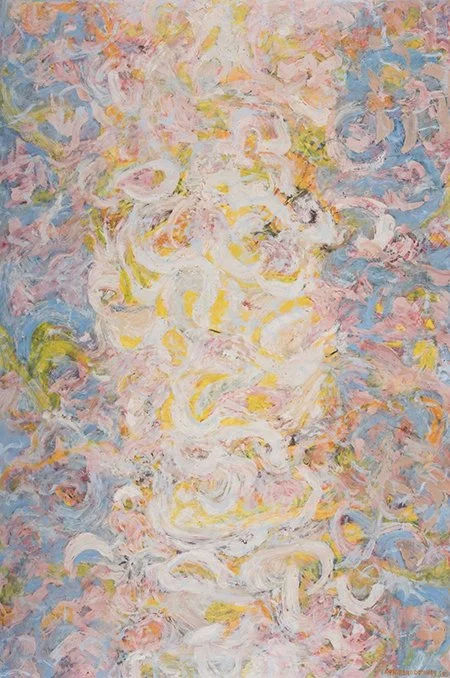
Untitled
(1959) Oil on canvas
Mint Museum
Charlotte, NC, USA
© Estate of Beauford Delaney
by permission of Derek L. Spratley, Esquire,
Court Appointed Administrator
Courtesy of Michael Rosenfeld Gallery, LLC, New York, NY
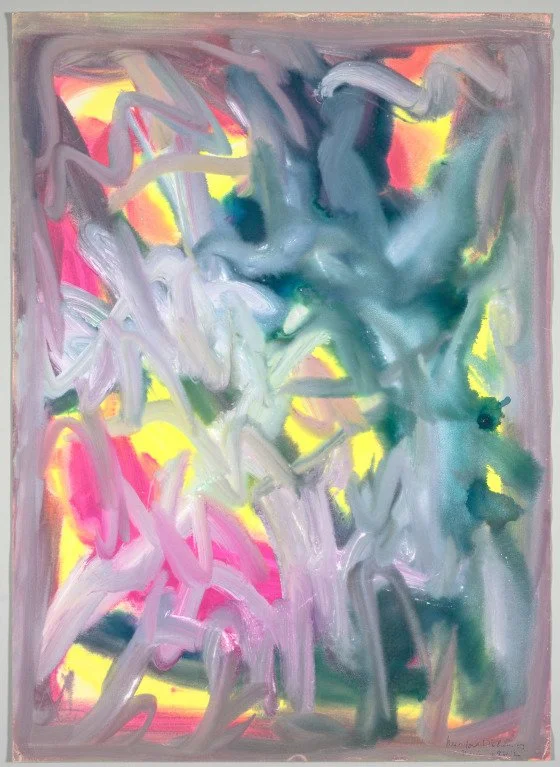
Untitled
(1962) Gouache
Estate of Paul Jenkins
Cleveland Museum of Art
Cleveland, OH, USA
© Estate of Beauford Delaney
by permission of Derek L. Spratley, Esquire,
Court Appointed Administrator
Courtesy of Michael Rosenfeld Gallery, LLC, New York, NY
Looking at the oil painting, he imagined “sounds becoming words before they've been fully formed.” The work on paper reminded him of graffiti—marks that may be incomprehensible to outsiders but meaningful to the people who create them and those who understand their particular language.
Together, these works suggested to him script, handwriting, and utterance.
After spending time with his two selections, Inyoni chose the gouache as the starting point for his creative project.
At first, color was the primary attraction. But as he looked more closely, the work's broad brushstrokes became increasingly important. He saw possibilities in the spaces created by those strokes—places where images could interact with the underlying colors.
His original plan was to use a print of Beauford's painting as the foundation for a collage, but he had to reconsider how he would proceed when he learned that reproducing Beauford's work in this way raised copyright concerns.
He had been excited about his initial concept, so the need to pivot was frustrating.
But the shift ultimately led him in an unexpected direction: he created his own painted canvas inspired by what he had discovered in Beauford's work. That original canvas became the foundation for his collage.
The result is The Convergence.
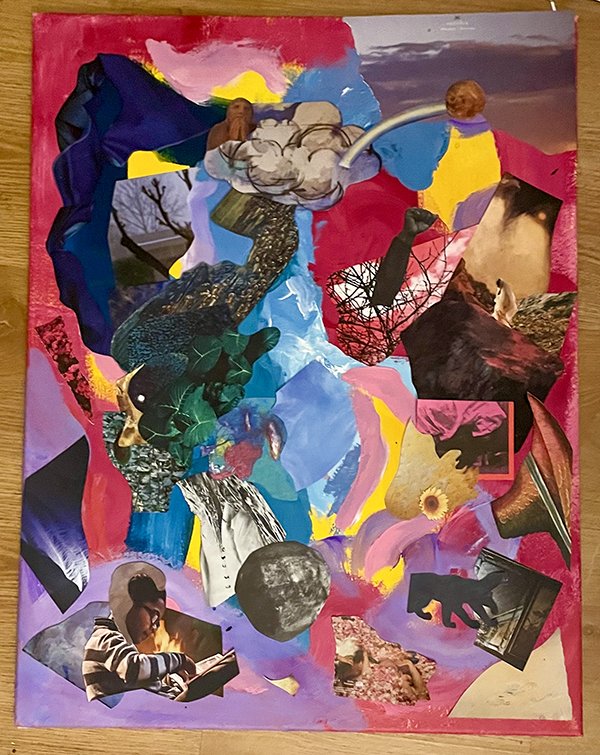
The Convergence
Zwa Inyoni
(2026) Mixed media on canvas
Image courtesy of the artist
The need to change his approach also changed the way Inyoni looked at Beauford.
Initially, he had been attracted by Beauford’s broad brushstrokes because they seemed to provide openings where his collage elements could take on a different significance.
Once he began creating his own painted surface, however, his focus changed, and he began to appreciate the skill involved in Beauford's process.
He became particularly aware of the challenges of mixing paint and controlling a brush. As someone who does not consider himself a painter, these were aspects of Beauford's work he had not previously considered.
His first attempts at working with paint not only gave him a new perspective on Beauford’s work but also inspired him to create a series of collages using his own painted canvases.
This represents a significant evolution in his creative practice.